
Most people never see this conflict, but they live inside it every day. It shows up in grocery aisles, clinic visits, school lunches, and the language used to describe what "healthy" even means.
They are solving different problems, not asking the same question

At first glance, food scientists and dietitians seem like natural allies. Both work with food, both talk about nutrition, and both claim to care about public health. But they are trained to solve very different problems, and that difference creates tension before anyone even enters the room.
Food scientists are usually focused on how to make food safe, stable, affordable, scalable, and appealing. They think in terms of shelf life, texture, microbial risk, ingredient functionality, production costs, and consumer acceptance. In a world where millions of people rely on packaged food, those concerns are not trivial. They are central to whether food systems function at all.
Dietitians, by contrast, are trained to translate nutrition science into human outcomes. They deal with diabetes management, kidney disease, heart health, food allergies, disordered eating, weight stigma, and cultural eating patterns. Their daily work is less about what can be manufactured efficiently and more about what helps a real person eat well over time.
That gap matters because each profession sees the other as missing the point. To a food scientist, a dietitian can sound idealistic about fresh, minimally processed eating without accounting for price, access, spoilage, and convenience. To a dietitian, a food scientist can sound overly comfortable defending products that meet technical standards while still nudging people toward diets high in sodium, sugar, and ultra-processed calories.
The battleground is often processed food, and the public gets caught in the middle

The sharpest friction appears around processed foods. Food scientists often argue, correctly, that processing is not automatically harmful. Pasteurization, fortification, freezing, fermentation, and canning have improved food safety and prevented nutrient deficiencies on a massive scale. Iodized salt, enriched flour, ready-to-use therapeutic foods, and infant formula are powerful examples of processing that saves lives.
Dietitians agree with much of that, but many are increasingly concerned about the modern food environment, where processing is not just preservation. It is formulation. Products are engineered for craveability, consistency, convenience, and repeat purchase. Research over the past decade, including large observational studies on ultra-processed food intake, has linked these diets with higher risks of obesity, type 2 diabetes, cardiovascular disease, and poorer overall diet quality.
The disagreement is not really about whether all processing is bad. It is about where to draw the line between useful technology and commercial overreach. Food scientists often emphasize nutrient delivery and safety metrics, while dietitians emphasize eating patterns, satiety, and long-term health behaviors. A protein bar with added fiber may look nutritionally improved in a lab profile, but a dietitian may still see it as a weak substitute for a more satisfying meal built from ordinary foods.
Consumers hear both messages and end up confused. One expert says "fortified and convenient," another says "highly formulated and habit-forming." Both may be right, but they are speaking from different definitions of what counts as success.
Industry money quietly shapes the disagreement more than most people realize

A major reason this conflict stays quiet is that it is embedded in institutions, not dramatic public feuds. Food scientists often work directly in manufacturing, ingredient development, sensory testing, and quality control. Their professional incentives are tied to making products work in the real marketplace. That means balancing health claims with cost limits, regulatory compliance, and the reality that people buy foods they enjoy.
Dietitians also interact with industry, but the relationship is more controversial. Professional associations, continuing education events, hospital food contracts, and public campaigns have all faced scrutiny when corporate sponsorship enters the picture. Critics worry that partnerships with beverage companies, snack brands, or processed food manufacturers can soften the language around harmful dietary patterns, even when no one explicitly tells professionals what to say.
This does not mean every food scientist is a corporate apologist or every dietitian is independent from commercial influence. The reality is messier. Industry funding affects research agendas, product framing, conference topics, and what kinds of innovation get celebrated. A company is far more likely to fund work on reformulating cereals with more protein than on helping families cook affordable legumes from scratch.
That imbalance shapes public understanding. It creates a world where technical improvements to packaged foods receive polished messaging, while broader dietary counseling often feels underfunded, fragmented, and less visible. The result is a lopsided conversation that rewards what can be sold more easily than what may improve health more deeply.
Labels, claims, and nutrition messaging are where the conflict becomes visible
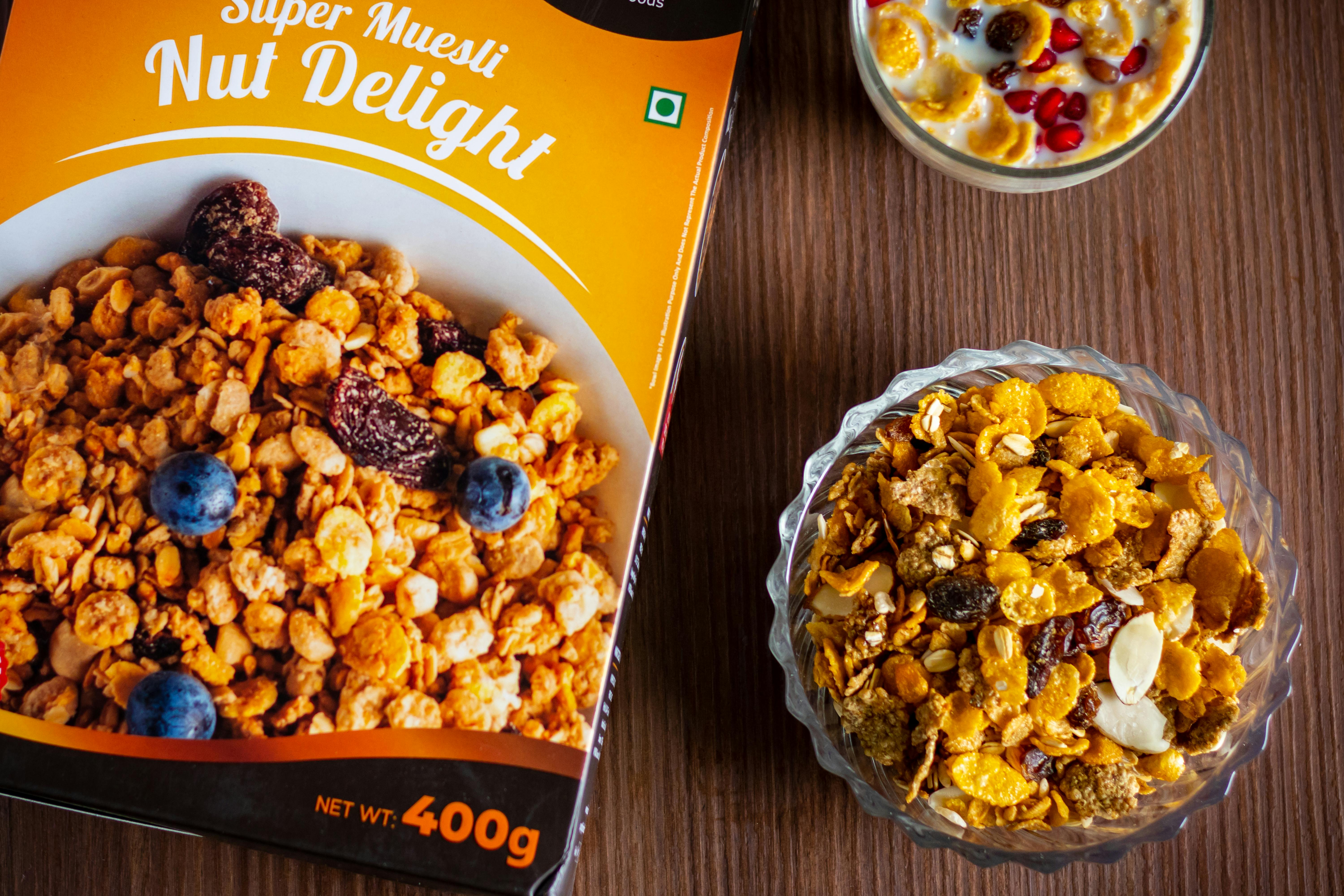
Nothing exposes the divide faster than front-of-pack claims. Food scientists help design products that can legally say "high in protein," "good source of fiber," "reduced sugar," or "supports immunity." Those claims are often accurate under existing regulations. They are also crafted to communicate value in seconds, which is how most people shop.
Dietitians tend to ask a tougher question: does the claim help consumers understand the overall quality of the food, or does it distract them? A sweetened cereal can carry whole grain claims. A snack can be gluten-free even if gluten was never the issue for the average buyer. A beverage can contain added vitamins and still deliver a large sugar load. The problem is not always falsehood. It is selective truth.
This tension has become more pronounced as nutrition science itself has evolved. Earlier public health messaging often focused narrowly on single nutrients such as fat, cholesterol, or calories. That reductionist approach made it easier to market low-fat cookies, sugar-heavy yogurts, and refined products with strategic nutrient tweaks. Many dietitians now emphasize dietary patterns over isolated numbers because people do not eat nutrients in a vacuum.
Food scientists are not wrong to point out that labels need measurable criteria and legally defensible claims. But dietitians are not wrong when they say a technically compliant message can still mislead. That is the heart of the quiet war: one side communicates what can be quantified cleanly, while the other worries about what gets lost when food is reduced to claims language.
Public health goals and business goals overlap, but only up to a point

Here is the uncomfortable truth: the two professions cooperate constantly, and they need each other. Reformulating products to reduce trans fats, lower sodium, improve food safety, or expand allergen labeling has required both technical expertise and nutritional guidance. Some of the biggest wins in modern food policy happened because scientists, clinicians, regulators, and industry all moved in roughly the same direction.
But that alignment has limits. A company may support reducing a harmful ingredient if the replacement is feasible, profitable, and acceptable to consumers. It may be much less enthusiastic about messages that encourage eating fewer packaged snacks overall. Dietitians, especially those working in community health, often confront the broader pattern: products are being slightly improved while the surrounding food culture remains heavily tilted toward convenience eating and aggressive marketing.
School meals, hospital menus, and retail diet programs show this tension clearly. Institutions want foods that are affordable, standardized, safe, and easy to distribute. Food scientists can help deliver that. Dietitians then face the challenge of making those systems support long-term health, cultural relevance, and disease prevention. Those goals overlap, but they are not identical.
This is why debates over "better-for-you" foods can feel so circular. A product can be objectively improved and still contribute to a dietary pattern that many clinicians consider harmful when repeated across the day. Technical progress is real, but it does not automatically equal nutritional progress at population level.
What a truce would actually look like for the people who eat the food

A useful truce would begin with honesty about roles. Food scientists should be recognized for helping keep food safe, accessible, shelf-stable, and available at scale. In many settings, especially low-income communities, emergency feeding systems, and global supply chains, that work is indispensable. Pretending everyone can live on fresh, local, minimally processed food is not serious policy.
At the same time, dietitians are right to insist that human health cannot be judged only by nutrient fortification, reformulation, or technical compliance. People eat in patterns shaped by stress, income, work hours, marketing, culture, medication use, and chronic disease. A food that performs well in manufacturing and passes label standards is not automatically a food that supports well-being in daily life.
The smartest path forward is not to pick a winner. It is to force stronger collaboration under better rules. That means clearer labeling, tighter standards for health halos, less dependence on industry-shaped messaging, more funding for independent nutrition research, and more public education about the difference between food safety, food engineering, and dietary quality.
If the public understood this divide better, nutrition advice would feel less contradictory. The quiet war would still exist, but it would no longer hide behind slogans. People could see the trade-offs clearly, and that alone would be a major step toward eating with more confidence and less confusion.




Leave a Reply