A menu can make Wagyu and Kobe sound interchangeable. In reality, the difference is far more precise, and it changes what you are actually eating and paying for.
Wagyu Is the Big Category, Not a Single Luxury Product
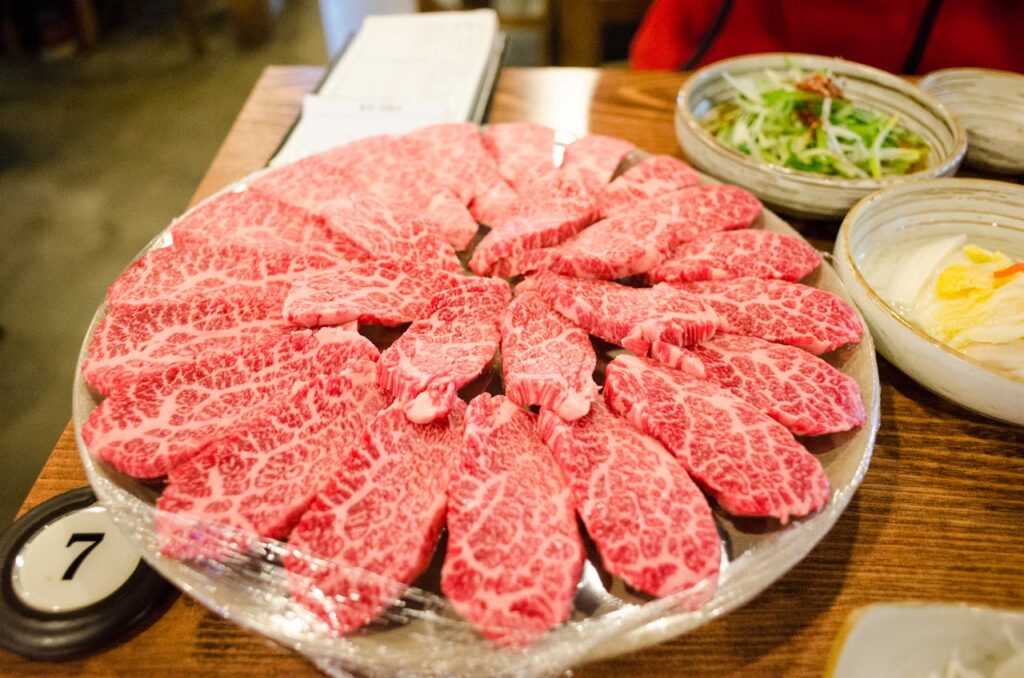
The first thing to clear up is the vocabulary. "Wagyu" literally means "Japanese cow," but in food terms it refers to a group of specific cattle breeds developed in Japan, not to one single elite steak. Japan officially recognizes four Wagyu breeds: Japanese Black, Japanese Brown, Japanese Polled, and Japanese Shorthorn. Of those, Japanese Black matters most in the premium market because it is the breed most associated with the intense marbling that people imagine when they hear the word Wagyu.
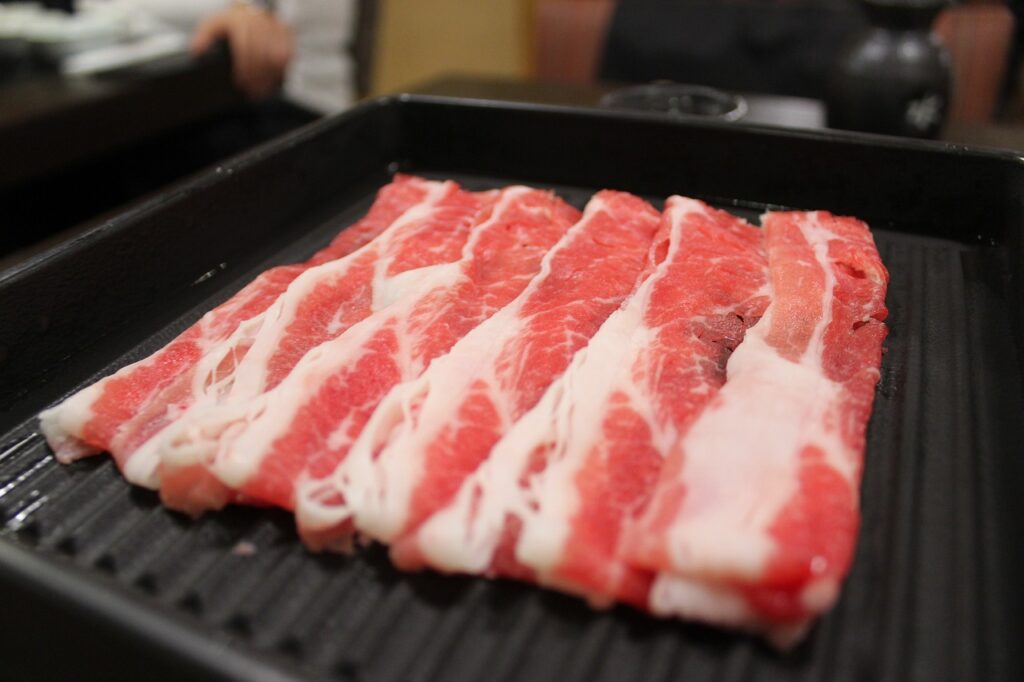
That marbling is the visual signature of Wagyu. Instead of fat sitting mainly on the outside of the steak, Wagyu develops intramuscular fat, meaning fine streaks of fat are threaded through the muscle itself. This matters because that fat melts at a relatively low temperature, which creates the soft, buttery texture and rich umami flavor that set high-end Japanese beef apart from standard supermarket steak. It is not simply "fattier" beef. It is beef with a very specific structure and mouthfeel.
Still, the term Wagyu is broader than many diners realize. A steak sold as Wagyu may be purebred Japanese Wagyu raised in Japan, or it may be an American or Australian animal with Wagyu genetics in its lineage. In the United States, for example, many Wagyu products come from crosses between Japanese Wagyu and Angus cattle. These can be excellent, often with more marbling than conventional American beef, but they are not the same thing as top-graded Japanese Wagyu.
That distinction is why the label alone tells only part of the story. "Wagyu" describes breed lineage or genetic background, but it does not guarantee a certain grade, country of origin, or eating experience. An A5 Japanese Wagyu striploin from Miyazaki is a very different product from a crossbred American Wagyu ribeye, even though both can legally be marketed with the Wagyu name. So before Kobe even enters the conversation, it is important to understand this basic rule: Wagyu is the umbrella category, and quality varies significantly inside that category.
Kobe Is a Specific Type of Wagyu With Strict Legal Requirements
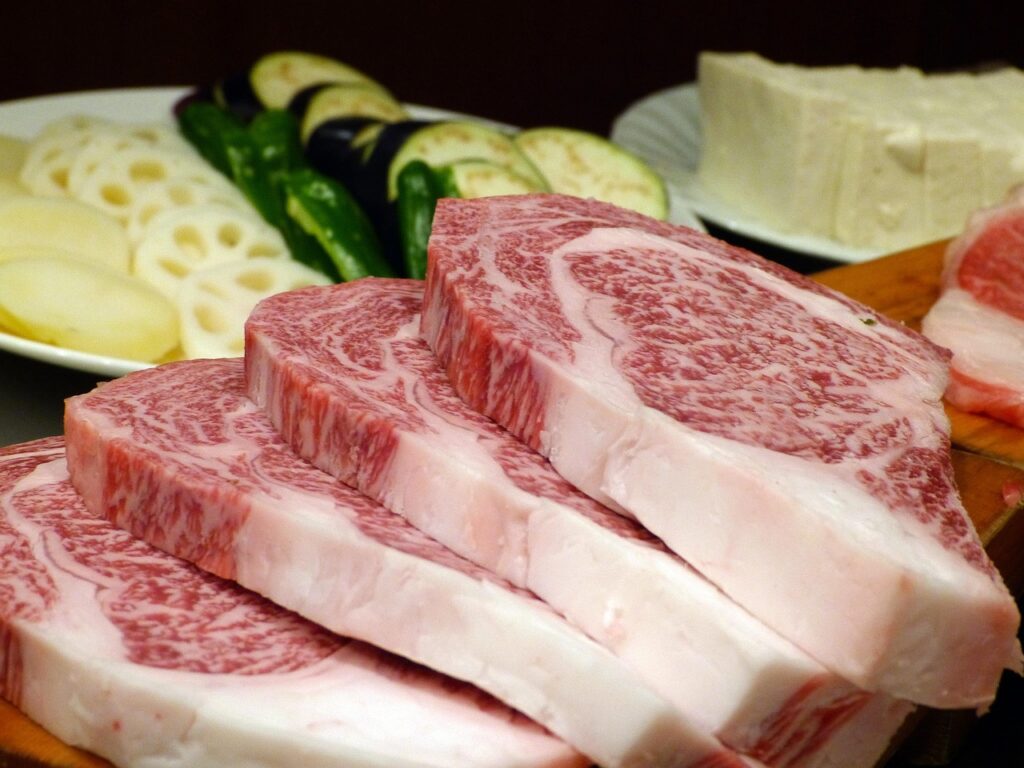
Kobe beef sits inside the Wagyu category, but it is far narrower and far more regulated. The simplest accurate statement is this: all Kobe beef is Wagyu, but not all Wagyu is Kobe. Kobe is not just a premium-sounding marketing term. It is a protected regional designation in Japan, and beef must meet a detailed set of conditions before it can legally carry the Kobe name.
To qualify as authentic Kobe, the cattle must come from Tajima-strain Japanese Black cattle, a carefully controlled bloodline within the Japanese Black breed. The animals must be born, raised, and processed in Hyogo Prefecture, the region whose capital city is Kobe. They must also meet strict standards for yield and quality under Japan's official beef grading system, including a minimum quality grade of A4 or A5. If any one of these elements is missing, the beef may still be superb Wagyu, but it cannot be sold as Kobe.
The regional rule is especially important because it works much like other protected food names around the world. Just as Champagne must come from the Champagne region of France, Kobe beef must come from Hyogo Prefecture. Even if Tajima cattle were raised elsewhere in Japan under excellent conditions, the product would not qualify. Geography is part of the legal identity, not an optional detail added for prestige.
Certification adds another layer of control. According to the standards used by the Kobe Beef Marketing & Distribution Promotion Association, authentic Kobe beef is traceable to the individual animal. Certified carcasses receive identifying numbers and official documentation, which helps protect both the reputation of the name and the buyer. This is one reason Kobe is so rare in export markets. Supply is limited not only by demand, but by the fact that the eligible pool of cattle is intentionally small and tightly managed from bloodline to final sale.
Grading, Marbling, and Texture Shape What You Taste
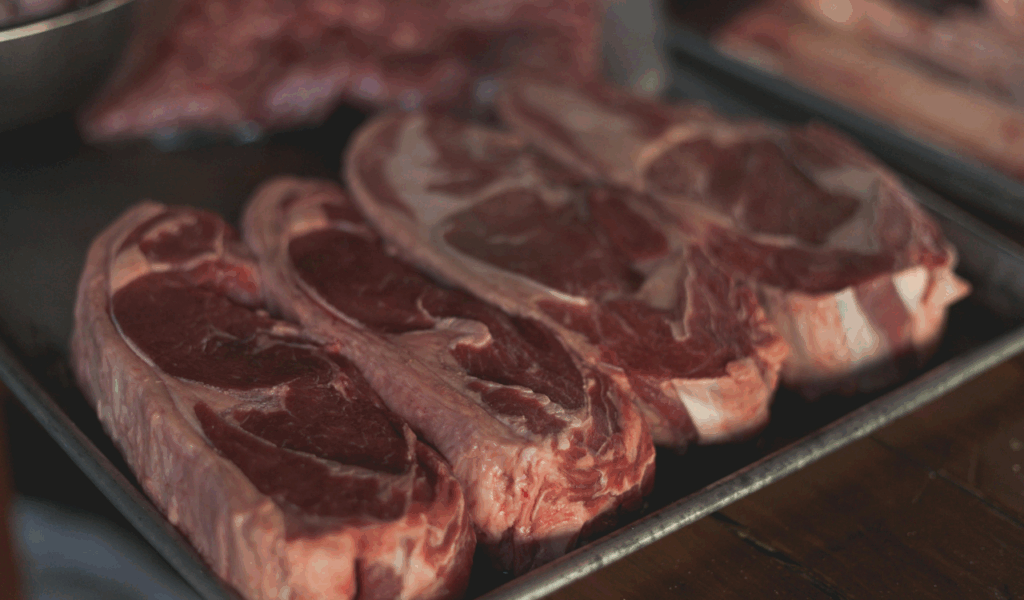
For most diners, the real question is not legal terminology but sensory difference. Why does one steak taste silkier, richer, or more luxurious than another? The answer starts with Japan's grading system, which is more detailed than many people expect. Beef is evaluated for both yield and quality. Yield is scored with a letter, A being the highest, while quality is scored from 1 to 5 based on marbling, color, texture, firmness, and fat quality. The highest overall grade is A5.
This matters because Wagyu can exist at multiple grades, not just the famous top tier. You can find A3, A4, and A5 Japanese Wagyu, and the eating experience changes meaningfully across those levels. A3 may still be richly marbled compared with ordinary beef, but it will usually feel less dense, less buttery, and less intense than A5. Kobe, by contrast, must reach A4 or A5, which means a baseline of high quality is built into the certification itself.
Marbling is where most people notice the difference immediately. High-grade Wagyu shows delicate, lace-like white fat evenly distributed through the red meat. In very highly marbled cuts, often associated with Beef Marbling Scores around 10-12, the steak looks almost webbed with creamy fat. When cooked properly, that fat begins to melt quickly, coating the palate with a texture that feels tender and almost velvety rather than chewy or heavy.
But here is the nuance many luxury menus skip. Kobe is famous for extraordinary marbling, yet it does not have exclusive rights to that level of quality. Top A5 Wagyu from regions such as Kagoshima or Miyazaki can rival Kobe in appearance and texture. In blind tastings, experienced diners sometimes find the differences subtle. Kobe's advantage is often not that it is uniquely marbled beyond all competition, but that its standards make that high-end experience more consistent and more tightly defined from one certified animal to the next.
Price, Scarcity, and Branding Explain the Gap on the Menu
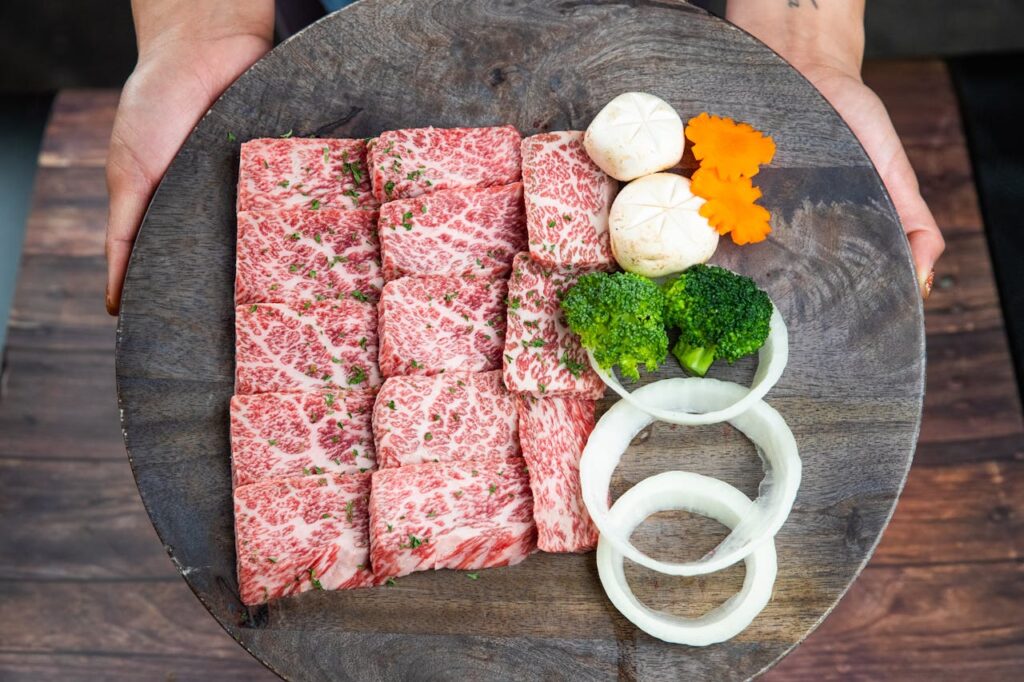
The price difference between Wagyu and Kobe can seem dramatic until you understand what is driving it. Wagyu already commands premium prices because slow growth, careful feeding, high marbling, and limited supply all raise production costs. Japanese A5 Wagyu is among the most expensive beef in the world even before the Kobe name enters the picture. Once the Kobe certification is added, the cost usually rises further because rarity and regulation both become part of the value.
Kobe production is limited by design. Only Tajima-strain cattle raised and processed in Hyogo Prefecture can qualify, and only those meeting the required grading and carcass standards receive certification. That sharply narrows supply. Basic economics takes over from there. When a product is globally famous, legally protected, and produced in small volumes, prices rise. The premium is not just about tenderness on the plate. It is also about scarcity, traceability, and the confidence that the product has passed a specific set of controls.
Brand recognition plays a major role too. Kobe is one of the few beef names that even casual diners recognize as a symbol of luxury. That recognition affects restaurant pricing because guests are not only buying flavor. They are buying the cachet of a name with strong cultural and culinary prestige. In the same way that certain wines or caviars command higher prices because of region and reputation, Kobe benefits from a brand identity built on strict standards and global fascination.
At the same time, price should not automatically be mistaken for a guaranteed superiority in every bite. A top-grade A5 Wagyu from another respected Japanese region can deliver a nearly identical sensory experience for some diners, and in some cases it may even suit a person's taste better. Kobe often costs more because it is rarer and more tightly certified, not because all non-Kobe Wagyu is clearly inferior. On a practical level, diners are often paying for a combination of eating quality, verified origin, and the prestige of a protected name.
How to Order Smartly and Know What You Are Really Getting
The smartest way to approach Wagyu and Kobe is to stop thinking of them as simple labels of "good" and "better." Instead, think in terms of category versus designation. Wagyu tells you about breed background. Kobe tells you that a very specific regional, genetic, and grading standard has been met. If a restaurant uses both names loosely, that is a sign to ask questions rather than assume the wording reflects authentic Japanese classification.
When you are reading a menu or buying beef, origin is the first clue. If the product is genuine Kobe, the seller should be able to identify Hyogo Prefecture as the source and provide traceable certification. If the item is described more generally as Japanese Wagyu, then region matters next. Beef from Miyazaki, Kagoshima, and other top Japanese producing areas can be extraordinary, especially at A5 grade. If the product is American Wagyu or Australian Wagyu, it may still be excellent, but it should be understood as a different style, often richer than conventional beef yet less intense than elite Japanese examples.
It also helps to remember that more marbling is not always better for every meal. Kobe and A5 Wagyu are deeply rich, so portions are often smaller than a typical steakhouse serving. Many chefs prefer to present them in thin slices or modest cuts because the flavor is concentrated and the fat is luxurious. Someone expecting a large, heavily seared American-style ribeye experience may be surprised by how little of true Japanese Wagyu it takes to feel satisfying.
In the end, what makes them different on your plate is a combination of genetics, geography, grading, and oversight. Wagyu is the broad family of Japanese cattle known for exceptional marbling. Kobe is one highly controlled expression of that family, sourced from Tajima-strain Japanese Black cattle in Hyogo and certified to strict standards. Once you know that, the menu stops being mysterious. You can judge the steak for what it really is, not just for the glamour of the name.