
Hot Pepper Vinegar, also called Southern pepper sauce, is a simple, tangy condiment made by steeping fresh hot peppers in warm vinegar. It adds a bright, spicy kick to greens, beans, cornbread, and any dish that needs a splash of heat. With just a few ingredients and almost no prep, it's an easy way to use fresh peppers and customize the flavor to your liking.
If you enjoy bold, pepper-forward flavors, you might also love these pickled habanero peppers for another spicy homemade staple.

Recipe Essentials
- 🔥 What it is: Southern-style pepper vinegar made by steeping hot peppers in warm vinegar.
- 🌟 Flavor: Bright, tangy, and customizable; from mild to fiery.
- 🍽️ Use it on: Greens, beans, fried cabbage, cornbread, tacos, burgers, coleslaw, potato salad, and more.
- ⏱️ Steep time: Let it sit at least 24 hours for the best flavor.
- 🏺 Storage: Pantry-safe with just peppers and vinegar; refrigerate if adding garlic, onion, sugar, or oil.
- ♻️ Bonus: Refill the jar with more vinegar as you use it.
Summarize and Save This Content On
It's perfect to serve with so many different recipes! I love splashing this vinegar-based hot pepper sauce over coleslaw, egg salad, greens, beans, or anything that needs a bright hit of heat. You can even use the pepper slices on chicken tacos, sandwiches, or burgers for an extra punch of flavor.
If you enjoy homemade condiments with a kick, try my avocado hot sauce or this bold and zesty jalapeño hot sauce next.
Jump to:
What Is Hot Pepper Vinegar?
Hot pepper vinegar (also called Southern pepper sauce or pepper vinegar) is a thin, tangy condiment made by steeping whole or sliced hot peppers in vinegar. Unlike thick blended hot sauce, this stays pourable-more like flavored vinegar-and it's traditionally splashed over collard greens, turnip greens, black-eyed peas, beans, homemade cornbread, and fried okra.
Unlike blended sauces or chunky salsas such as our homemade tomato salsa, hot pepper vinegar stays thin and pourable because the peppers are steeped whole rather than pureed.
Ingredients
All you need are three simple ingredients to make your own Southern hot pepper sauce.
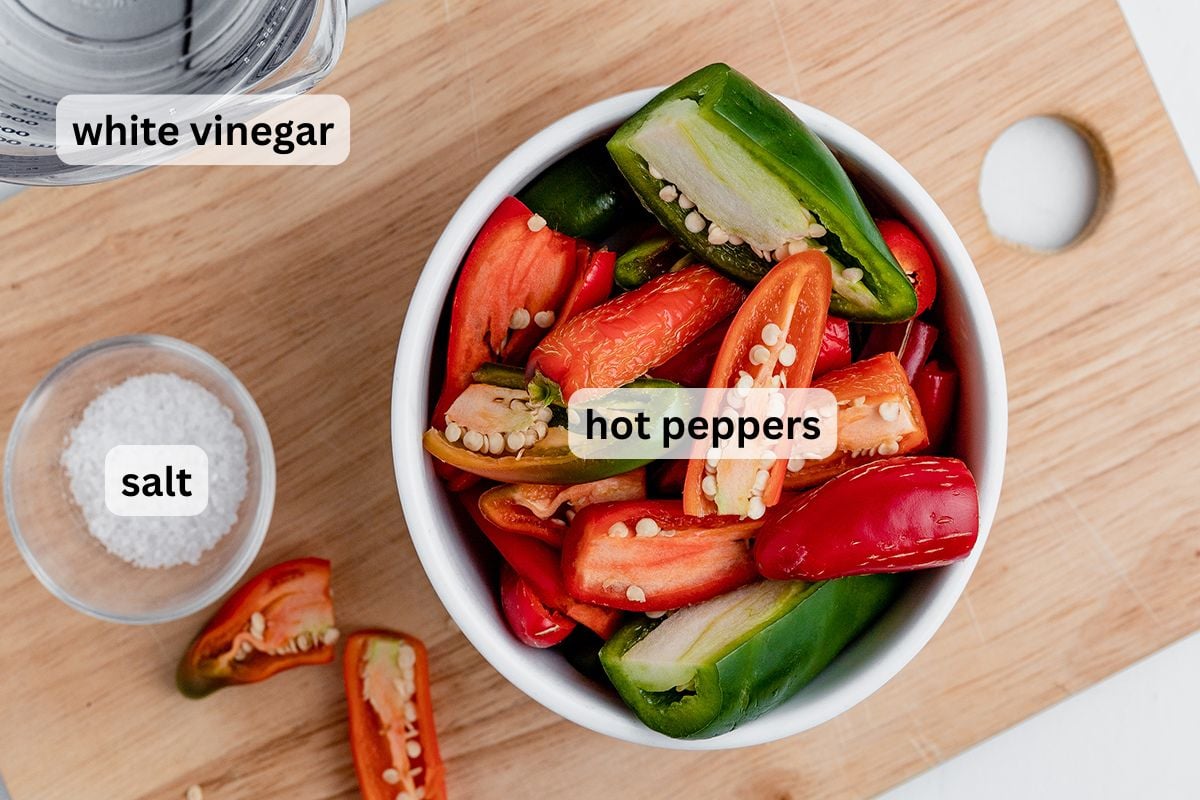
For traditional spicy pepper vinegar, plain distilled white vinegar is the top choice. It keeps the color bright and the flavor sharp and clean, like in our classic cucumbers and onions in vinegar. You can also substitute it with apple cider vinegar, which is slightly less acidic.
See the recipe card below for the exact quantities of each ingredient.
Optional Add-Ins for Extra Flavor
You can customize your spicy vinegar with simple add-ins that change the flavor, aroma, and overall heat level. Here are some popular options and what they bring to the mix:
- Garlic: Adds a rich, savory depth that rounds out the sharp vinegar bite. Smash it for a more intense garlic flavor, or mince it like in these spicy pickles.
- Onion: Infuses a gentle sweetness and extra aromatics as it steeps.
- Whole Peppercorns: Bring a warm, peppery complexity that complements the chilies.
- Sugar: Softens the acidity of the vinegar and enhances the natural flavor of the peppers.
- Olive Oil: Adds body and richness and can actually make the pepper sauce taste even hotter by helping the capsaicin bloom.
Best Peppers for Hot Pepper Vinegar
Choosing the right pepper is the key to getting the perfect flavor and heat in your homemade hot pepper vinegar. Whether you want something mild and tangy or fiery and intense, the peppers below will help you customize your batch exactly how you like it.
The heat level of each pepper is measured using the Scoville Scale, which ranks peppers by their capsaicin (heat) level. Lower Scoville Heat Units (SHU) mean a milder pepper, while higher SHU indicate a much hotter pepper - making it easy to pick the perfect pepper for your vinegar.
For classic Southern flavor, cayenne, Tabasco, and small hot red or green chilies are ideal. Jalapeños make a milder vinegar; habanero or Scotch bonnet make it fiery.
| Pepper | Heat (Scoville Units) | Flavor Notes | Ideal Use in Spicy Vinegar |
|---|---|---|---|
| Jalapeño | 2,500-8,000 SHU | Fresh, grassy | Great for mild, everyday pepper vinegar |
| Chipotle (Smoked Jalapeño) | 2,500-8,000 SHU | Smoky, warm | Adds smoky depth to the vinegar |
| Serrano | 5,000-25,000 SHU | Clean, sharp | Balanced medium heat and bright flavor |
| Cayenne | 30,000-50,000 SHU | Bright, punchy | Classic choice for Southern-style pepper vinegar |
| Tabasco | 30,000-50,000 SHU | Thin, sharp heat | Traditional flavor used in pepper sauce |
| Habanero | 100,000-350,000 SHU | Fruity, floral | Hot vinegar with bold, tropical notes |
| Scotch Bonnet | 100,000-400,000 SHU | Sweet, tropical | Caribbean-style pepper vinegar with heat + flavor |
| Ghost Pepper | 855,000-1,041,000 SHU | Fruity, smoky, slow-building heat | Extremely hot vinegar - use sparingly |
| Carolina Reaper | 1.5-2.2 million SHU | Intense, fiery | Extreme heat vinegar - tiny amounts only |
How to Make Hot Pepper Vinegar
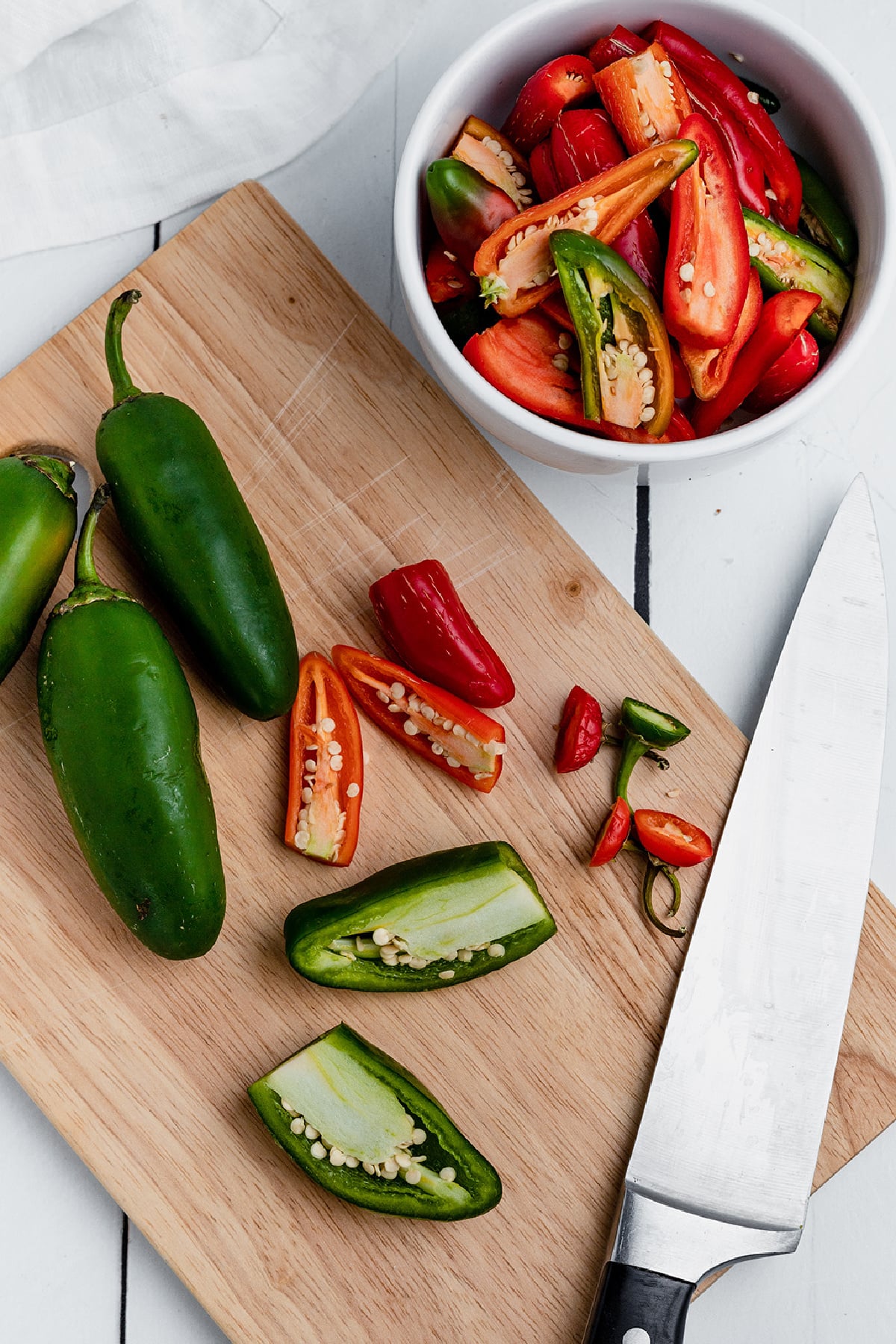
Step 1: Prep the peppers. You can slice the peppers, cut them in half, or simply slice the ends off. You want to keep the seeds and membrane as they are what add lots of heat and flavor.
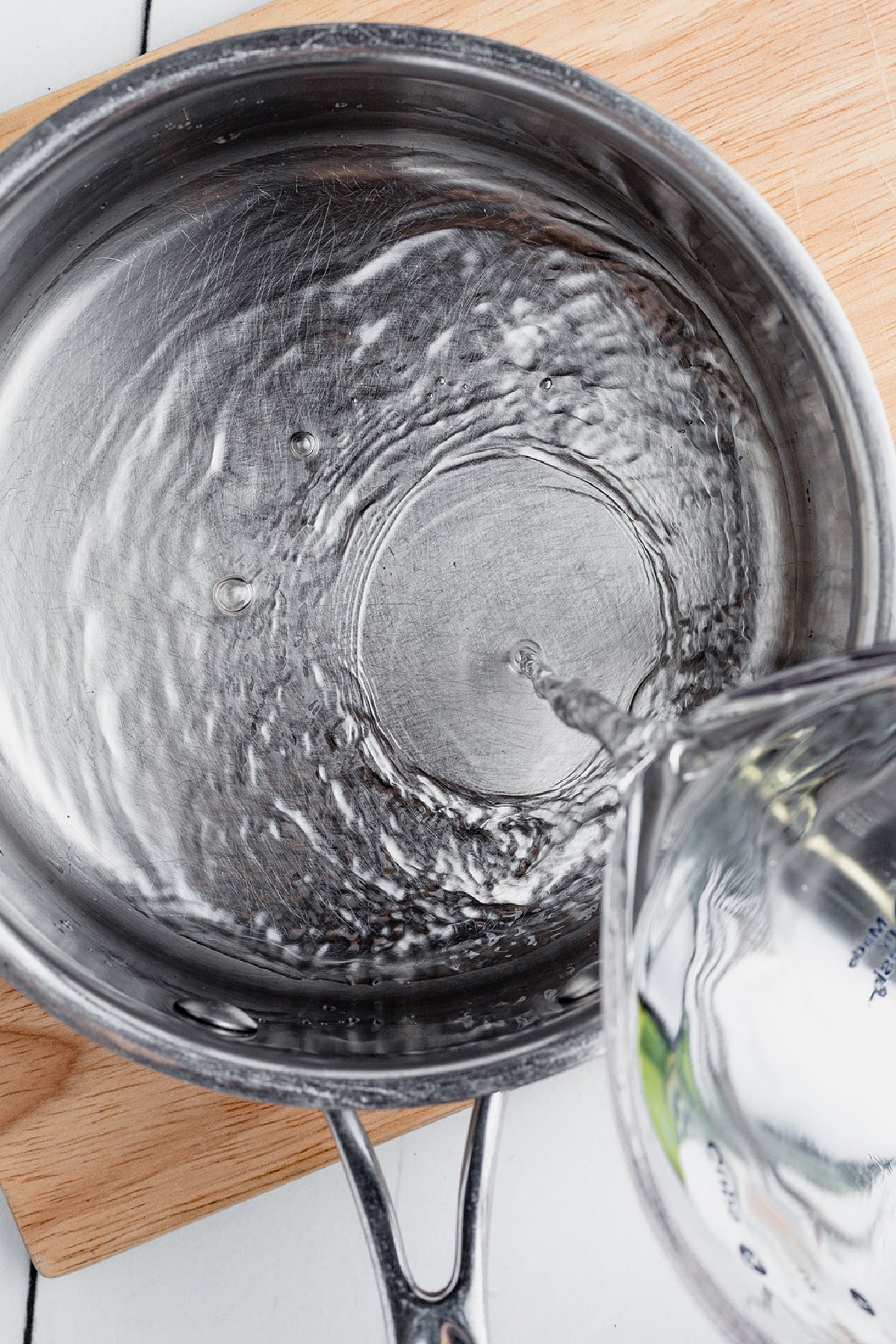
Step 2: Heat the vinegar. Add the vinegar and sugar to a saucepan and heat just until to starts to boil. Remove it from the heat.
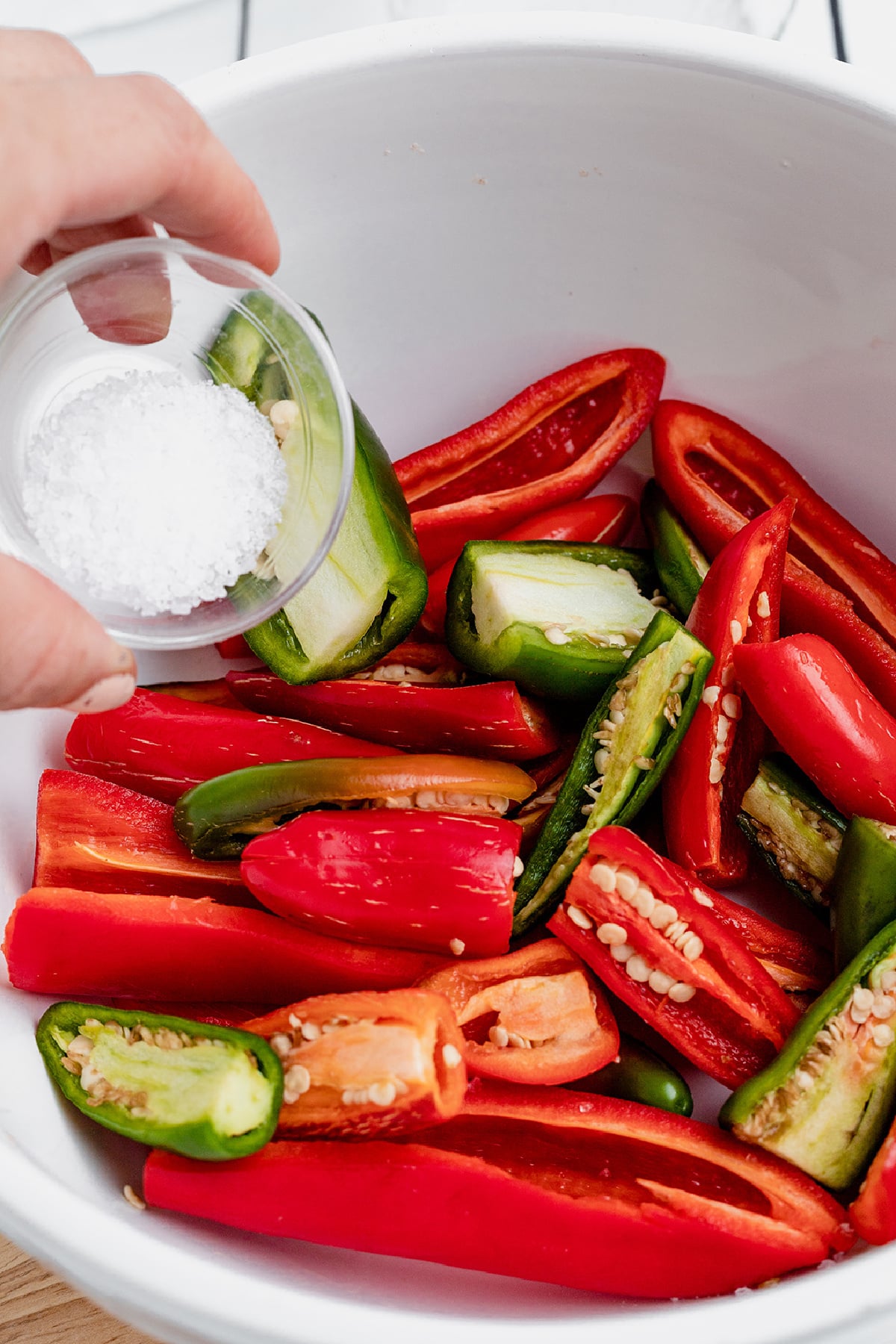
Step 3: Season. Toss the hot peppers in the salt to coat evenly,
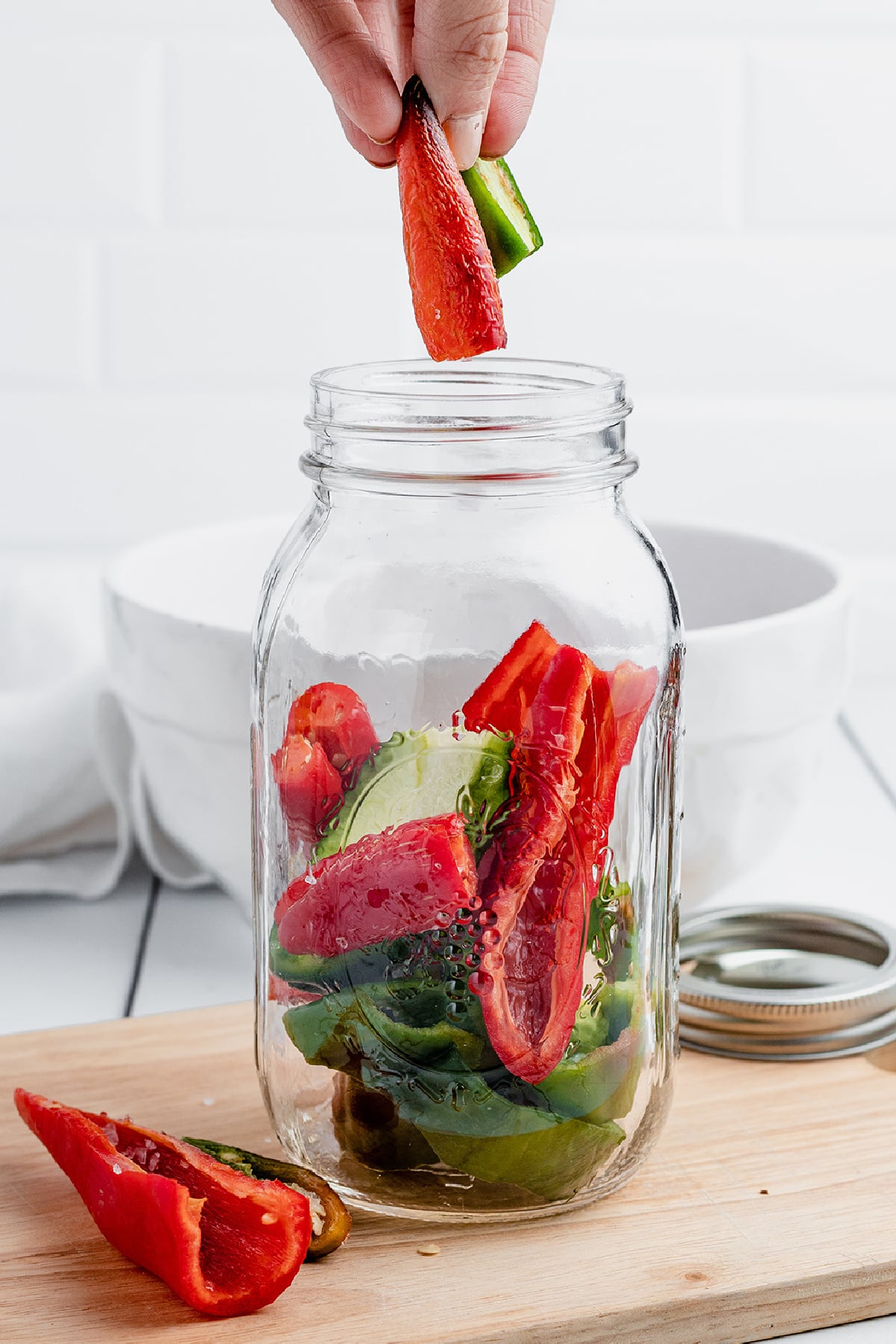
Step 4: Add to jar. Cram as many hot peppers as you can into your jar or bottle. If adding any additional flavor ingredients, add them now.
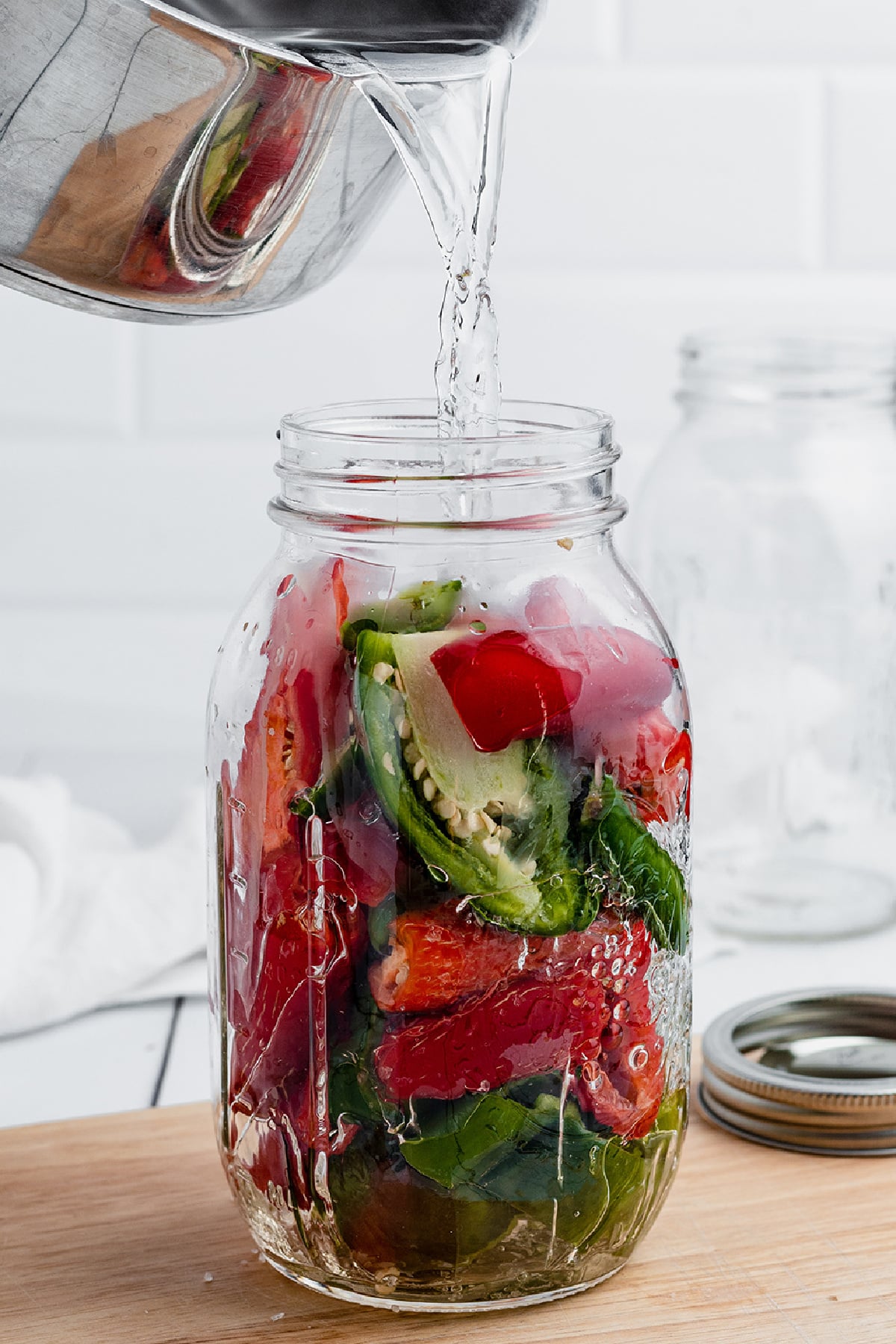
Step 5: Add the vinegar. Slowly and carefully pour your hot vinegar into your container until the peppers are covered. Cover the jar with a lid and let the peppers sit for at least 24 hours before using it to add flavor to dishes like these Southern collard greens.
Recipe Tips
- Let it steep: Allow the jar to sit at least 24 hours before using-longer steeping means deeper, stronger flavor.
- Handle with care: Wear gloves or wash hands well after cutting peppers to avoid burning your skin or eyes.
- Clean up thoroughly: Wash knives, cutting boards, and surfaces well to remove lingering chili oils.
- Leave headspace: Use a jar large enough to leave about ¼ of the top empty, which helps with circulation and easy shaking.
- Top it off: When the vinegar gets low, simply refill the jar with more vinegar-no need to heat it.
- Expect mellowing: The peppers slowly lose heat over time, so the flavor becomes milder the longer it sits.
- Store properly: If your recipe uses just peppers and vinegar, it can be stored in a cool, dark pantry. If you add low-acid ingredients (garlic, onion, sugar, or oil), refrigerate and use within a few months.
- Shake before using: Give the jar a quick shake before drizzling to redistribute the flavor.

Serving Suggestions
Hot pepper spicy vinegar adds a bright, spicy kick to almost anything. Here are the best ways to use it:
- Splash over slow cooker collard greens, turnip greens, mustard greens, or kale.
- Drizzle onto black-eyed peas, field peas, crockpot pinto beans, or hoppin' john. It's also great to add zing to fried cabbage, cornbread, or fried okra.
- Stir a teaspoon or two into coleslaw, potato salad, egg salad, or dressings.
- Serve it up on the table with your favorite homemade soup recipes, stews, beans, and sautéed veggies for extra tang.
- Top sandwiches, burgers, hot dogs, or chicken tacos with the peppers themselves.
Hot Vinegar Recipe FAQs
It keeps well for several months, and often up to a year, when stored in a clean, airtight jar in a cool, dark place. The flavor actually improves as it sits and the peppers continue to infuse the vinegar. If you add ingredients like garlic or onion, it's best to store it in the refrigerator and use within a few months.
There's no strict rule - it depends on how much heat and tang you like. A good starting point is 1 to 2 tablespoons, then adjust to taste. Splash on a little at a time until your dish has the kick you want.
Distilled white vinegar is the classic and best choice for hot peppers and vinegar. It's sharp, clean, and strong in acidity, which helps extract the pepper flavor and keeps the vinegar shelf-stable. Because it's inexpensive and neutral in taste, it lets the heat and flavor of the peppers shine.
Apple cider vinegar also works well and adds a mild, slightly sweet tang with a fruity finish. It gives the pepper vinegar a softer, more rounded flavor, especially if you prefer something less sharp than white vinegar.
Not always. If you're making the classic version-just peppers and vinegar-it can be stored at room temperature in a pantry or cupboard. If you mix in lower-acid add-ins like garlic, onion, or sugar, it's safest to refrigerate the jar to maintain freshness and quality.
Yes-this is a common tradition!
You can top off the vinegar as you use it, and the peppers will continue to flavor the new vinegar. Just know the heat and flavor will gradually weaken over time. When the peppers start to look dull or soft, it's best to replace them with a fresh batch.
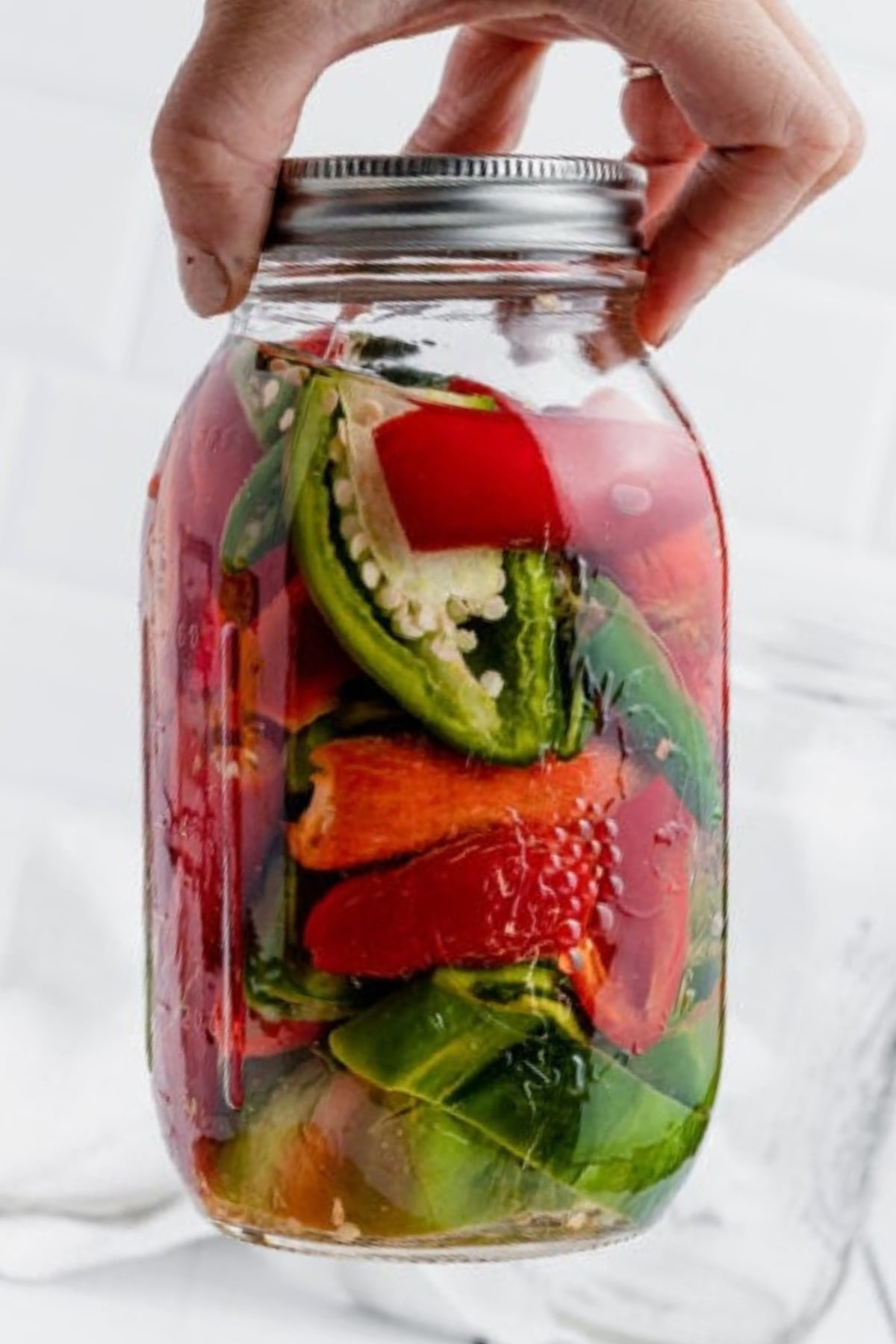
Homemade Pepper Sauce Video


Spicy Pepper Vinegar
Ingredients
- 3 cups distilled white vinegar
- 7-8 hot peppers sliced or diced, not seeded
- ¾ teaspoon salt
Instructions
- Clean jar, lid, and band with hot water. Rinse thoroughly.
- Grab 7-8 hot peppers slice them up. Pick your favorite variety or use a mixture. You can also just slice them in half or slice the ends off. No need to seed the peppers or remove the membrane. They will add lots of heat and flavor if that is what you are looking for!.
- Heat your vinegar and sugar up until just starting to boil. Remove from heat.
- Toss hot peppers in salt until blended.
- Cram as many hot peppers as you can into your jar or bottle. If adding any additional flavor ingredients, add them now.
- Using a funnel if necessary, slowly and carefully pour your hot vinegar into your container until the peppers are covered.
- Cover with lid and let sit at least 24 hours before using.
Video
Notes
- Let it steep: Give the peppers at least 24 hours to infuse the vinegar for the best flavor.
- Handle carefully: Wear gloves or wash hands well after cutting hot peppers.
- Keep it clean: Wash your knife and cutting board thoroughly to remove chili oils.
- Leave headspace: Use a jar with about ¼ of the top empty to help the peppers infuse evenly.
- Top it off: Refill the vinegar as you use it-no need to heat it first.
- Store smart: Pepper-only vinegar can be kept in the pantry; refrigerate if you've added garlic, onion, sugar, or oil.


Leave a Reply