
The dining room may feel lively and effortless on a packed Saturday night, but behind the swinging doors, the kitchen is running on precision, stamina, and constant adjustment. What most guests never see is that the biggest challenges are not always the flames or the shouting. They are the invisible rhythms, quick fixes, and hard choices that keep service moving when every ticket seems to hit at once.
The ticket machine becomes the real soundtrack
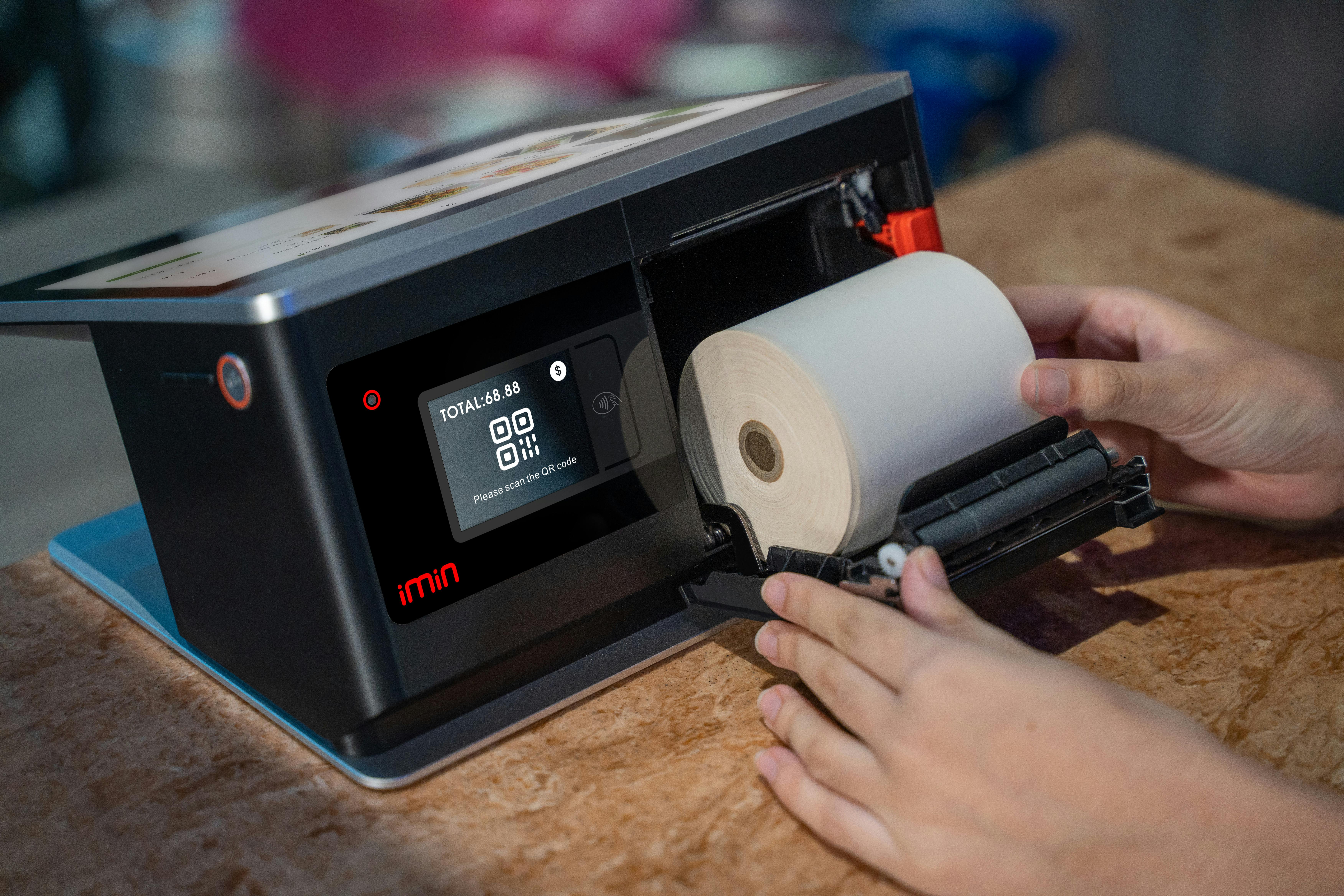
The first thing that changes on a packed Saturday night is the sound. In many kitchens, the printer starts spitting out tickets so fast that it becomes a kind of metronome for the whole room. Every new slip of paper means another table waiting, another timing puzzle, and another chance for the line to either stay smooth or fall behind.
What diners rarely notice is that tickets are not just orders. They are instructions that affect every station at once. A single table might involve grill, sauté, salad, fry, dessert, and the expeditor, all moving in sync. When too many large parties hit together, cooks have to read ahead, group similar dishes, and pace the firing so the window does not get flooded all at once.
Timing matters more than cooking

A busy service is not won by making one great dish. It is won by getting twelve different dishes ready at the same moment, at the right temperature, for the right table. That is why experienced cooks talk constantly about fire times, pickups, hold times, and plate readiness. The food has to arrive together, even when each item cooks at a different speed.
This is where kitchen skill becomes less about recipes and more about control. A steak may need resting time, fries have a short crisp window, fish can dry out in minutes, and pasta cannot sit long without losing texture. On a Saturday night, cooks are quietly calculating all of this in real time while more tickets continue to arrive.
The prep list starts breaking down

By the height of service, even a well-prepared kitchen begins to feel the limits of its prep. Sauces run low faster than expected. Garnishes vanish. Containers that looked full at 5 p.m. suddenly reveal only a few portions left. Saturday nights are where prep forecasts are tested, and where small miscalculations turn into major stress.
The response is usually quick and practical, not dramatic. Someone starts an emergency batch of vinaigrette. A cook switches to a backup pan of mashed potatoes. Another trims herbs on the fly between tickets. Good kitchens build cushions into prep for this reason, but demand is never perfectly predictable. The public sees plated food. The staff sees a constant battle to keep ingredients from hitting zero mid-rush.
Communication gets shorter and sharper
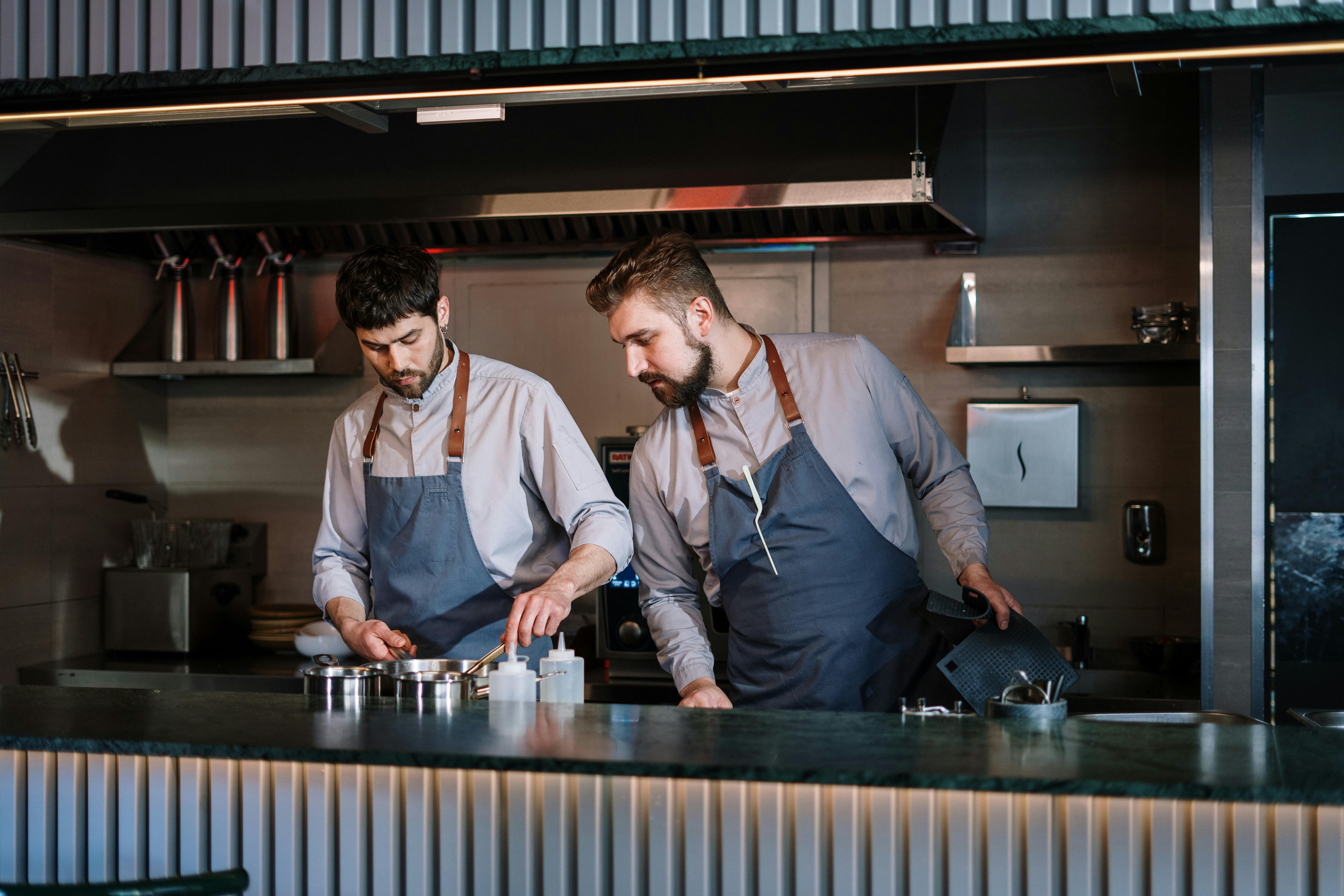
In a packed kitchen, nobody has time for long explanations. Communication becomes clipped, direct, and highly specific. You hear phrases like behind, corner, all day, heard, and walking in because they carry immediate meaning and help prevent mistakes. It is not rude. It is a survival system built for speed, safety, and clarity.
What people often miss is how much discipline this takes. When the room is loud and everyone is under pressure, vague language causes delays and accidents. A cook carrying a hot pan needs a clear path. An expeditor needs a clear answer about how long on two salmon. Short calls keep bodies moving and orders aligned. The calmer kitchens are often the ones that sound the most precise.
Mistakes are fixed on the fly
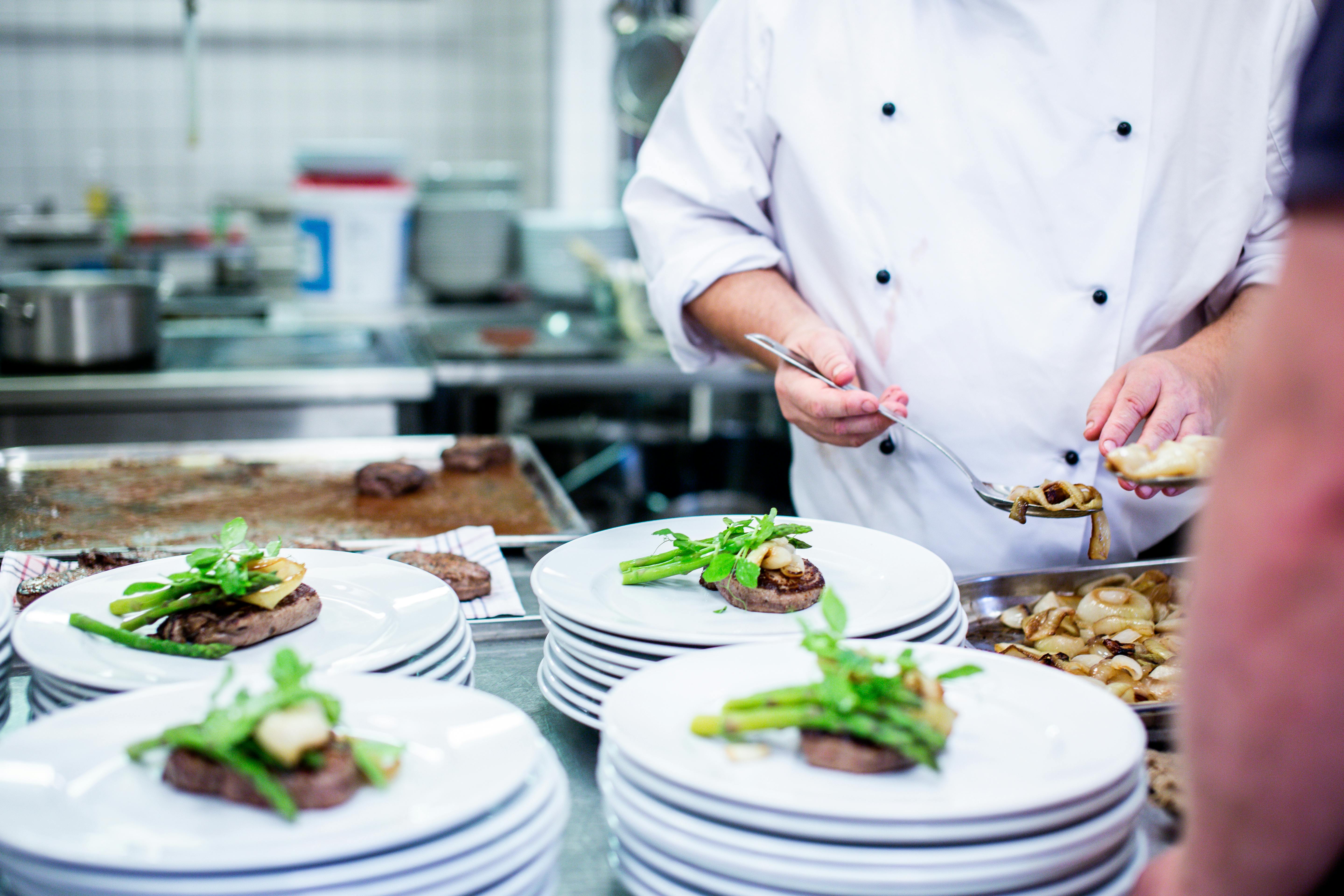
No matter how strong the team is, mistakes happen during a heavy rush. A steak goes past medium rare. A server rings in the wrong side. A plate sits too long in the window. A guest allergy note gets noticed at the last second and the dish has to be rebuilt. The hidden story is not that kitchens make errors. It is how fast they recover from them.
The best crews treat recovery as part of service, not as a rare exception. They keep backup proteins, extra mise en place, and station awareness specifically to limit the damage. One cook may refire an item while another keeps the rest of the table warm. If guests never realize a problem occurred, that usually means the kitchen solved it before it reached the dining room.
Heat and fatigue start shaping every decision
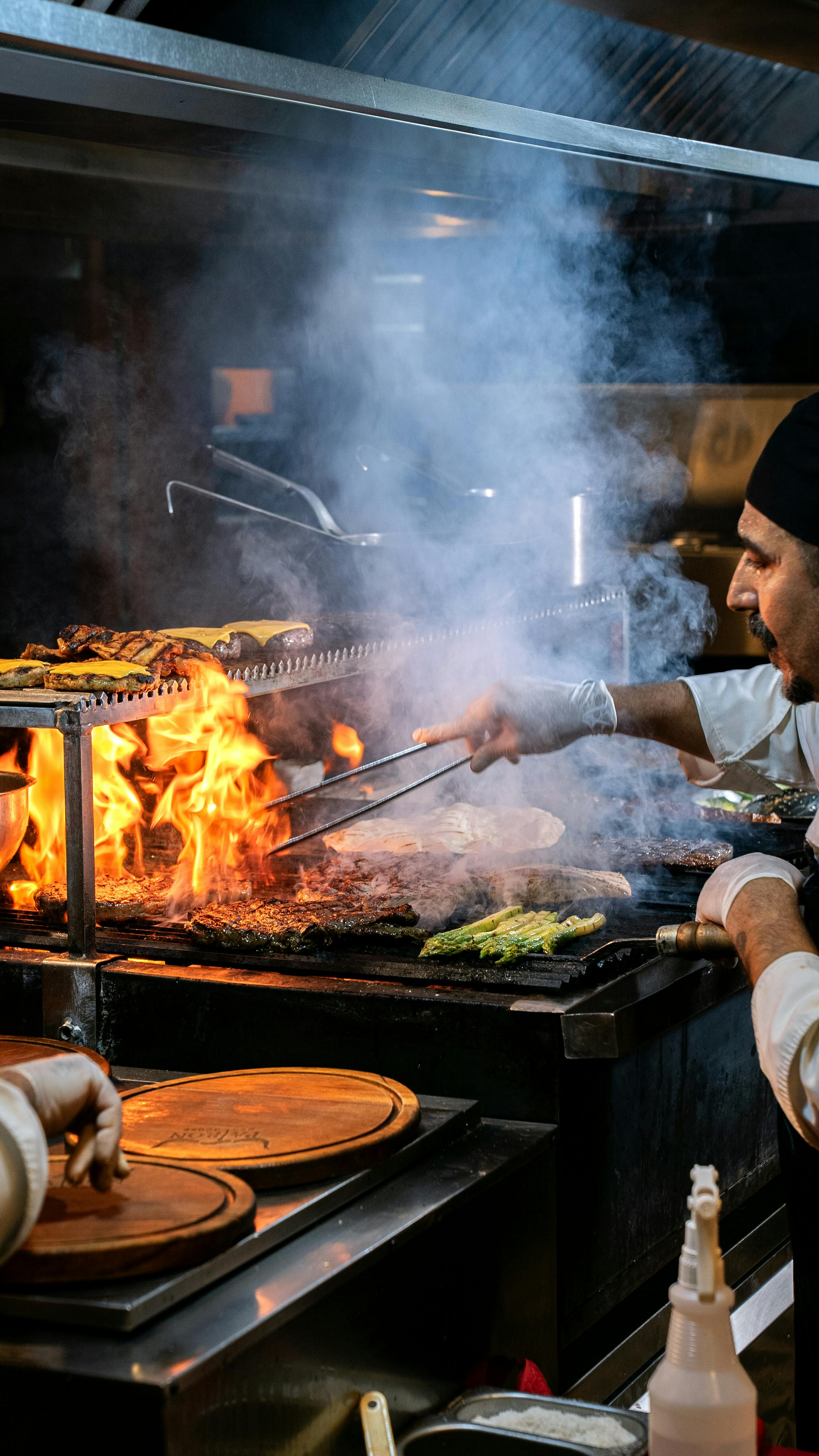
By late evening, the kitchen is not just busy. It is physically draining. Commercial kitchens run hot, and the combination of burners, ovens, fryers, steam, sharp tools, and nonstop movement wears people down fast. Add dehydration, aching feet, and the pressure of staying exact while moving quickly, and fatigue becomes part of the work environment.
That matters because tired people have to work even harder to stay sharp. Experienced chefs build routines around this reality. They wipe stations, reset tools, drink water when they can, and repeat movements in the same order to avoid lapses. Saturday night service is as much an endurance test as a cooking test, and a lot of professionalism is simply managing your body under strain.
The dish pit becomes a pressure point
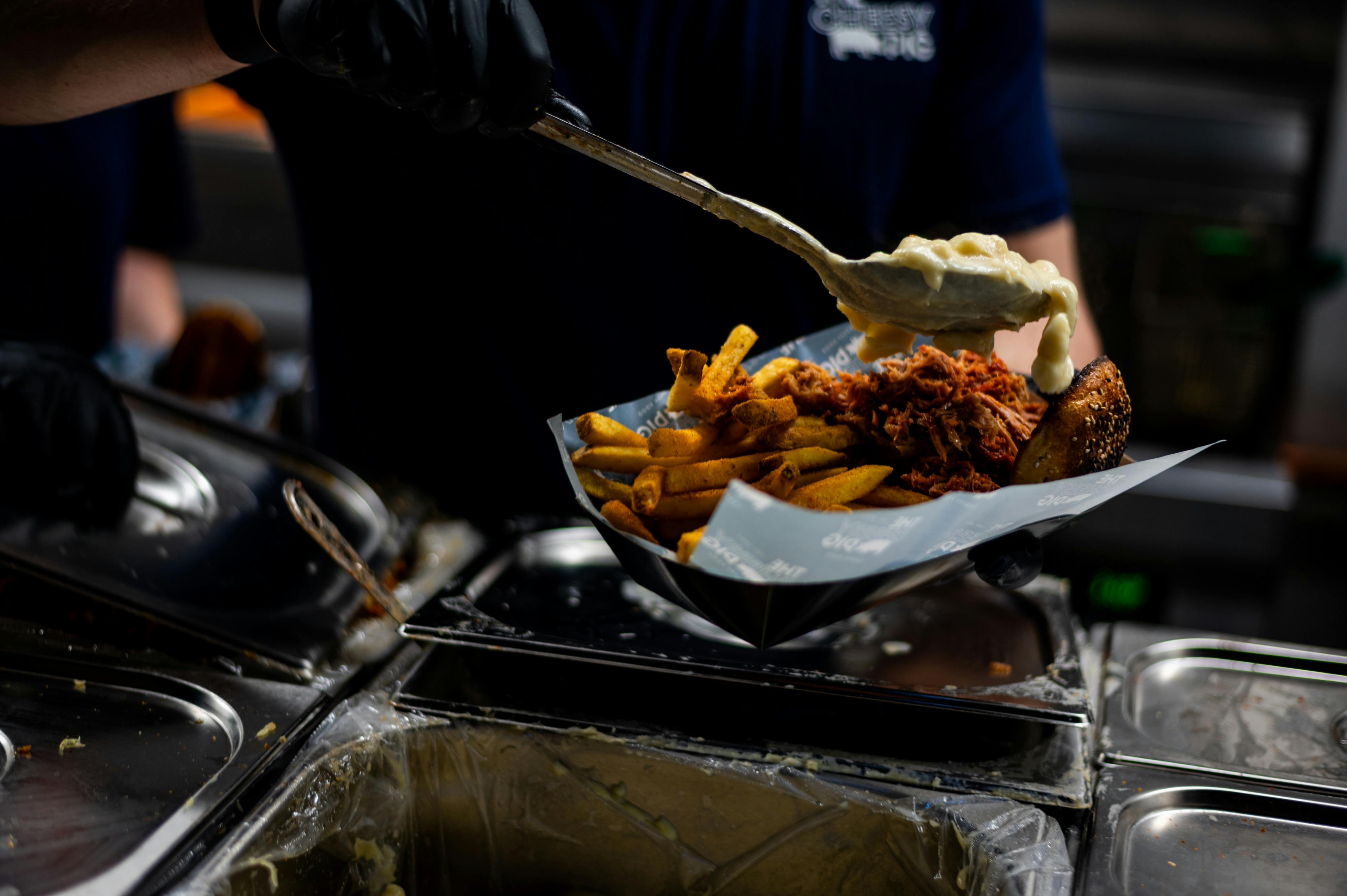
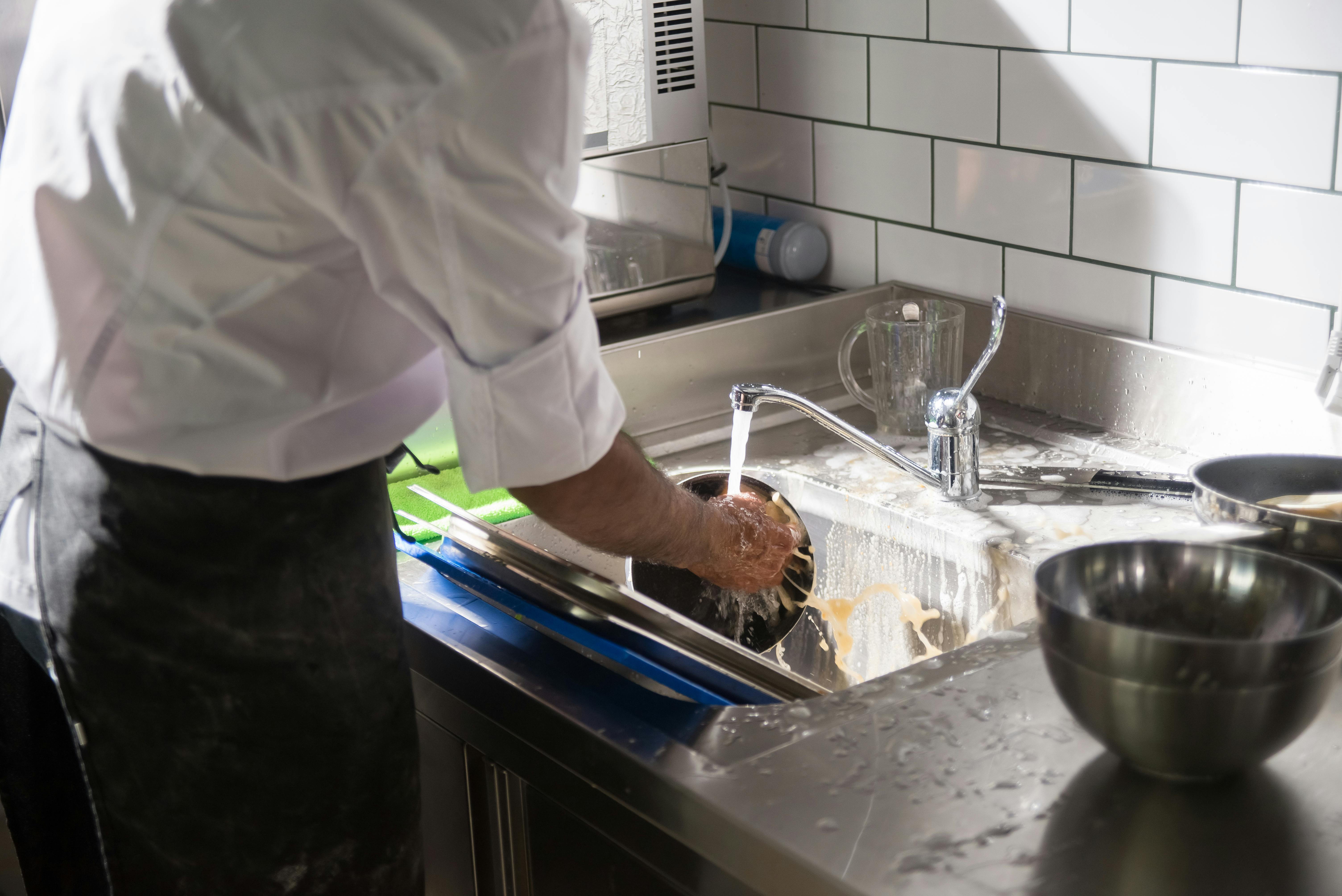
One of the least glamorous but most important areas on a busy night is the dish station. If plates, pans, tongs, hotel pans, and mixing bowls stop circulating, the whole kitchen starts to choke. Cooks may have food ready, but without clean tools and dishes, service slows in ways guests never connect to the back of house.
This is why strong restaurants treat dish staff as essential to the line, not separate from it. During peak rush, dish volume surges from every direction at once. Large sauté pans, sheet trays, ramekins, and serving ware all come back dirty and needed again immediately. A backed-up dish pit can trigger shortages across stations, making one hidden bottleneck affect the entire service flow.
Cleanup starts before service is over
The popular image is that cleanup begins after the last plate leaves the pass. In reality, smart kitchens start closing while they are still serving. As soon as certain prep bins are empty or equipment is no longer needed, staff begin wiping, consolidating, labeling, wrapping, and reorganizing. It is the only way to avoid facing a disaster after a long night.
This quiet reset also helps the final stretch of service run better. A cleaner station reduces confusion, frees up space, and lowers the risk of cross-contamination. It gives cooks a little more control at the exact moment energy is dropping. By the time the last ticket comes in, many kitchens are already halfway into breakdown mode, just trying to end the night in one piece.




Leave a Reply