
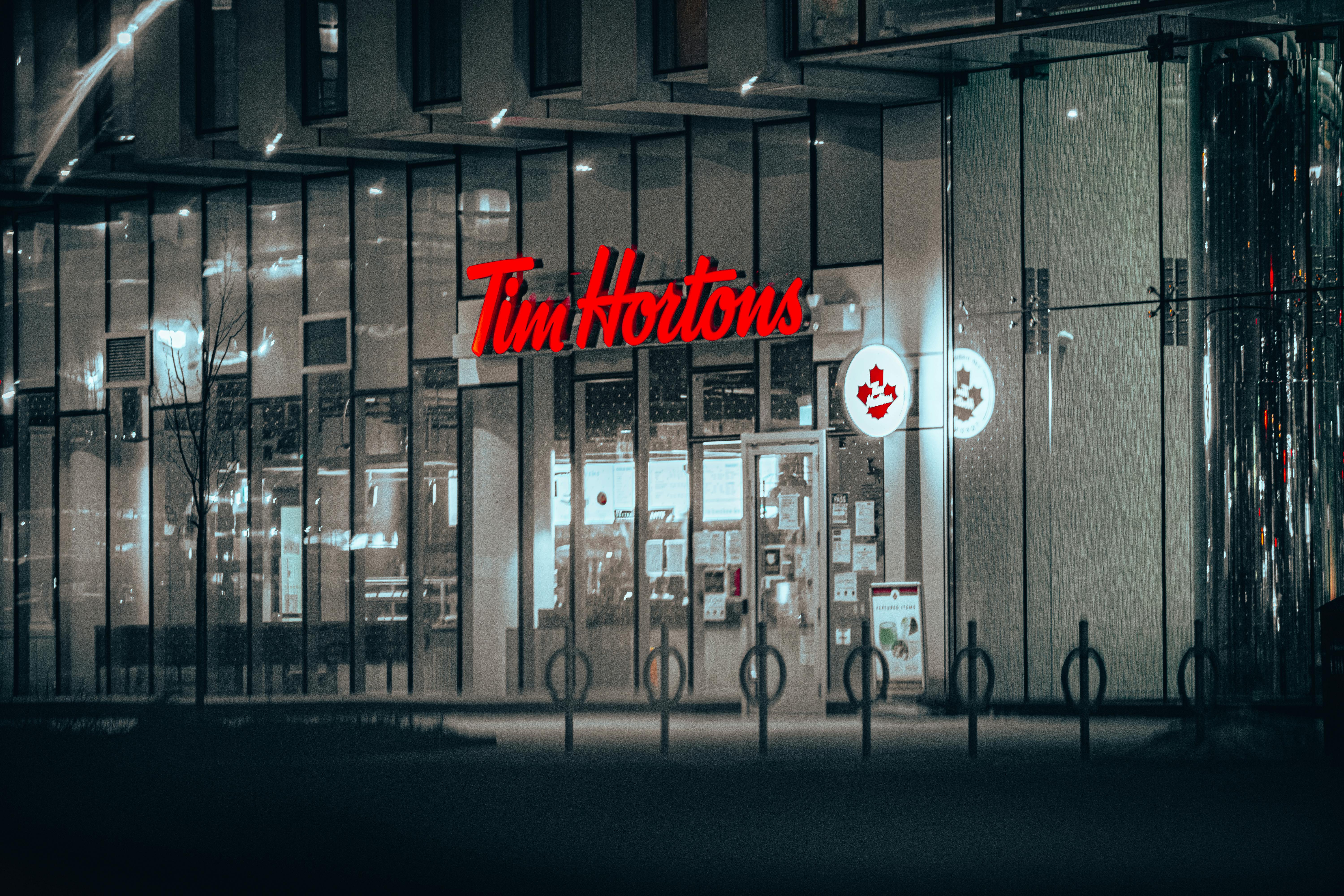
Tim Hortons is still everywhere in Canada. That is exactly why growth has become so hard to find.
Canada is already close to fully built out

The first reality is simple: Tim Hortons has very little white space left in its home market. In many Canadian cities and suburbs, the chain already has multiple locations within a short drive, and in dense urban areas it can feel as if there is a store on every major corner. When a brand reaches that level of scale, adding more units no longer creates the same lift it once did.
This is a classic maturity problem, not necessarily a collapse. Restaurant Brands International, Tim Hortons' parent company, has continued to describe Canada as a highly developed market, which means future growth depends less on opening stores and more on getting existing customers to visit more often. That is far harder when a brand is already woven into daily routines.
There is also the issue of cannibalization. New locations can pull traffic from older ones rather than bring in truly new demand. In practical terms, one Tim Hortons may simply be taking breakfast and coffee sales from another Tim Hortons down the road.
Consumers are spending more carefully than they did before

The second force is the broader Canadian consumer slowdown. High interest rates, expensive housing, and persistent grocery inflation have left many households watching small everyday purchases more closely. Coffee and breakfast are still habitual buys, but even habitual spending becomes more selective when budgets tighten.
That matters because Tim Hortons has long depended on frequency. A customer who used to stop in five times a week may now go three times, brew coffee at home more often, or skip food add-ons like breakfast sandwiches and baked goods. Small changes in routine can have an outsized effect when multiplied across millions of transactions.
Value perception has become critical. If customers feel menu prices are rising faster than quality or portion sizes justify, traffic can soften even if average sales per order look stable. In that environment, flat or barely positive same-store sales can mask pressure underneath.
Competition is stronger and more focused than it used to be
Another major reason is that Tim Hortons no longer has the field to itself in coffee and breakfast. McDonald's has spent years improving its McCafé positioning in Canada, while Starbucks remains strong in premium coffee. At the same time, convenience stores, gas stations, and fast-growing local cafés have become more credible alternatives.
This competition is not only about coffee quality. It is about speed, digital convenience, loyalty rewards, menu innovation, and store experience. Chains that make ordering easier or create a stronger sense of consistency can chip away at even the most entrenched incumbent.
Younger consumers are especially important here. Many of them are less loyal to legacy brands and more willing to rotate between chains based on promotions, app offers, taste preferences, or convenience on a given day. That weakens the automatic advantage Tim Hortons once enjoyed.
The menu is bigger, but that does not guarantee stronger demand

Growth can also stall when a chain adds complexity without creating clear excitement. Tim Hortons has expanded beyond coffee and doughnuts into loaded breakfast items, lunch offerings, specialty drinks, and limited-time products. The strategy aims to raise average ticket and capture more occasions, but not every new item becomes a repeat-purchase winner.
In fast service restaurants, menu sprawl can create operational strain. More ingredients, more preparation steps, and more promotional rotations can slow service or make execution less consistent. For a brand built on convenience, that is a meaningful risk.
Customers tend to forgive a simple menu if core products are dependable. They are less forgiving when a broad menu still delivers an uneven experience. If coffee quality, food temperature, freshness, or order accuracy vary too much, menu expansion becomes less of a growth engine and more of a distraction.
Price increases have helped sales, but not always traffic

A key point often missed in headline growth numbers is the difference between higher sales and more customer visits. Many restaurant chains have posted acceptable revenue gains in recent years partly because they raised prices. But if those gains come while guest counts are flat or down, the business may be losing momentum beneath the surface.
Tim Hortons has faced that same balancing act. Passing through higher labor, ingredient, and supply costs may protect margins, but there is a limit to how much pricing a value-oriented brand can take before customers push back. Once that threshold is reached, frequency usually suffers first.
This is why near-zero growth can be more revealing than it looks. It suggests the easy levers have already been pulled. There may be little room left to rely on pricing alone to keep the Canadian business moving.
What happens next will depend on trust, speed, and value

The path forward is less about dramatic reinvention and more about disciplined execution. Tim Hortons still has enormous brand recognition, a deep store network, and an emotional place in Canadian culture. Those are real advantages, but in a mature market they only matter if the everyday experience stays reliable.
That means sharper focus on core coffee quality, faster drive-thru performance, stronger digital loyalty offers, and a menu that feels valuable without becoming cluttered. According to industry analysts, mature quick-service chains usually return to steadier growth when they simplify operations and improve consistency rather than chase endless novelty.
In other words, Tim Hortons' slowdown is not a mystery. It is the predictable result of a giant brand hitting the limits of saturation while consumers grow pickier and competitors grow stronger. The next chapter will be decided one cup, one breakfast run, and one customer experience at a time.




Leave a Reply