
The sticker shock is real. A pork roast priced at $5 in the US and $13 in Canada is not a simple case of one store being greedy.
The price tag starts with currency, but it does not end there

At first glance, exchange rates seem like the obvious answer. If the Canadian dollar is weaker than the US dollar, imported inputs and benchmark commodity prices become more expensive in Canada. That matters because livestock feed, farm equipment, fuel, and many packaging materials are all influenced by North American and global markets.
But currency alone cannot explain a gap this wide. Even after converting currencies, Canadian shoppers often pay more for meat. Economists point out that retail food prices are shaped by the full path from farm to shelf, and every step in that chain can add costs differently in each country.
There is also a psychological factor in pricing. Canadian retailers set prices for Canadian wages, rents, and transport realities, not simply by mirroring a US shelf label. So while exchange rates matter, they are only the opening chapter.
Canada's smaller market changes the economics of meat

A smaller population means fewer buyers spread over a very large geography. The United States has a much bigger consumer base, more grocery competition in many regions, and greater scale in meat processing. That scale can lower per-unit costs in slaughtering, packing, distribution, and promotions.
Canada, by contrast, has fewer major population clusters and a more concentrated grocery sector. When fewer chains dominate food retailing, price competition can look different. Stores still compete, but they may have less room to spread fixed costs over enormous sales volumes the way US chains often can.
This difference shows up in meat especially clearly. Pork is perishable, cold-chain dependent, and expensive to move. In a smaller market, processors and retailers often face higher per-package costs, even before the product reaches the refrigerated case.
Distance, fuel, and refrigeration push Canadian costs higher
Geography is one of the least glamorous but most powerful reasons food prices diverge. Canada's population is concentrated in a narrow band, but supply routes still cover long distances between farms, processors, warehouses, and stores. Keeping pork cold and safe through that journey requires trucks, energy, labor, and time.
Transportation costs have a bigger effect on low-priced goods. If a roast is being sold as a bargain item, even a modest increase in freight or refrigeration can sharply change the final shelf price. Fuel price swings and trucking labor shortages can therefore hit meat prices fast.
Weather can also raise costs indirectly. Winter logistics, road conditions, and heating needs for facilities add another layer. These are not always visible to shoppers, but they are built into the number printed on the package.
Farming and processing costs are not identical on either side

It is easy to assume pork comes from the same North American system, but production costs vary meaningfully. Feed is the biggest expense in raising hogs, and feed prices can differ by region depending on grain supply, weather, transport access, and local competition. Labor and energy costs also vary across provinces and states.
Processing is another major factor. Large US meat plants often benefit from scale efficiencies that are hard to match. If a processor can handle more animals at lower average cost, retailers downstream may secure lower wholesale prices, especially during promotional cycles.
Regulatory compliance also shapes costs. Food safety rules exist in both countries, but plant structures, inspection systems, and industry concentration can influence how expensive compliance is on a per-unit basis. Those costs eventually reach the checkout lane.
Promotions can make the US price look unusually cheap
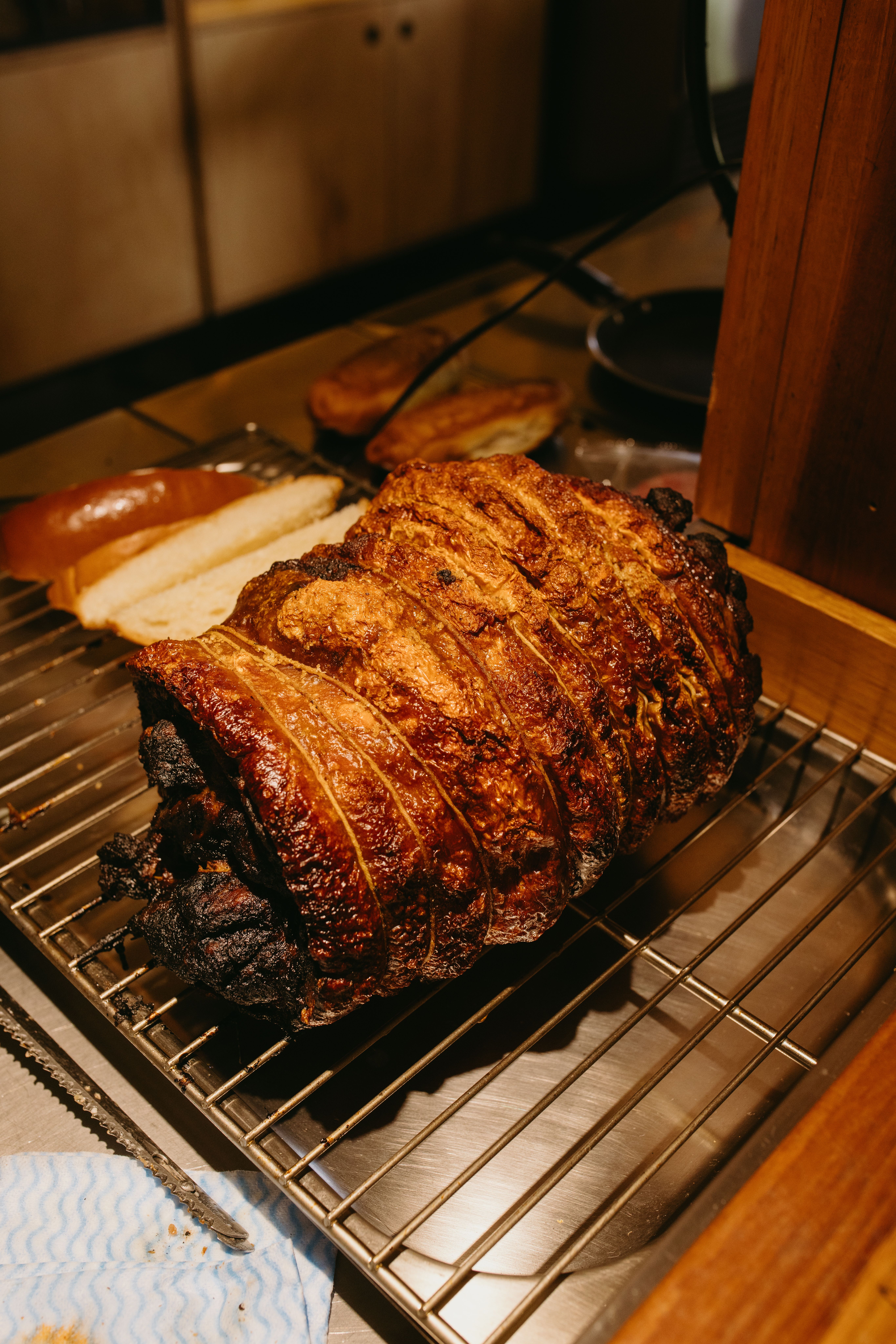
Sometimes the US number is not a normal price at all. A $5 roast for 3.77 lb may be a loss leader, a temporary discount used to pull shoppers into the store. Grocers often accept razor-thin margins, or even losses, on a featured meat item because they expect customers to buy higher-margin goods alongside it.
Canadian stores run promotions too, but the depth of discount can differ. Wholesale costs, flyer strategies, supplier deals, and local competition all shape how aggressive a retailer can be. A dramatic US sale price may therefore exaggerate the true everyday gap between the two countries.
Package sizing can also affect perception. A larger cut marked down heavily can produce a striking total price, even if the per-pound economics are less extreme than they appear at first glance.
The real answer is a stack of costs, not one simple cause

The big difference between $5 and $13 is best understood as a layered effect. Currency movements, smaller market scale, longer transport routes, processing economics, and different promotional tactics all combine to widen the gap. No single explanation is satisfying because grocery pricing is built from many moving parts.
For shoppers, the result feels unfair because the product looks so similar. Yet food prices reflect systems, not appearances. A pork roast is not just meat on foam and plastic. It is grain, labor, diesel, refrigeration, real estate, competition, and strategy wrapped into one number.




Leave a Reply