
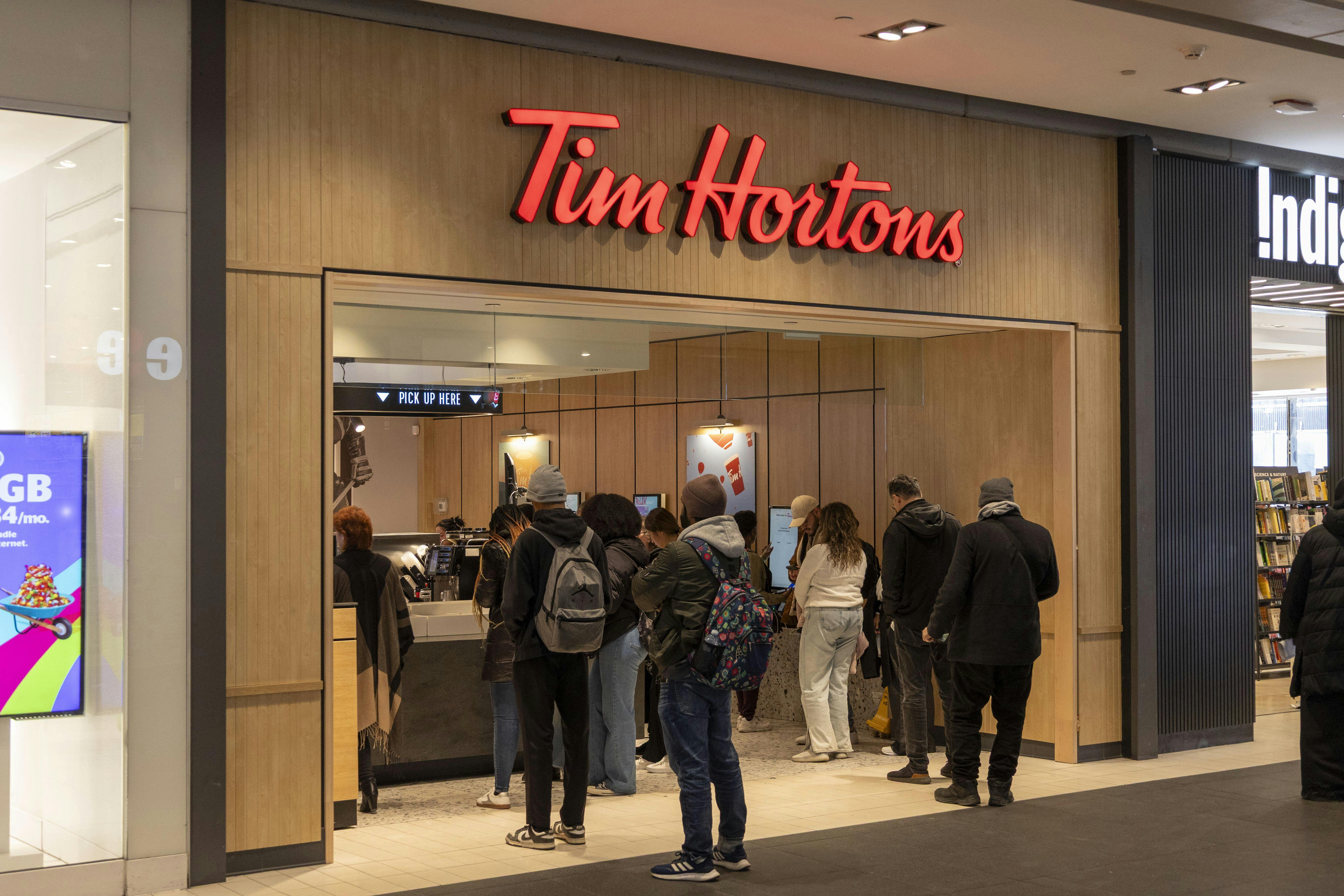
For many people, Tim Hortons is more than a coffee stop. That is exactly why the frustration feels so personal.
The brand's emotional bond is now working against it

Tim Hortons built its reputation on familiarity, affordability, and routine. For decades, it was the place for a dependable coffee, a simple breakfast, and a quick stop that felt deeply Canadian. That emotional loyalty gave the chain unusual strength in a crowded market.
Now, that same attachment is intensifying disappointment. Customers are not reacting to just one bad coffee or one slow drive-thru line. They are reacting to the sense that a brand they trusted no longer delivers the basics with the same care.
Consumer commentary across review platforms and social media often reflects that feeling. People compare today's Tim Hortons not just with competitors, but with the Tim Hortons they remember. That gap between memory and current experience is driving much of the anger.
Food and coffee quality complaints keep surfacing
The most common criticism is also the most important one. Customers say the food and drinks simply do not taste as good or as consistent as they once did.
Coffee has long been central to the brand's identity, yet many patrons describe it as watered down, bitter, lukewarm, or inconsistent from one visit to the next. In a market where consumers can easily compare chains and independent cafés, that kind of variation matters. A coffee chain cannot afford uncertainty in its core product.
Food complaints follow a similar pattern. Customers often point to dry baked goods, breakfast sandwiches that appear hastily assembled, and lunch items that feel more processed than fresh. Tim Hortons has expanded its menu repeatedly, but many critics argue that broader selection has not translated into better execution.
Higher prices are changing expectations

Price increases have become a major flashpoint. Customers who once saw Tim Hortons as a budget-friendly daily habit now say the value proposition feels weaker.
This matters because affordability was part of the chain's social contract with customers. If a coffee and breakfast stop becomes noticeably more expensive, people expect higher quality, better service, or both. When those improvements are not obvious, resentment builds quickly.
The inflationary environment has affected every restaurant chain, and Tim Hortons is not alone in raising prices. Still, public reaction suggests many customers believe the brand is asking them to pay more for a diminished experience. That is a particularly damaging perception for a company built on convenience and routine purchases.
Speed and service are no longer dependable

Convenience used to be one of Tim Hortons' strongest advantages. Increasingly, customers say that advantage has become less reliable.
Drive-thru delays are a frequent complaint, especially during morning rush periods. Longer menus, mobile orders, and staffing pressures have complicated operations at many quick-service chains, but customers tend to judge the experience by one simple measure: how long they had to wait for a basic order.
Service quality also varies sharply by location. Some stores still receive strong praise for friendly staff and efficient handling, but others draw complaints about incorrect orders, poor communication, and rushed interactions. In a high-frequency business, those small failures accumulate into a larger brand problem.
The menu has grown, but the identity feels blurred

One of the clearest frustrations is that Tim Hortons no longer feels as focused as it once did. Customers often say the chain has tried to be too many things at once.
Over time, the brand has pushed beyond coffee, donuts, and straightforward breakfast into loaded beverages, lunch items, specialty bowls, wraps, pizzas in some markets, and constant limited-time offerings. Innovation can attract attention, but it can also create operational strain and dilute the core identity.
Many longtime patrons appear to want fewer experiments and better execution. They are not necessarily demanding a smaller company. They are asking for a more disciplined one, where the flagship items are consistently strong and the menu makes sense.
What customers really want from Tim Hortons now

The frustration surrounding Tim Hortons is not just a wave of online negativity. It reflects a broader expectation that a legacy brand should still understand why people loved it in the first place.
Most customers are not asking for reinvention. They want hot coffee served quickly, fresh food that matches its price, clean stores, accurate orders, and a consistent experience from one location to another. Those are basic demands, but in quick service, basics define the brand.
That is why so many people say they have had enough. It is not because Tim Hortons has become irrelevant. It is because it still matters, and customers believe it should be doing much better than this.




Ken Rancourt says
About 8 years ago I reach the point where Tim`s service was bad enough to quit going in.
Every day on way to work stop and buy 2 coffee. One day stood there for 5 minutes while the staff was at drive through joking around. Now there is a line of 5 or 6 people and I asked if anyone was working. Got service but 3 orders wrong. In last time I was in .