
Few foods calm a room as quickly as melted cheese. It is warm, familiar, and almost unnervingly good at making people feel better.
Melted cheese works because comfort begins with the senses

The first reason melted cheese feels emotionally restorative is sensory, not symbolic. When cheese is heated, its fats soften, proteins loosen, and aromas intensify, creating a richer smell and smoother mouthfeel than cold cheese can offer. Food scientists have long noted that warm, high-fat foods trigger strong pleasure responses because they combine temperature, texture, and flavor in a way the brain reads as rewarding and safe.
Texture matters more than people often realize. Melted cheese stretches, coats, drips, and folds, turning eating into a tactile experience as much as a taste experience. That soft consistency reduces friction in the mouth and creates a sense of indulgence without requiring much effort from the eater. In practical terms, it feels easy, and foods that feel easy often register as comforting.
Aroma is another powerful part of the equation. Heating cheese releases buttery, nutty, and roasted notes that signal richness before the first bite even arrives. According to sensory research across food and consumer behavior, smell is tightly tied to emotional memory and expectation. The scent of grilled cheese, pizza, queso, or baked pasta often starts soothing people before they have even sat down.
There is also a visual component. Cheese that bubbles, browns, and stretches telegraphs abundance and readiness. In an anxious culture, foods that look generous and instantly satisfying carry unusual emotional force. Melted cheese does not ask for patience or interpretation. It announces pleasure clearly, and that clarity is part of its support-system status.
Its emotional power is rooted in memory, ritual, and early life
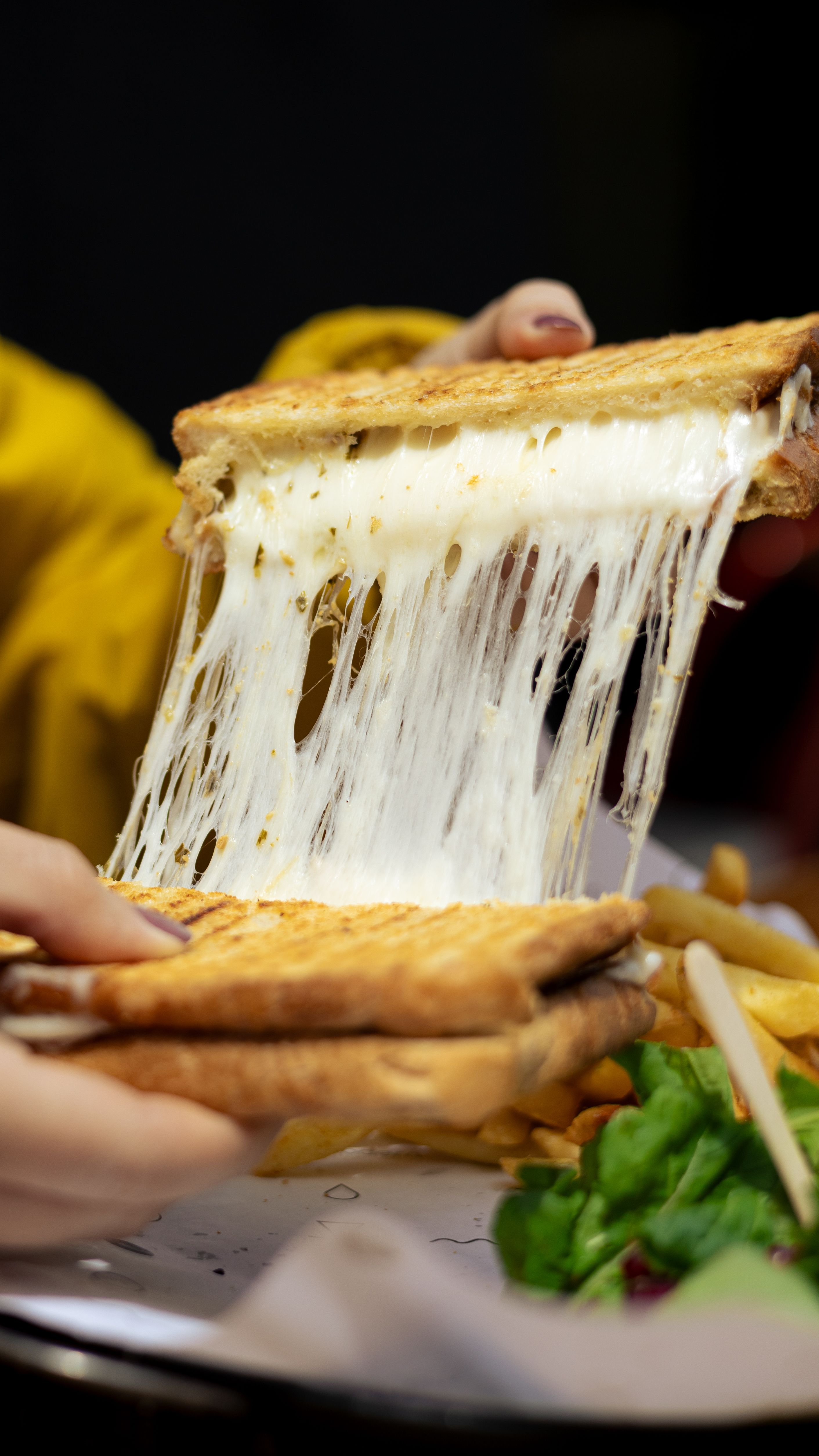
Childhood is where melted cheese gains much of its authority. For many people, grilled cheese sandwiches, macaroni and cheese, cheese toast, and pizza were among the first "special" foods that felt both dependable and joyful. Psychologists who study nostalgia regularly point out that foods tied to early caretaking become emotional anchors later in life, especially during stress, loneliness, or fatigue.
That connection is strengthened by repetition. Melted cheese appears in family dinners, school cafeterias, birthday parties, sleepovers, game nights, and late-night snacks, meaning it shows up in both routine and celebration. Few foods move so easily between ordinary life and reward. Because of that, it becomes associated with stability as well as pleasure.
Ritual also amplifies its appeal. The making of melted cheese dishes often has recognizable stages: buttering bread, sprinkling shredded cheese, pulling a tray from the oven, lifting the first hot slice. Repeated domestic rituals tell the brain that something familiar and manageable is happening. In uncertain moments, that predictability itself is soothing.
Even adulthood does not break the bond. Busy professionals order pizza after hard days, students inhale mozzarella sticks during exams, and families bring baked casseroles to one another during illness or grief. Melted cheese keeps showing up at points of emotional need. Over time, the food stops being just an ingredient and starts functioning like a social signal that says, "You can rest now."
Science helps explain why the craving feels so immediate

Part of melted cheese's power lies in its nutritional architecture. Cheese contains fat, protein, salt, and compounds produced during fermentation and aging, all of which contribute to a deeply satisfying flavor profile. Researchers in appetite and reward have found that foods combining fat and sodium are especially effective at driving cravings because they deliver dense sensory reward quickly and reliably.
Heat changes how those rewards are perceived. As cheese melts, fat becomes more available on the tongue, flavors spread more evenly, and the food feels fuller and more aromatic. This creates what chefs and food developers call high palatability, meaning the food is exceptionally easy to keep eating. A gooey grilled cheese or a bowl of queso does not just taste good. It is engineered by chemistry to feel gratifying almost immediately.
There is also a satiety angle. Because cheese contains protein and fat, it can feel substantial in a way many sweet snacks do not. That matters during stress, when people often seek foods that seem grounding rather than merely exciting. Melted cheese can serve as a sensory reward and a physical one, offering warmth and fullness at the same time.
Some popular explanations overstate the science, especially claims that cheese works like an addictive drug. The evidence for that is far weaker than headlines suggest. Still, the broader truth remains solid: warm, salty, fatty foods with strong aroma and soft texture are highly effective comfort cues. Melted cheese happens to deliver all of them in a single bite.
It became universal by adapting to nearly every culture and occasion

Melted cheese is not confined to one cuisine or class identity, and that flexibility is central to its dominance. In the United States, it appears in diner sandwiches, stadium nachos, pizza chains, and holiday casseroles. In Switzerland, fondue turned communal melted cheese into a ritual of hospitality. In Mexico and across Tex-Mex cooking, queso became a party centerpiece and restaurant staple.
Europe offers countless variations on the same emotional logic. France has raclette and croque monsieur, Italy has lasagna, pizza, and baked mozzarella dishes, and the United Kingdom has cheese on toast and cauliflower cheese. Each version expresses local taste, but all rely on the same promise: warmth, richness, and ease. The ingredient changes form without losing its comforting identity.
Its accessibility also matters. Melted cheese can be luxurious, as in Alpine fondue or artisanal baked brie, but it can also be democratic and cheap. Processed cheese slices, shredded supermarket blends, frozen pizzas, and convenience snacks helped normalize the experience across income levels. When a comfort food is available at both restaurants and gas stations, it gains cultural reach very quickly.
Crucially, melted cheese adapts to the event. It fits family dinners, sports viewing, children's meals, dating, celebration, and recovery days. Few foods can move from wedding appetizer to dorm-room survival meal without seeming out of place. That range turned melted cheese from comfort food into a near-universal emotional language.
Modern life made melted cheese even more emotionally useful

Contemporary stress helped elevate melted cheese from beloved food to coping mechanism. In periods of economic strain, political tension, pandemic isolation, and digital overload, people increasingly gravitate toward foods that feel uncomplicated and reassuring. Trend reporting from restaurant groups and market researchers has repeatedly shown that comfort foods surge during unstable periods, and cheese-heavy dishes often lead that wave.
The appeal is practical as well as emotional. Melted cheese dishes are fast, forgiving, and scalable. A grilled cheese takes minutes, sheet-pan nachos feed a crowd, and baked pasta can carry a household through several meals. In a culture where many people are tired, distracted, and budget-conscious, foods that offer high reward with low complexity naturally gain staying power.
Social media intensified the effect. Cheese pulls, bubbling skillets, and browned tops are visually irresistible on camera, and platforms built around short-form video reward foods with obvious sensory drama. Melted cheese performs beautifully in that environment because its pleasure is instantly legible. You do not need culinary expertise to understand what a stretchy mozzarella pull means.
Brands and restaurants recognized this quickly. Limited-time menu items centered on cheese fries, stuffed crusts, dips, and loaded sandwiches are routinely marketed as indulgent relief. The messaging is rarely subtle. It promises a break, a treat, a reset. Melted cheese became emotional support in part because modern consumer culture learned how to package that feeling.
Its real function is social, which is why it keeps its power

At its core, melted cheese is not just comforting because of flavor. It is comforting because it often arrives in shared settings where emotional bonds are being reinforced. Fondue pots, pizza boxes, queso bowls, and baked casseroles are naturally communal formats. They encourage gathering, reaching, talking, and lingering, which makes the food part of the social glue rather than a mere side attraction.
This communal role matters during both joy and hardship. People bring cheesy baked dishes to new parents, grieving families, and sick friends because they are filling, familiar, and widely liked. Hosts serve them at parties because they lower social tension and invite easy participation. In both cases, melted cheese acts as a bridge between appetite and care.
Its universality also comes from low psychological risk. Unlike highly polarizing foods, melted cheese is broadly recognizable and easy to enjoy, even across generations. Children like it, adults trust it, and older diners often associate it with continuity and home cooking. In a fragmented culture, broadly shared pleasures gain unusual importance.
That is why melted cheese has become society's emotional support system. It is sensorially rewarding, memory-rich, scientifically satisfying, culturally adaptable, and socially connective. Most of all, it offers immediate reassurance in a form people already understand. When life feels sharp, melted cheese feels soft, and that may be its most powerful promise of all.




Leave a Reply