
The name sounds straightforward, but it hides a long misunderstanding. What Americans call Canadian bacon has always told a bigger story about trade, language, and how food gets renamed once it crosses a border.
The American idea of Canadian bacon is surprisingly narrow
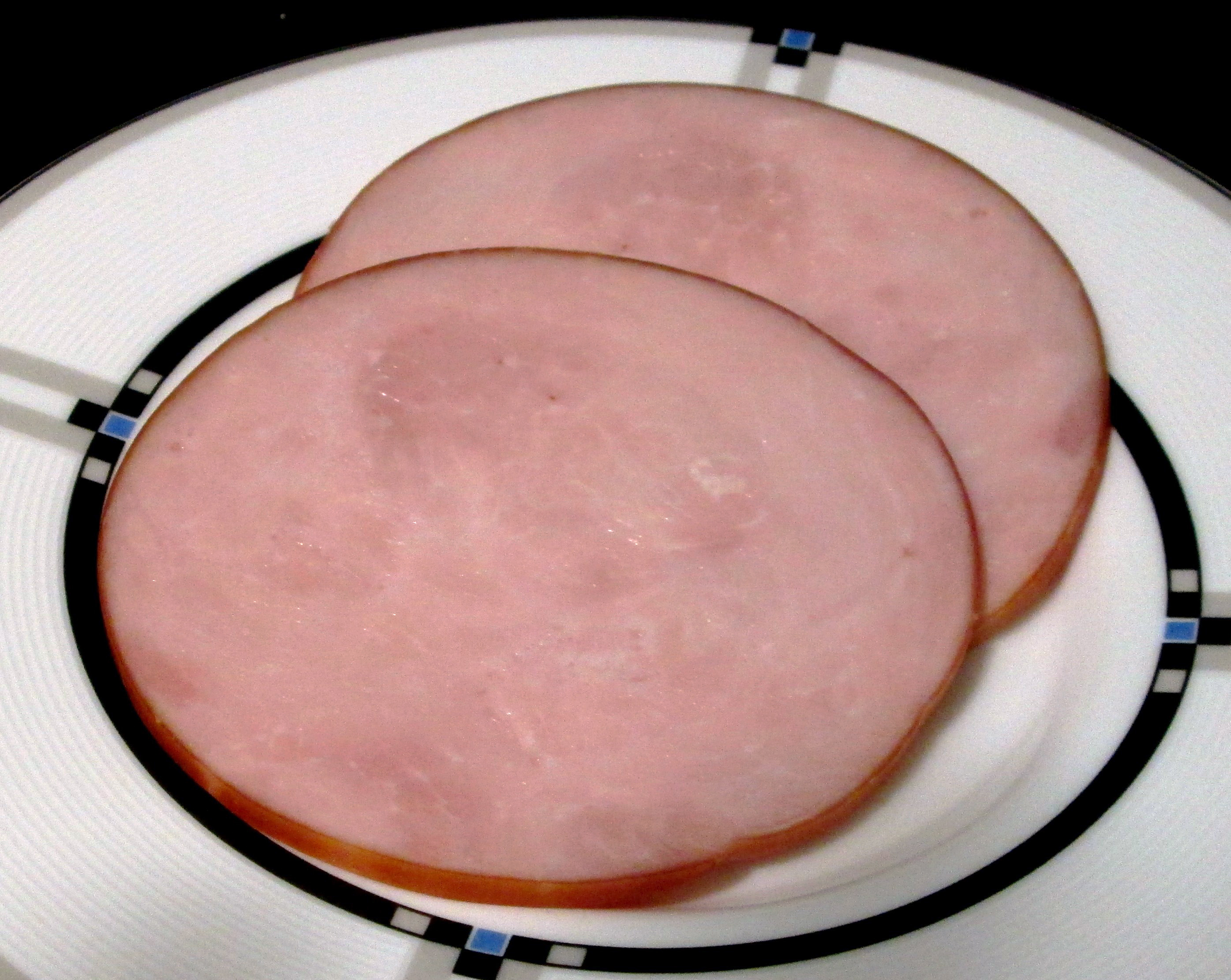
Ask an American to picture Canadian bacon and the answer is usually the same: a small, round slice of lean pink meat, often seen on breakfast plates or pizza. It looks more like ham than the streaky bacon many people expect. That image is so common in the United States that many assume Canadians must eat it all the time.
The problem is that this product is not the standard bacon of everyday Canadian cooking. In Canada, what most people simply call bacon is usually the same strip bacon familiar across the United States, cut from pork belly and cooked until crisp. Walk into a Canadian diner and the bacon beside your eggs will generally not be those neat medallions Americans associate with the country.
This gap between image and reality matters because it shows how food labels can freeze a partial truth into a national stereotype. A niche cut became a national symbol in the American imagination. Over time, repetition in restaurants, grocery stores, and frozen pizza branding made the misunderstanding feel permanent.
The cut itself comes from the loin, not the belly

The most important difference is anatomical. Traditional bacon in both Canada and the United States is usually made from pork belly, a fatty section that produces long streaks of meat and fat. What Americans call Canadian bacon is generally made from the pork loin, which is much leaner and naturally more uniform in shape.
Because it comes from the loin, the product cooks and tastes differently. It has less fat, a firmer bite, and a flavor profile closer to ham. In many cases it is cured and smoked, then sliced into round pieces. That is why it lands somewhere between bacon and ham in the American breakfast vocabulary.
In Canadian food terminology, this loin-based product is more often linked to "back bacon," especially when the cut includes the eye of the loin. A related Canadian specialty is peameal bacon, which is wet-cured pork loin rolled in cornmeal. Peameal bacon is deeply associated with Toronto and southern Ontario, and it is much closer to a truly Canadian iconic pork product than the generic American supermarket item labeled Canadian bacon.
The name grew out of export history, not Canadian eating habits

The label did not appear because Canadians promoted a national bacon identity to the United States. It grew from older trade patterns between Canada, Britain, and the U.S. In the 19th and early 20th centuries, Canadian pork producers exported cured pork products, including cuts from the loin, to outside markets. Names often followed commerce more than local table habits.
Food historians have noted that back bacon had a stronger place in Britain and parts of the British Empire than belly bacon did at certain times. Since Canada was a major exporter within that network, cuts associated with Canadian packing houses became identifiable abroad. In that context, attaching "Canadian" to a style of cured loin pork made commercial sense even if it did not describe what most Canadians ate every morning.
American usage then simplified the story. Instead of preserving distinctions among back bacon, peameal bacon, smoked loin, and related preparations, the market condensed them into a single phrase. Once restaurants and food manufacturers embraced the term, especially in the mid-20th century, it stopped being a precise description and became a familiar label.
Canadians usually mean something else when they talk about bacon
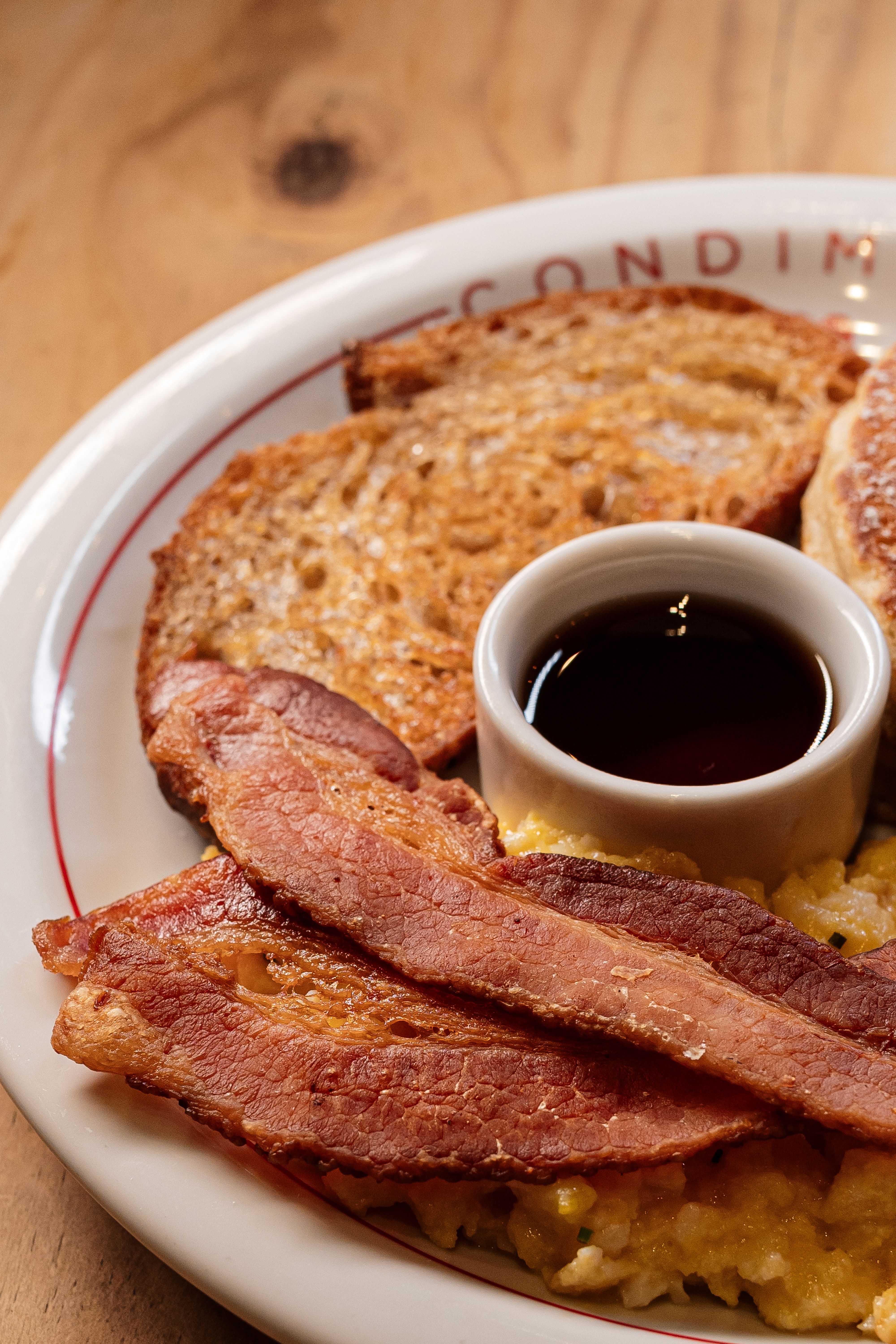
Language in food culture is local, and bacon is a perfect example. In much of Canada, if someone asks for bacon, they usually mean side bacon, the same streaky strips known in the U.S. as regular bacon. That is the everyday product sold in packages, served at brunch, and crumbled over dishes.
If Canadians want the lean loin product, they are more likely to call it back bacon. If they want the specifically cornmeal-coated cured loin linked to Ontario, they may call it peameal bacon. Those distinctions are important because they reflect real culinary categories rather than an imported umbrella term.
This is where Americans often get misled. They hear "Canadian bacon" and assume it is a domestic Canadian phrase used in homes, butcher shops, and diners across the country. It largely is not. The phrase is far more natural in American menus than in Canadian conversation, which is why many Canadians are amused when asked whether they eat "Canadian bacon" regularly.
Pizza and breakfast chains turned a trade term into pop culture

One reason the misunderstanding has lasted so long is visibility. In the United States, Canadian bacon became one of the standard breakfast meat options, especially in diners and chain restaurants looking for a leaner alternative to strip bacon or sausage. It also became a famous pizza topping, particularly in the pairing often marketed as Hawaiian pizza with pineapple.
That visibility gave the term cultural power far beyond its culinary accuracy. Grocery labels, frozen food packaging, and restaurant menus repeated "Canadian bacon" for decades, teaching generations of consumers that this was a clearly defined national food. Once a phrase becomes routine in retail and mass dining, it can override more accurate butcher's vocabulary.
The irony is that one of the foods most associated with "Canadian bacon," Hawaiian pizza, was itself created in Canada by Greek-born restaurateur Sam Panopoulos in Ontario. Even there, the topping in question was basically a ham-style product, not proof of a uniquely Canadian bacon tradition. Pop culture did not preserve the nuance. It flattened it.
What Canadian bacon really reveals about food identity

At its core, this is not just a story about pork cuts. It is a lesson in how national food identities are often created from outside the nation being labeled. Americans did not completely invent the connection, but they did harden it into a meaning that most Canadians would not naturally use. That happens often with foods that travel through export markets and restaurant culture.
The same pattern appears across the culinary world. Dishes get renamed, simplified, and rebranded to fit local expectations. Over time, the new name can become more powerful than the original context. "Canadian bacon" survived because it was useful, memorable, and easy for American consumers to understand, even if it was not especially accurate.
So no, Canadian bacon is not exactly fake. It is real as a cured pork product and real as a long-standing American term. But it was never the straightforward national staple many people imagine. The phrase says less about what Canadians have historically eaten and more about how North America has packaged, sold, and misunderstood its own food traditions.




Leave a Reply