
Canada and the United States often look nearly identical through a drive-thru window. But when it came to supersized fast-food portions, Canada stopped short of going all in.
A shared fast-food culture with an important difference
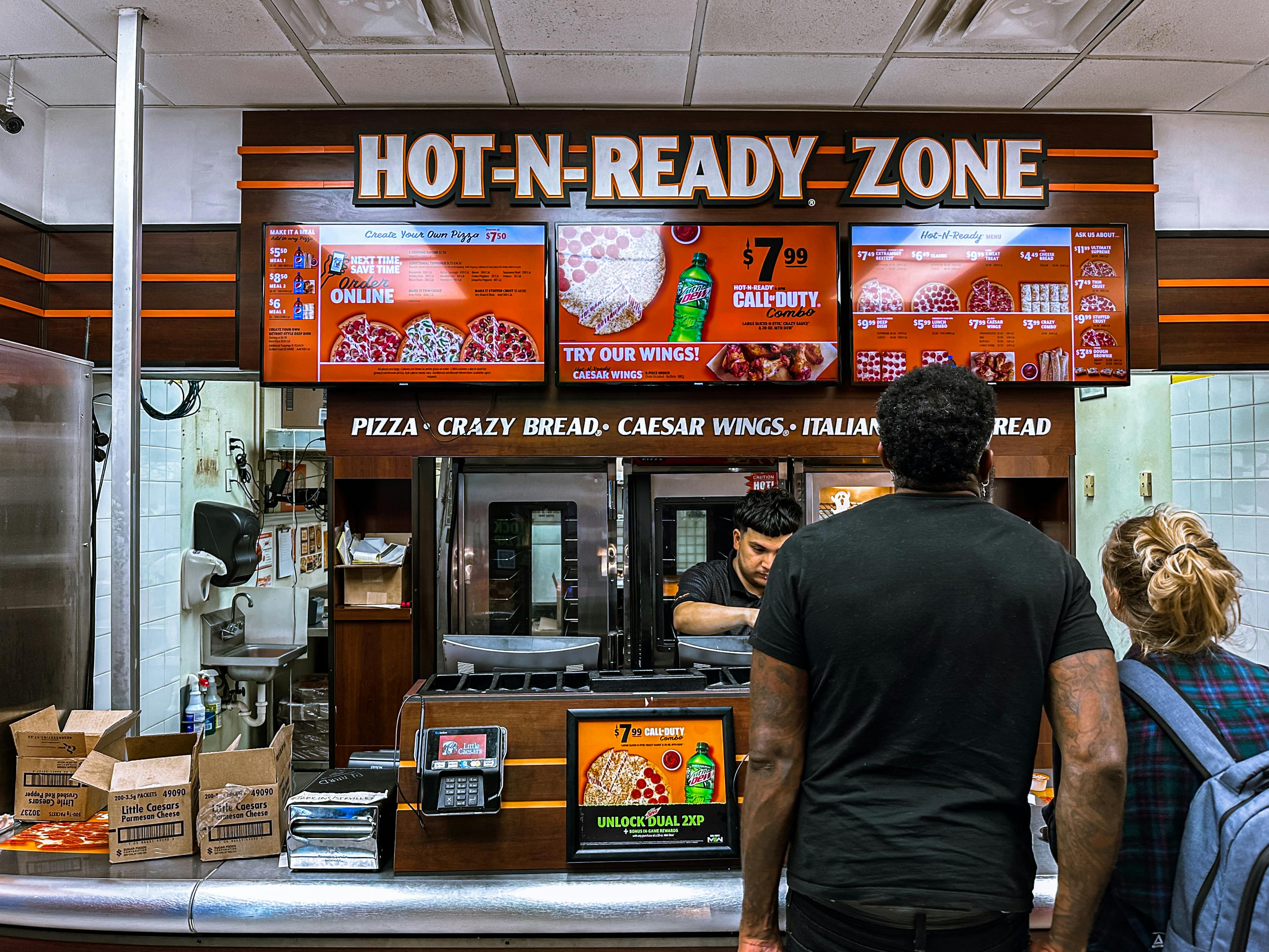
At first glance, the two countries seemed headed in the same direction. American chains expanded aggressively into Canada, and many brought the same burgers, fries, and soft drinks that fueled the U.S. fast-food boom in the 1980s and 1990s. Canadian consumers were hardly immune to value meals, combo upgrades, and large fountain drinks. Yet the most exaggerated version of portion inflation never became quite as normal north of the border.
Part of that difference came down to market scale. The United States had a far larger population, a deeper suburban sprawl, and a more intense competition among chains to promise "more for less." In that environment, bigger servings became a marketing language of their own. Canada's smaller market made trends easier to import, but harder to push to the same extreme in every region.
There was also a subtle consumer distinction. Canadian diners, on average, showed interest in value, but often without the same enthusiasm for spectacle. The giant soda, the bucket-sized fries, and the novelty of limitless refills had less cultural force. Fast food was popular in Canada, but supersizing never became as central to the national identity of convenience eating as it did in the U.S.
Regulations and public health messaging changed the tone

One reason portion escalation met more resistance in Canada was the country's stronger habit of framing food as a public issue, not just a private purchase. Provincial and federal health authorities spent decades communicating around nutrition, sodium, sugar, and childhood obesity in a more coordinated way than many American jurisdictions. That did not stop junk food consumption, but it did shape the public atmosphere around it.
Menu labeling and nutrition disclosure also mattered. Requirements varied by province, but over time consumers were exposed to clearer calorie counts and ingredient information at major chains. In Ontario, for example, calorie posting rules put highly visible numbers next to items that had long been sold mainly on appetite appeal. A supersized drink or extra-large fries looked different when the math was unavoidable at the point of sale.
Canada also moved earlier or more uniformly on some related health policies. Restrictions on marketing to children in Quebec have long been cited by researchers as an important example of how regulation can alter food culture over time. Add in school nutrition standards, public health campaigns, and sugar-focused reporting, and the environment became less friendly to turning oversized portions into routine everyday consumption.
Pricing, taxes, and operating costs discouraged excess

Bigger portions only spread when they are cheap enough to feel irresistible. In the United States, supersizing worked because the extra food often cost very little more, creating the impression of winning a bargain. That strategy existed in Canada too, but the economics were not always as favorable. Higher input costs, different tax structures, and tighter margins often made giant portions a less obvious business winner.
Food prices in Canada have generally run high relative to U.S. expectations, especially when transportation, regional distribution, dairy rules, labor costs, and climate-related logistics are factored in. Serving dramatically more fries, cheese, meat, or soda at rock-bottom upgrade prices can be harder to sustain in a country where supply chains are stretched across enormous distances. A promotion that makes sense in Chicago or Dallas may work differently in Winnipeg, Halifax, or Kelowna.
Consumer psychology played a role as well. Canadians have often faced noticeably higher restaurant prices and fewer extreme discount wars than Americans. When the jump from medium to giant is not framed as a near-free bonus, fewer people take it automatically. Supersizing thrives when excess feels economical. In Canada, it more often looked like an indulgence with a visible price attached.
Canadian cities and daily life shaped how people ate

The geography of eating matters more than it first appears. America's supersize era grew alongside car culture, long commutes, giant cup holders, and a dining pattern built around consuming food in motion. Canada certainly has car-dependent suburbs, but many of its largest cities developed with somewhat denser cores, stronger transit use, and a different relationship to convenience eating. That changed how portable abundance fit into daily routines.
In cities such as Montreal, Toronto, and Vancouver, fast food competes with a wider mix of street-level alternatives, from independent sandwich shops to bakeries, shawarma counters, sushi takeout, and food courts shaped by immigration. That diversity has not made Canada healthier by default, but it has diluted the dominance of the classic burger-fries-soda model. When many quick meals are available, oversized standardized portions have less power as a universal draw.
Even the social rhythm was different. Canadian lunch habits in many urban centers leaned toward shorter walks, indoor food courts, and smaller quick-service meals rather than giant combo meals consumed alone in a vehicle. The physical setup of daily life did not eliminate large portions, but it gave less support to the kind of oversized, highly routinized fast-food consumption that became so deeply embedded in many parts of the United States.
National identity and food expectations also mattered

Canada's food culture is often described as modest, and that matters here. While the country enthusiastically adopted American brands, it did not absorb every American food signal with equal force. The idea that "bigger is better" never carried the same broad symbolic appeal. In many Canadian settings, obvious excess can read less as freedom and more as waste, especially when discussing food purchased for one person.
There is also the issue of self-image. Canadians have long defined themselves partly in contrast to the United States, sometimes subtly, sometimes bluntly. That instinct shows up in debates about health care, cities, social policy, and consumer behavior. Fast food was never outside that comparison. Media coverage and documentaries about American obesity trends, giant sodas, and portion creep gave Canadians a nearby cautionary tale rather than an ideal to copy.
Immigration patterns contributed another brake. Canada's population growth over recent decades has been heavily shaped by newcomers bringing food traditions centered on sharing, balance, freshness, or differently structured meals. Fast food remained common, but it sat within a broader eating culture that was not entirely built around maximal portions. That diversity did not prevent overconsumption, but it did complicate the rise of one oversized norm.
The result was moderation by comparison, not abstinence
None of this means Canada rejected large fast-food portions altogether. Major chains still sold oversized drinks, calorie-dense combos, and limited-time indulgence items, and Canadians bought plenty of them. Obesity rates rose, ultra-processed food expanded, and convenience dining remained a major part of modern life. The difference is that Canada usually experienced these trends in a more muted form than the United States.
The retreat from explicit supersizing also became visible after the early 2000s. In the U.S., criticism from health experts, lawsuits, and cultural backlash pushed chains to rethink the language of "Super Size" itself. Canadian operations often followed that turn without having leaned as heavily into the most theatrical forms of portion expansion in the first place. As a result, the correction looked less dramatic because the peak had been lower.
So Canada's story is not one of superior restraint so much as different pressure. Public health messaging, pricing realities, urban form, cultural caution, and a less aggressive market all worked together to limit how far portion inflation could go. Canada embraced fast food, but it never fully turned supersizing into a national habit.




Leave a Reply