
What children eat at school says a great deal about how a country thinks about family life, public health, and education. Canada and the United States share a border, but their school lunch cultures are far from identical.
Two Neighboring Countries, Two Very Different Lunch Systems

The biggest difference starts with structure, not food. In the United States, school lunch is often treated as a formal part of the school day, backed by a long-established federal system. The National School Lunch Program, created in 1946, helps fund meals for millions of students and sets rules for nutrition, pricing, and eligibility. In many American schools, cafeterias, hot lunch lines, and district-wide menus are standard features of daily life.
Canada developed along a very different path. For decades, there was no national school meal program at all, and lunch remained mostly a family responsibility. Many Canadian students have traditionally brought meals from home, often packed in lunch bags with sandwiches, fruit, yogurt, and snacks. While provinces, nonprofits, and local school boards have supported breakfast, snack, and lunch initiatives, the country never built a single lunch infrastructure comparable to the American one.
That distinction changes expectations. In the U.S., families often assume schools will offer lunch for purchase or through subsidy. In Canada, many parents still expect to pack food themselves unless their child's school runs a specific program. Even with Canada's recent movement toward a national school food strategy, the cultural habit of the packed lunch remains deeply rooted.
These separate systems also shape the physical school environment. American schools are more likely to have large cafeterias, dedicated food service staff, and industrial kitchens or reheating systems. Canadian schools, especially older or smaller ones, may have lunchrooms, classrooms used for eating, or limited food preparation capacity. The result is not just a different menu, but a different lunchtime experience.
What Students Actually Eat During the School Day

Open a lunchbox in Canada and you are still likely to see food prepared at home. Sandwiches remain common, but so do wraps, cut vegetables, cheese, crackers, pasta salad, soup in thermoses, and leftovers from dinner. Because many Canadian schools do not provide a full hot meal every day, lunch often reflects household routine, cultural background, and what parents can pack quickly in the morning. This gives lunches variety, but it also means quality can differ sharply from one child to another.
In the United States, a larger share of students eat food prepared by the school. A typical tray may include an entrée such as pizza, chicken, tacos, burgers, or pasta, along with milk, fruit, and vegetables. Federal standards have pushed schools to offer more whole grains, lower sodium items, and produce options, especially after reforms tied to the Healthy, Hunger-Free Kids Act. Students still debate taste and quality, but the meal itself is usually part of a regulated system.
Portion style differs too. American school lunches are commonly served as a composed meal with required components. Canadian lunches are often assembled in containers and meant to be eaten cold or at room temperature unless a microwave or heat-up service is available. This changes what foods are practical. It also affects how children think about lunch, either as a meal provided to them or as an extension of home cooking.
Cultural diversity appears in both countries, but in different ways. In Canada's packed-lunch model, families can more easily include foods tied to their heritage, from roti to rice dishes to dumplings. In the U.S., districts increasingly adapt menus for diverse communities, but standardization still limits how personalized a school meal can be.
Funding, Equity, and Who Gets Fed
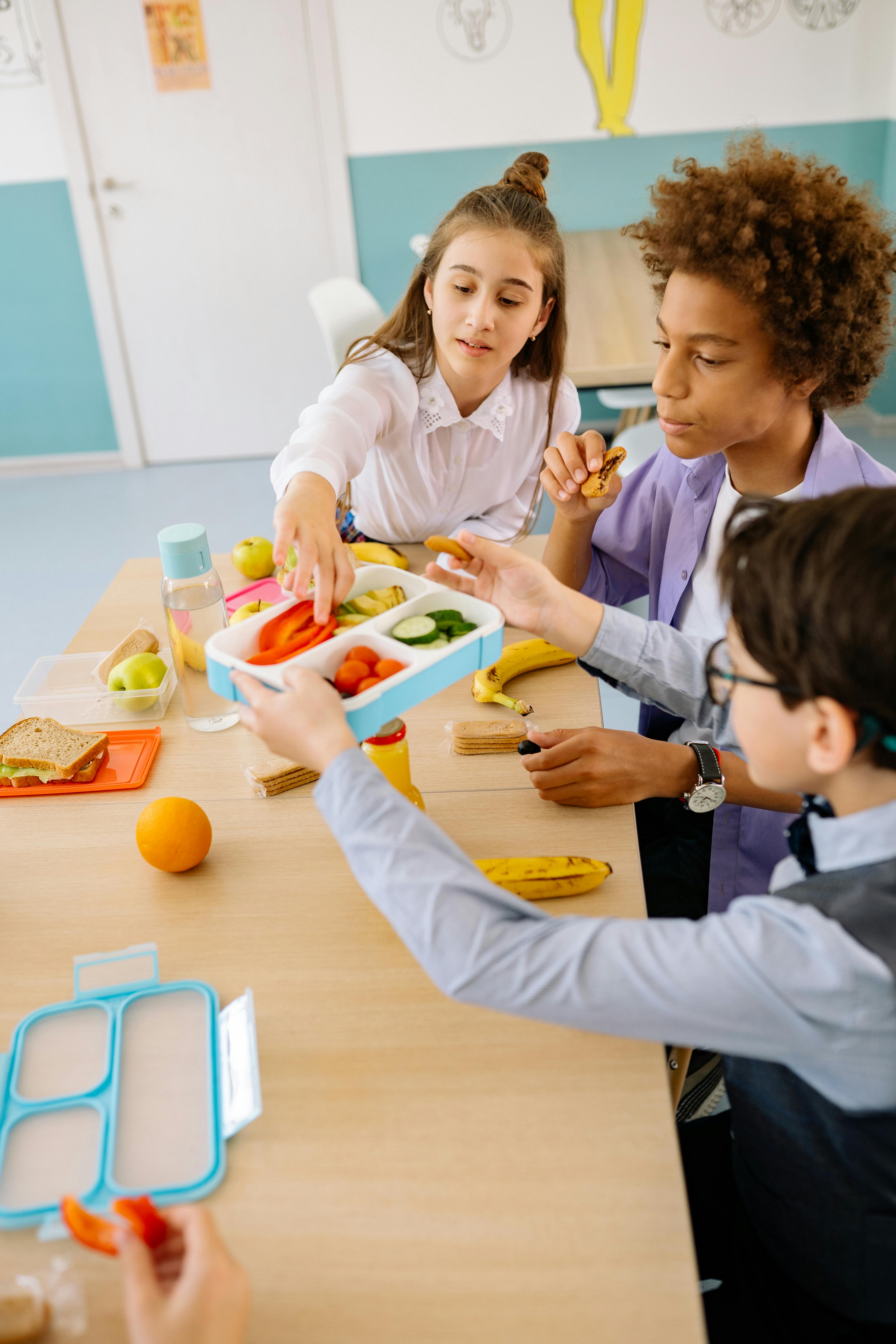
Money sits at the center of the lunch divide. In the United States, public funding is built into the system, and students may qualify for free or reduced-price meals based on household income. That framework has made school lunch one of the country's most important anti-hunger tools. During the pandemic, the importance of those meals became even clearer, and several states later moved toward universal free school meals to reduce stigma and improve access.
Canada has historically relied more heavily on patchwork funding. Provincial grants, charitable organizations, municipal partnerships, and parent fees often help support food programs. Breakfast clubs and snack bins are common in some schools, especially where food insecurity is a concern, but coverage is uneven. A student in one province or district may have dependable access to school food, while another may have none beyond what they bring from home.
That inconsistency has real consequences. Food Banks Canada and other national groups have repeatedly highlighted child food insecurity as a growing concern, especially as grocery prices rise. When lunch depends on what families can pack, inequality becomes visible in a very personal way. Some children arrive with balanced meals, while others have too little food or highly processed low-cost items that do not keep them full.
The American system has its own problems, including meal debt, administrative burden, and ongoing debates over reimbursement rates. Still, it offers a baseline structure Canada largely lacked for many years. That is why recent Canadian federal investment in school food has drawn attention. It signals a shift from charity-based support toward a more public, policy-driven model.
Cafeterias, Lunch Periods, and Daily School Life

Lunch culture is about more than what is eaten. In many American schools, lunch is a scheduled institutional event with clear routines. Students line up, move through serving stations, enter cafeteria seating areas, and finish within a defined time window that can be surprisingly short. Reports from advocacy groups and pediatric experts have long noted that some American students get less than 20 minutes to actually eat after receiving their food, which can affect both appetite and waste.
Canadian lunchtime often feels less centralized. Because so many students bring food from home, schools may not need full cafeteria service, and children may eat in classrooms, common areas, or multipurpose rooms. In elementary schools, lunch supervision can be handled by staff or paid monitors, and the atmosphere may feel closer to an organized break than a mass meal service. In some regions, students even go home for lunch, though this is less common than in the past.
These different setups influence behavior. American cafeterias can be loud, rushed, and highly social, but they also create a shared food experience. Nearly everyone is participating in the same system at once. Canadian lunchrooms may be quieter and more fragmented, with each student opening a different homemade meal and eating at a different pace.
Time and logistics matter as much as menu design. A hot meal loses its appeal if students barely have time to sit down, while a packed lunch can become repetitive if schools lack refrigeration or reheating options. In both countries, educators increasingly recognize that lunch conditions affect nutrition just as much as the food itself.
Nutrition Rules, Public Health, and Parent Expectations
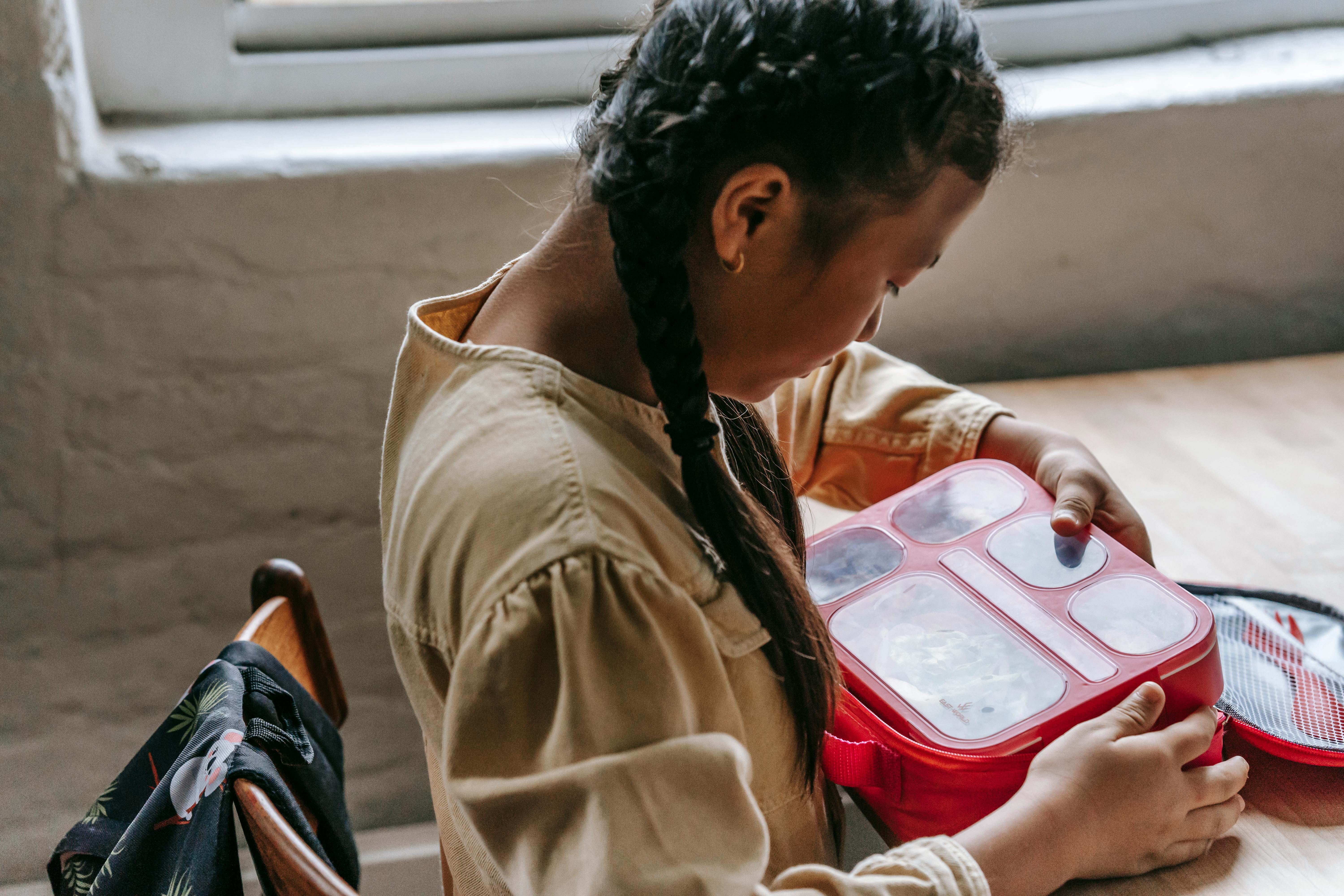
Policy tells another important part of the story. In the United States, school meals must meet detailed nutrition standards if schools participate in federal programs. Requirements cover fruits, vegetables, grains, protein, and milk, while also setting limits on calories, sodium, and saturated fat. These rules have been revised over time and remain politically contested, but they create a national framework that shapes what ends up on millions of trays each day.
Canada has had nutrition guidance, but far less uniform lunch oversight because so many meals come from home. Provincial school food and beverage policies often focus on what can be sold on campus rather than what children bring in lunchboxes. That means parent choice plays a larger role. Families decide whether lunch includes fresh food, packaged snacks, sweet drinks, or leftovers, and schools have limited power to standardize those decisions.
This creates a different public health tension. In the U.S., critics often target the institutional meal, arguing over processed foods, flavored milk, or sodium levels. In Canada, the concern is often inconsistency and the burden placed on parents to deliver a healthy lunch every single day. Nutrition experts frequently point out that even informed families face constraints involving cost, time, allergies, and children's preferences.
Parent expectations reflect these systems. American parents may criticize the school menu yet still depend on it. Canadian parents may value control over what their children eat but also feel pressure to provide attractive, waste-free lunches five days a week. In both countries, school lunch ends up being a quiet measure of social priorities, family workload, and the reach of public policy.
Why the Gap Is Narrowing, but Still Matters

The old divide between packed lunches in Canada and cafeteria meals in the United States is no longer absolute. More Canadian schools now run meal programs, offer catered lunches, or partner with community organizations to provide universal snacks and breakfasts. At the same time, more American districts are rethinking menu quality, local sourcing, scratch cooking, and universal free meals. Both countries are moving toward a broader understanding that food at school supports learning, attendance, and mental well-being.
Still, the historical gap remains visible. American lunch culture is institution-first, shaped by federal policy, large-scale food service, and a long tradition of school-provided meals. Canadian lunch culture has been family-first, shaped by lunchboxes, local variation, and a weaker national infrastructure. Those origins continue to affect what students expect when the lunch bell rings.
The most surprising difference may be philosophical. In the United States, lunch is more often seen as a service schools are responsible for delivering. In Canada, it has more often been treated as something families send with children, unless a school steps in to fill a need. That sounds subtle, but it influences everything from cafeteria design to nutrition equity.
As both countries confront rising food costs and child hunger, their models may keep evolving. Yet for now, a simple school lunch still reveals two distinct ideas about care, responsibility, and the role of public institutions in children's everyday lives.




Leave a Reply