
Food is never just about what is on the plate. In Canada, it has also been a story about power, policy, geography, and who gets to decide what people grow, buy, and eat.
The 1950s: A Local Food Culture Still Had Strong Roots

In the 1950s, Canadian food identity was still deeply regional. Atlantic kitchens leaned on cod, salt fish, oats, and root vegetables, while Quebec held tightly to bread, pork, maple, and dairy traditions. On the Prairies, wheat, beef, and preserved foods reflected both climate and immigrant settlement patterns. British Columbia's food habits were shaped by salmon, orchard fruit, and Asian influences that had survived despite years of exclusion and discrimination.
Most food retailing also remained relatively local or national in character. Independent grocers, public markets, small butcher shops, and neighborhood bakeries still mattered. That meant consumers were often closer to the source of their food and to the people who produced it. Canadian households were not insulated from American influence, but they were not yet organized around it.
Policy mattered here. Supply management had not yet fully taken shape, but governments still accepted the idea that food systems deserved national stewardship. Rail transportation, grain marketing structures, and domestic processing all reinforced the belief that food was tied to sovereignty. Canada had not lost its food identity at this stage, because decisions about production and distribution were still grounded mainly in Canadian conditions.
The 1960s: Mass Marketing Began to Rewrite Canadian Taste

The 1960s changed food not only through technology, but through imagination. Television entered more homes and brought with it an overwhelming stream of American advertising, branding, and lifestyle messaging. Convenience became the new aspiration. Processed cheese slices, canned soups, boxed desserts, sugary breakfast cereals, and frozen dinners did not simply sell products. They sold a modern way of life, and much of that script came from the United States.
This was also the decade when large food manufacturers gained more influence over what counted as desirable eating. American firms and American-style corporate marketing helped normalize standardization. A meal that once reflected place and season increasingly reflected packaging, shelf life, and national ad campaigns. Canadian brands existed, but many competed by copying U.S. formats rather than defending local distinctiveness.
At the same time, suburbanization restructured shopping habits. Families moved away from urban food markets and toward car-dependent retail patterns that favored bigger stores and broader packaged inventories. Local food traditions did not vanish overnight, but they started to lose everyday visibility. As that happened, decision-making power began shifting from communities and regional producers to corporate planners, ad executives, and supply chains heavily shaped by American commercial logic.
The 1970s: Fast Food, Consolidation, and Standardization Took Hold

The 1970s were the decade when American food systems became physically unavoidable in Canada. Fast-food chains expanded aggressively, bringing burgers, fried chicken, fries, and soft-drink culture into daily life. Their importance went beyond menu items. They taught consumers to expect sameness across cities, provinces, and neighborhoods. The message was clear: food should be quick, cheap, familiar, and identical wherever you are.
That standardization had broad consequences for Canadian producers. Restaurants and major retailers increasingly demanded uniform products, centralized purchasing, and large-scale supply contracts. Smaller farms and processors often struggled to meet those terms. The more that procurement was built around volume and consistency, the more the system favored industrial methods over regional diversity.
This was also a period of retail consolidation. National chains became more powerful, and their business practices looked increasingly like the American model. Shelf space became a battleground controlled by a handful of buyers. Once those buyers prioritized multinational brands and high-turnover packaged goods, the room for local specialties narrowed. Canada still had distinctive foods, but more of the market was now being organized by efficiency metrics and corporate strategies that were not uniquely Canadian in origin or purpose.
The 1980s: Free Trade Reframed Food as a Market, Not a National Asset

The 1980s brought the sharpest policy turn of the modern era. Debates over the Canada-U.S. Free Trade Agreement were not just about tariffs. They were about whether Canada would treat food as part of a national economic and cultural system, or simply as another tradable commodity. Supporters promised lower prices and bigger export opportunities. Critics warned that Canada would become more vulnerable to U.S. corporate pressure and regulatory harmonization.
Those warnings were not abstract. Once trade integration deepened, Canadian governments faced stronger incentives to align standards, packaging norms, processing systems, and market rules with those of the much larger American economy. In practice, that meant Canada often reacted rather than led. It is difficult for a smaller market to set the terms when firms can threaten relocation, import substitution, or lost access to continental supply chains.
At the same time, food media and consumer aspiration became even more Americanized. Chain restaurants, snack brands, and supermarket categories flowed north with little resistance. Canadian policy still protected certain sectors, especially dairy and poultry through supply management, but the wider direction was clear. Food was no longer being defended primarily as a public good tied to national resilience. It was increasingly being managed as a competitive market integrated with U.S. priorities.
The 1990s and 2000s: Global Trade and Big Retailers Finished the Shift

If the 1980s changed the rules, the 1990s and 2000s changed the everyday reality. NAFTA accelerated continental integration and made cross-border supply chains more normal across food manufacturing, ingredients, packaging, and distribution. Supermarkets became larger, more centralized, and more data-driven. Their power over suppliers grew dramatically. In that environment, Canadian identity mattered less than scale, price, logistics, and alignment with North American product systems.
Big-box retail also transformed expectations. Stores offered strawberries in winter, California lettuce year-round, and endless aisles of processed foods that looked nearly identical on both sides of the border. Variety increased on paper, but local distinctiveness often weakened in practice. A shopper could feel abundance while losing connection to regional seasonality, provincial specialties, and domestic processing capacity.
During these decades, Canada also saw the rise of restaurant franchising, private-label products, and multinational agribusiness control over inputs such as seeds, chemicals, and genetics. Decisions about what could be profitably grown and sold became more concentrated. Farmers faced pressure from both ends, expensive corporate inputs upstream and powerful retail buyers downstream. The result was not the disappearance of Canadian food, but its subordination to a continental system in which American scale and corporate influence set the pace.
The 2010s to Today: Canada Still Produces Food, but Often Follows Someone Else's Script
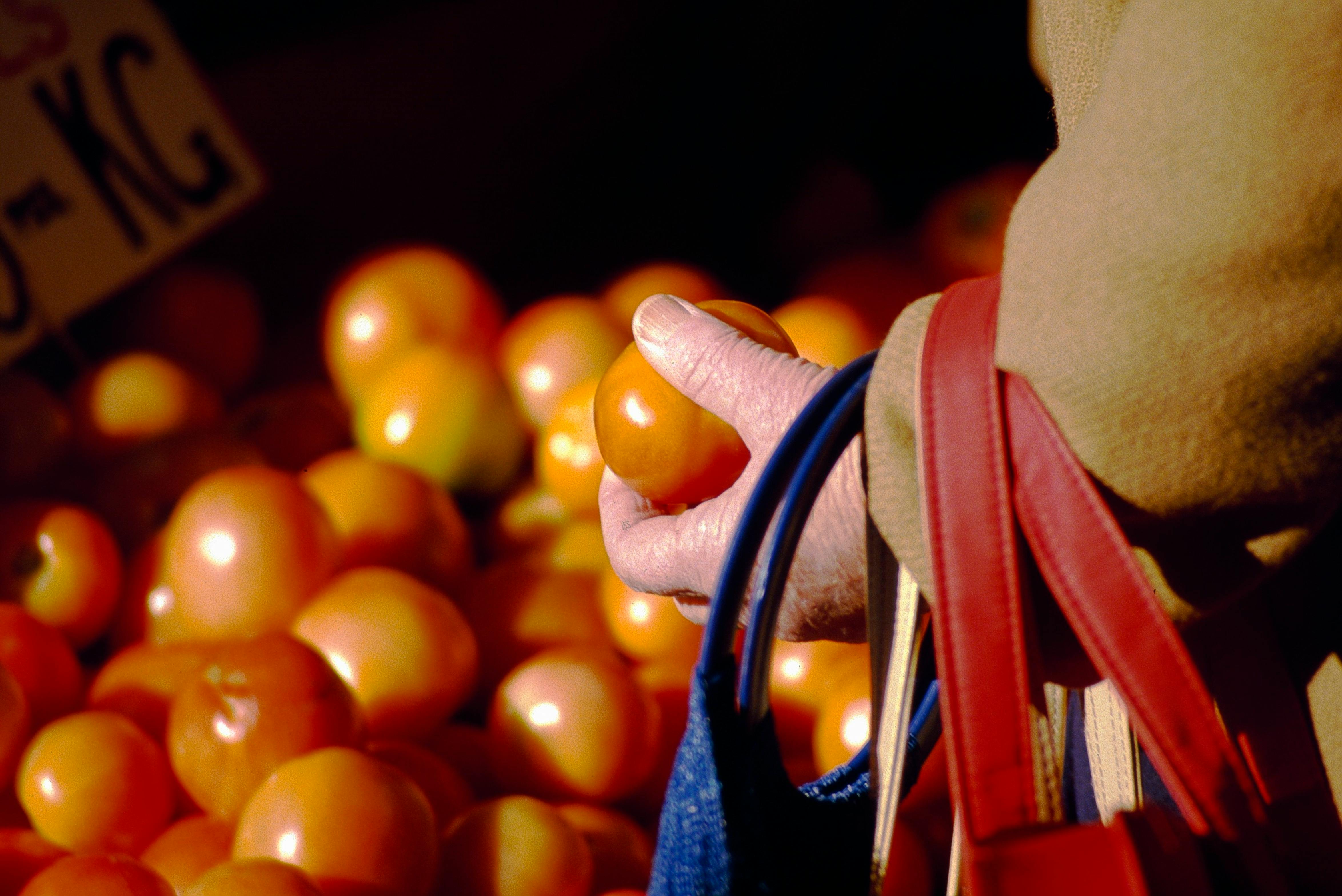
Today's Canadian food landscape can look vibrant on the surface. Farmers' markets are popular, chefs celebrate regional ingredients, and consumers talk more about local food, Indigenous foodways, sustainability, and food security. Those are important developments. But they exist alongside a much larger structure in which pricing, branding, supply logistics, and even public debate are still shaped heavily by U.S. market trends and corporate norms.
Recent disruptions exposed this dependence. During the pandemic and the inflation crisis that followed, Canadians were reminded how fragile concentrated supply chains can be. The same few grocers dominated the market, imported produce remained central, and political arguments often focused on competition concerns that had been building for decades. According to widely reported market analyses, Canada's grocery sector is unusually concentrated, which limits consumer choice and weakens the position of smaller domestic suppliers.
The deeper issue is not that Canada eats American food. It is that Canada increasingly governs food within an American-defined framework of consolidation, convenience, investor power, and permanent price pressure. Rebuilding a food identity would require more than nostalgia for butter tarts or tourtière. It would mean restoring domestic processing, strengthening regional supply chains, protecting farm diversity, supporting Indigenous leadership, and treating food policy as a matter of national self-determination again.




Leave a Reply