
Frozen pizza is supposed to be easy. I did not expect it to become a master class.
What began as a simple kitchen experiment quickly exposed how much flavor and texture most of us leave on the table when we follow the box and hope for the best.
Why frozen pizza so often falls short at home
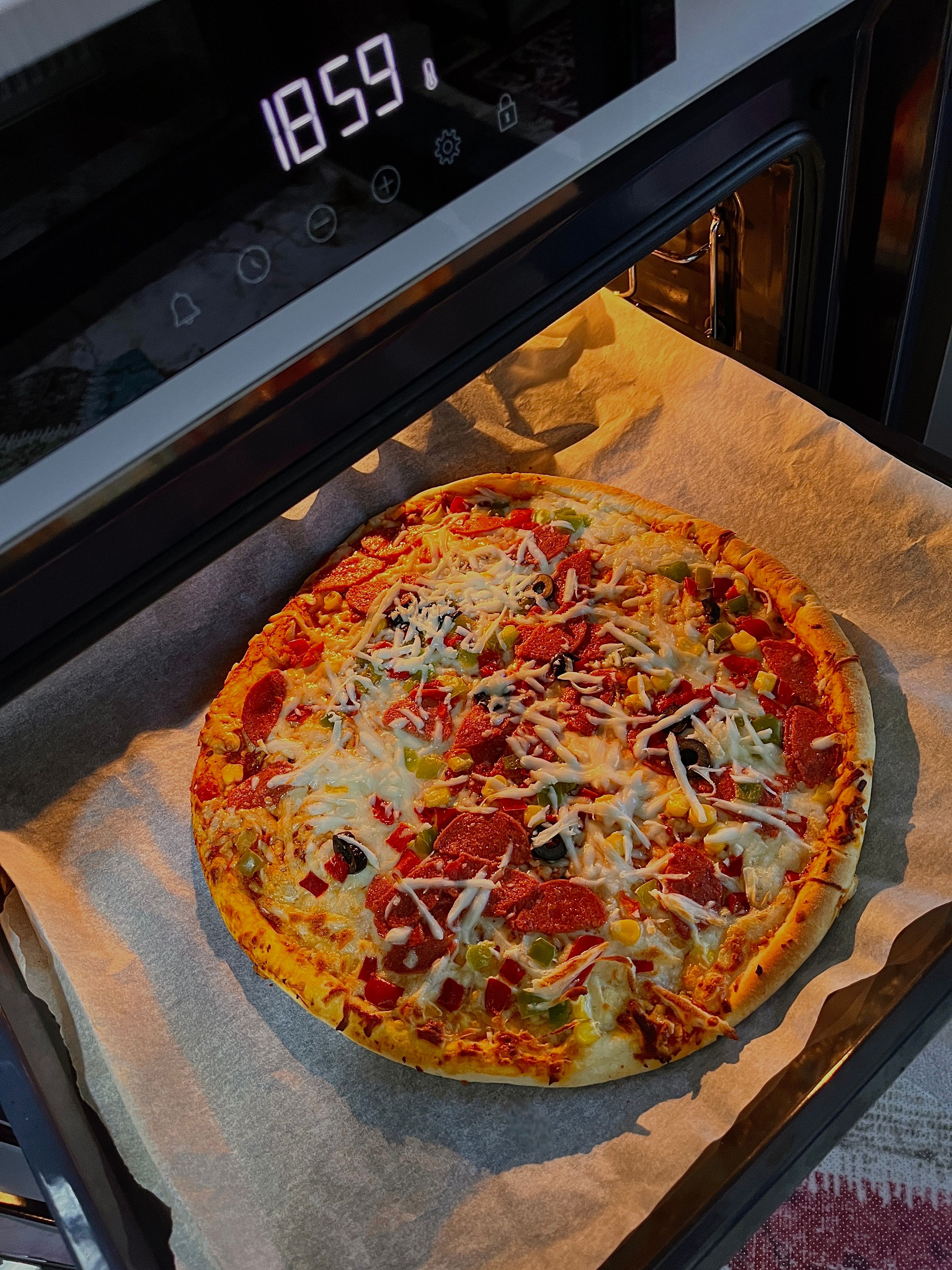
The first surprise was not what the chefs did. It was what they all agreed we usually do wrong. Most home cooks treat frozen pizza as a zero-skill food, which means it goes from freezer to oven with almost no thought about heat management, airflow, or timing. That hands-off approach is convenient, but it often produces the same disappointing result: pale cheese, a dry rim, and a center that never quite firms up.
The chefs pointed to one common issue immediately. Many home ovens are inaccurate, sometimes by 15 to 25 degrees, according to appliance testing reports and consumer kitchen studies. If the dial says 425°F but the oven is really running cooler, the crust dries before it browns. That is why so many frozen pizzas taste cooked yet somehow unfinished.
They also noted that sheet pans can sabotage the crust. A pan creates a barrier between the pizza and direct oven heat, trapping moisture under the base. The result is often a soft bottom instead of a crisp one. In side-by-side tests in restaurant kitchens, the chefs said the same pizza cooked directly on a preheated surface consistently developed better browning and stronger structure.
Just as important, nobody recommended blind obedience to package timing. Frozen pizzas vary widely in thickness, sauce moisture, cheese load, and sugar content. A pizza that needs 11 minutes in one oven may need 14 in another. The chefs were not rejecting the instructions. They were treating them as a starting point rather than a rule.
The first chef focused on the oven, not the toppings
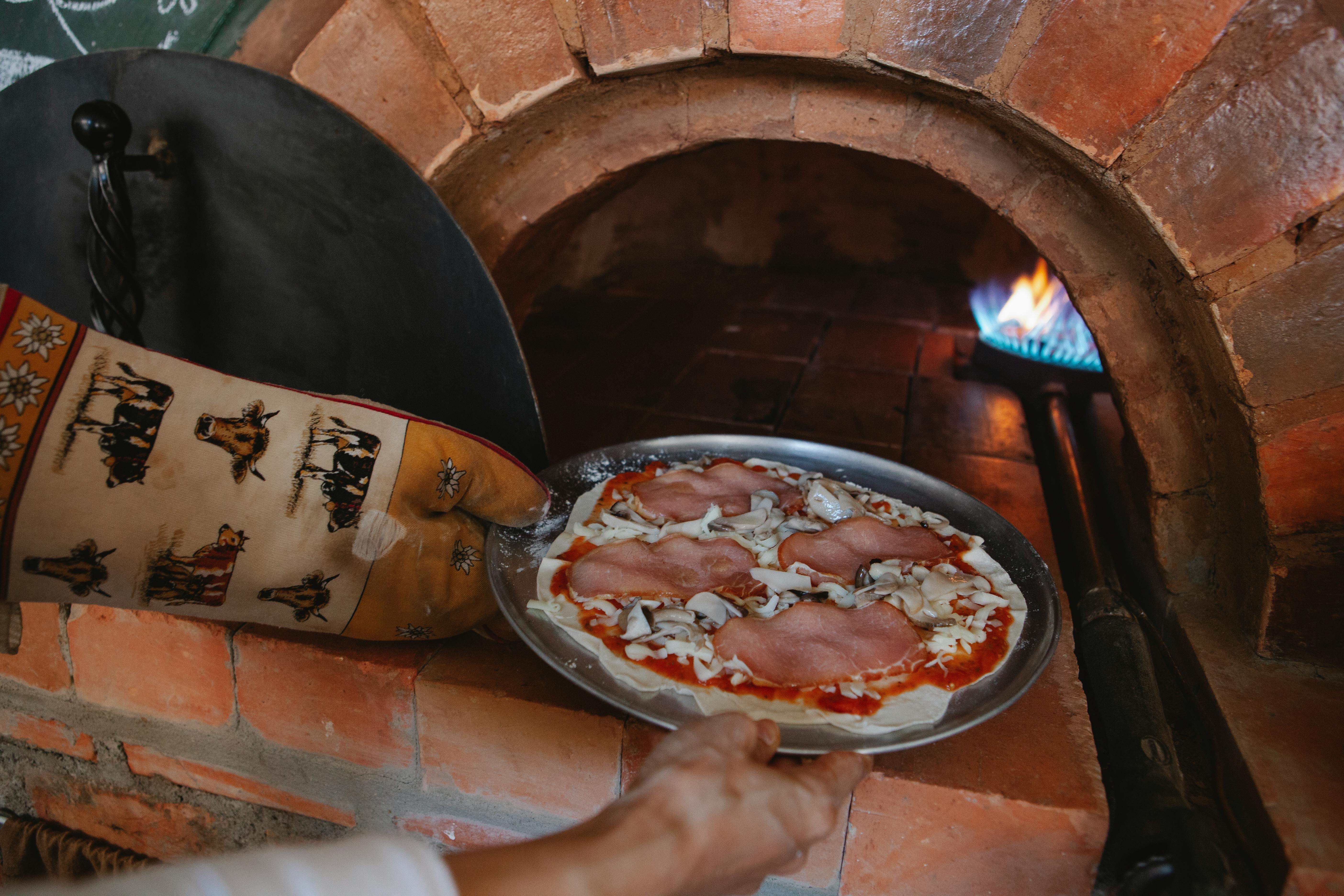
Chef number one, a longtime pizzaiolo who now consults for restaurant groups, had the most technical approach. His view was simple: frozen pizza quality is largely decided before the pie even enters the oven. He preheated for a full 35 to 45 minutes, much longer than most home cooks do, because he wanted the oven walls and cooking surface fully saturated with heat. "Hot air matters, but stored heat matters more," he told me.
He used either a baking steel or a heavy pizza stone on the middle rack. Both tools act as heat reservoirs, delivering an immediate burst of conductive heat into the crust. That first contact helps set the base quickly, reducing sogginess before the toppings have time to overcook. If neither tool was available, he suggested flipping a heavy sheet pan upside down and preheating that instead.
His timing method was equally precise. He started the pizza directly on the hot surface, then rotated it about ⅔ of the way through cooking to account for oven hot spots. He also watched for three visual cues rather than waiting for the timer: bubbling at the cheese edges, deep browning on the rim, and a bottom crust with visible toasted spots. In his tests, those cues were more reliable than any printed minute range.
The result was dramatic. The same supermarket pepperoni pie I had made dozens of times came out with a rigid, crisp underside and a noticeably lighter interior crumb. It tasted less like reheated convenience food and more like something intentionally baked.
The second chef treated frozen pizza like a moisture problem
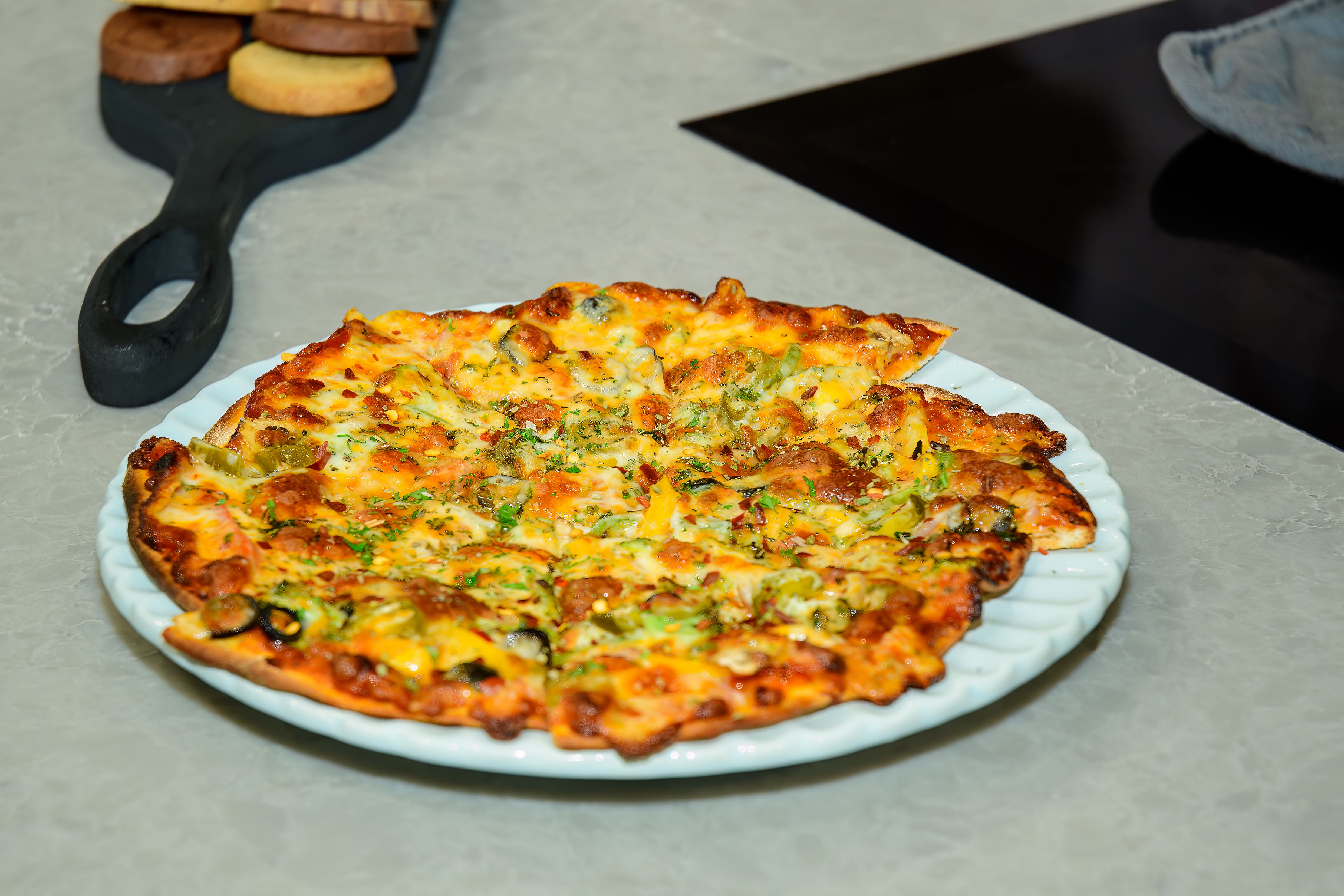
Chef number two came from a fine dining background and saw frozen pizza through a different lens. To her, the enemy was not poor ingredients but uncontrolled moisture. Frozen pizzas carry ice crystals, dense cheese, and sauce that release water at different rates. If that moisture cannot escape fast enough, the top steams while the crust struggles to brown.
Her fix began before baking. She unwrapped the pizza and let it stand at room temperature for about 10 minutes while the oven finished preheating. Not long enough to thaw, just long enough to reduce the surface frost. That small change, she said, helps prevent a burst of steam in the first minutes of baking. Food scientists often note that frost and surface ice can interfere with efficient browning, especially in lower-powered home ovens.
She also repositioned the rack higher than I normally would. A slightly upper-middle position exposed the cheese and toppings to stronger radiant heat, which encouraged better color before the crust dried out. If the base was browning too slowly, she would finish the pizza for the last 1 to 2 minutes directly on the oven floor or on a blazing preheated pan.
Her final move felt almost too simple: she rested the pizza for 2 minutes before slicing. That short pause let molten cheese set and steam redistribute instead of escaping all at once through the first cut. The slices held together better, and the center no longer collapsed into a wet fold.
The third chef improved the flavor with small strategic upgrades

The third chef, who runs a busy neighborhood bistro, believed frozen pizza's biggest weakness is not texture but flatness. "It's usually underseasoned and one-note," he said, especially in mass-market cheese and pepperoni varieties. His approach did not fight the product itself. It gave it a few carefully chosen supports, much like a cook would finish a soup or sauce before serving.
He never overloaded the pie. Instead, he added one or two concentrated ingredients that could survive high heat without dumping moisture. Thin slices of low-moisture mozzarella, a pinch of red pepper flakes, a light dusting of grated Pecorino, or a few pre-cooked mushrooms were his favorites. The goal was contrast, not clutter. According to him, too many home upgrades fail because people pile on raw vegetables that release water and make the pizza softer.
He also brushed the outer crust with a very thin film of olive oil just before the final third of baking. That encouraged richer browning and a more fragrant edge without turning the crust greasy. In some tests, he added a tiny sprinkle of garlic powder or dried oregano to the rim, which gave the pizza a stronger pizzeria aroma the second it left the oven.
What stood out most was restraint. He treated frozen pizza as a base with limits, not a blank canvas. By respecting those limits, he made cheap pies taste better without compromising structure.
The fourth chef used the broiler to finish what the oven started
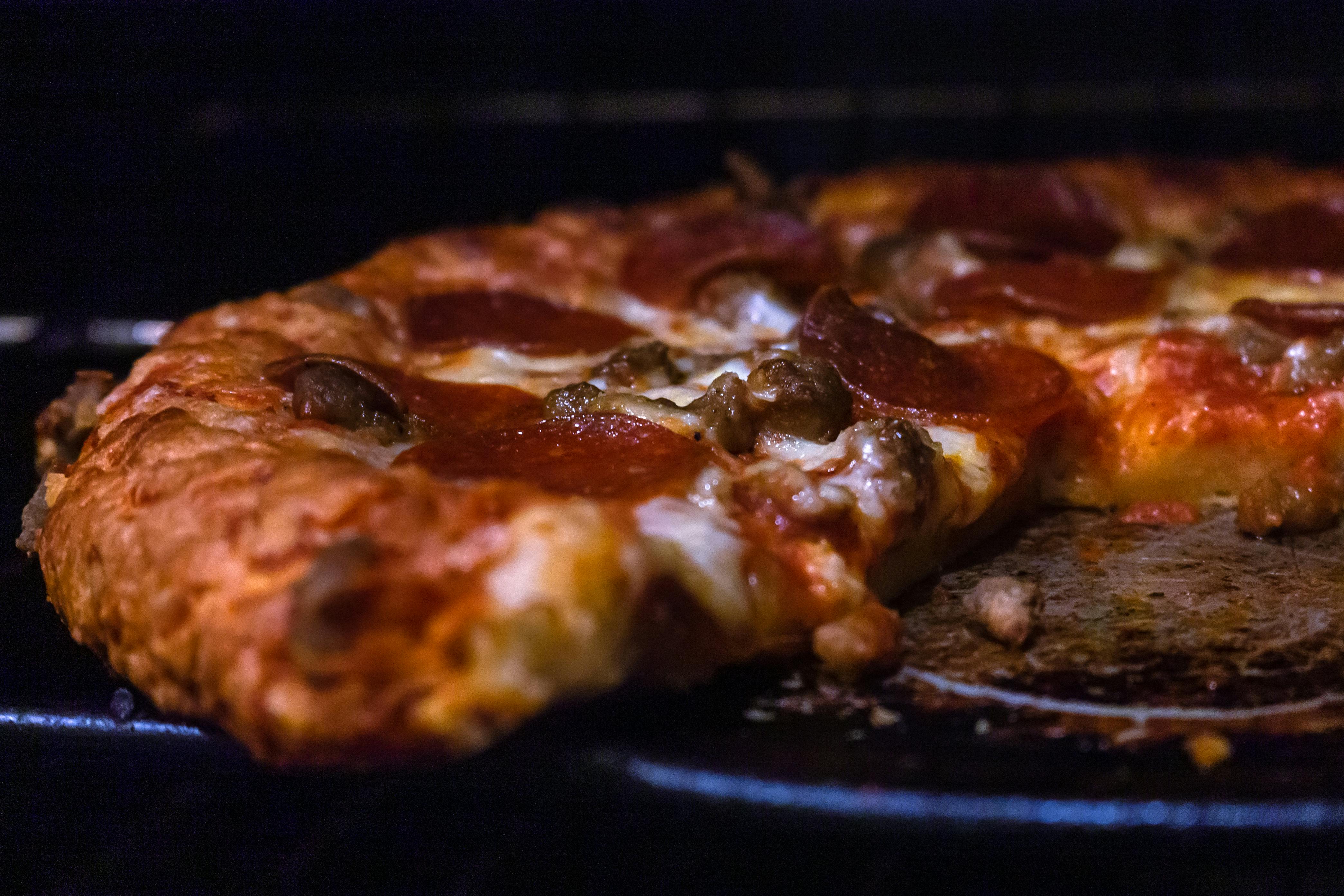
The fourth chef works in high-volume catering, where consistency matters more than culinary theater. His frozen pizza method was built around a practical reality: many home ovens cannot deliver strong top heat during a standard bake. That is why cheese often melts without blistering, and why pepperoni can release fat without ever crisping at the edges.
His answer was a controlled broiler finish. He baked the pizza until it was nearly done, usually 1 to 2 minutes shy of the package range, then switched to broil for 30 to 90 seconds. The goal was not aggressive charring. It was targeted surface browning. Done carefully, this created spotted cheese, curled pepperoni, and a more appetizing top without drying the interior.
He was strict about placement and attention. The pizza stayed on an upper-middle rack, not directly under the element, and he never walked away. Broilers can move from perfect to burnt in less than a minute, especially with sugary sauces or finely shredded cheese. In professional kitchens, that kind of finish is common because it gives cooks visual control right at the end.
This method produced the most dramatic visual transformation of all four. The pizza looked more like delivery and less like freezer food. More important, the intensified browning added bitterness, salt perception, and roasted notes that made the whole pie taste more balanced.
The method I use now and why it changed my standards
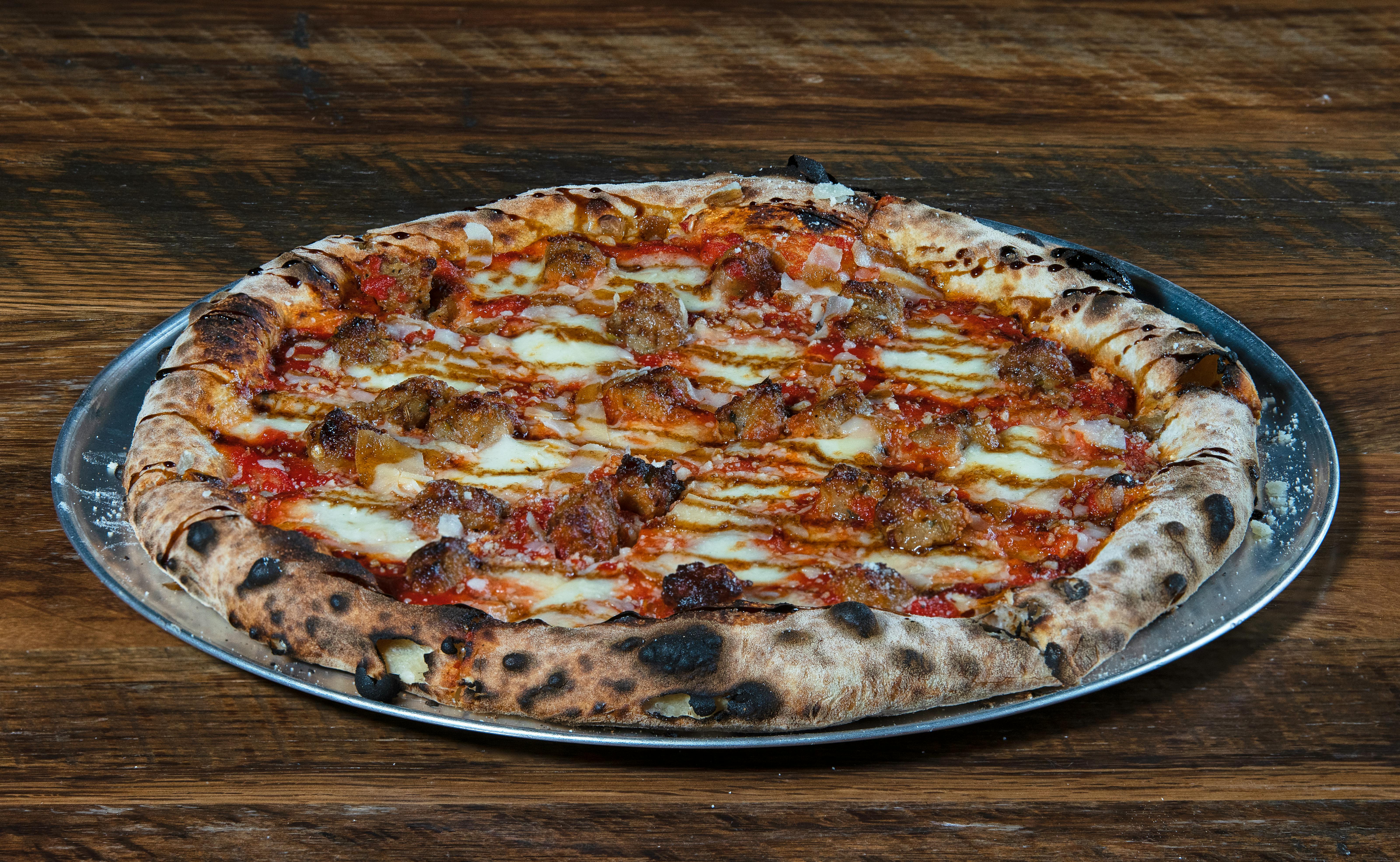
After trying all four approaches over several weeks, I landed on a hybrid method that borrows the strongest ideas from each chef. I preheat the oven with a baking steel for at least 35 minutes, unwrap the pizza while the oven finishes heating, and cook it directly on the hot surface. About halfway through, I rotate it. If the top needs more color at the end, I use a brief broiler finish.
I also stopped trusting the box more than my senses. Now I look for a firm, browned underside, active bubbling near the cheese edge, and a rim that has color instead of just dryness. If I want to add anything, I keep it minimal and low-moisture. A little Pecorino, some chili flakes, or a few slices of pre-cooked topping are usually enough.
The larger lesson is that frozen pizza is not low effort because it deserves neglect. It is low effort because a few smart choices can deliver major returns. Heat storage, moisture control, and finishing technique matter just as much here as they do in any other kind of cooking. That was the real shift for me.
Now, when I think about my old method, I understand why it felt inconsistent. I was relying on packaging to solve a cooking problem that belonged to me. The chefs did not turn frozen pizza into artisan pie. They did something more useful: they made it reliably good. Once you taste that difference, it is very hard to go back.




Leave a Reply