
Few grocery items spark cross-border confusion quite like milk in a bag. To many Americans, it looks absurd at first glance, but in parts of Canada, it is completely ordinary.
Why bagged milk looks so strange to Americans

At a visual level, bagged milk challenges what most American shoppers expect dairy to look like. In the United States, milk is strongly associated with rigid gallon jugs, paper cartons, and clearly branded containers that can go straight from the store shelf to the fridge. A soft plastic bag, especially one that must be placed into a pitcher and cut open, feels incomplete. It looks less like packaging and more like something still waiting to be unpacked.
That reaction is not just about milk. It is about familiarity. Packaging shapes trust, and consumers often treat standard formats as proof that a product is safe, modern, and convenient. When Americans see bagged milk, many assume it is a downgrade or a cost-cutting gimmick, even though the milk itself is no different from what they buy at home.
There is also the matter of control. A jug has a cap, a handle, and a spout built in. Bagged milk asks the user to perform a small ritual: place the inner bag in a reusable pitcher, snip a corner, and pour carefully. To people who did not grow up with that routine, it can look clumsy and spill-prone. What Canadians see as normal kitchen muscle memory, Americans often read as needless complication.
Social media has amplified that discomfort. Videos of confused Americans trying to pour from the wrong corner or asking why the bag has no lid turn a regional grocery habit into a spectacle. The horror is often played for laughs, but beneath the jokes is a real truth: packaging norms are cultural, and bagged milk violates American expectations in a very visible way.
How Canada ended up with milk in bags

The story of bagged milk in Canada is tied to regulation, manufacturing, and a period of packaging change in the late 20th century. During the 1960s and 1970s, Canada moved toward metric measurement, and that shift created an opening for new dairy packaging formats. Instead of redesigning every bottle and carton line immediately, some processors found it easier and cheaper to package milk in flexible plastic bags.
By the 1970s, bagged milk had become especially common in Ontario, Quebec, and the Maritimes. A typical package usually contains three smaller bags sold together, adding up to about 4 liters. That format matched household consumption patterns and worked well for families buying multiple days' worth of milk at once. It also reduced the amount of hard plastic used in each sale.
Regional adoption mattered. Western Canada gradually moved away from bagged milk in many areas, while eastern provinces retained it as a regular supermarket option. That means Canada is not uniformly a bagged-milk nation, despite the stereotype. According to long-running reporting by the CBC and other Canadian outlets, the format survives because it remains economically viable and because established consumer habits are hard to dislodge.
The persistence of bagged milk says as much about infrastructure as nostalgia. Once dairies, retailers, and households are set up around a packaging system, switching everything over is expensive. What appears irrational from the outside is often the result of decisions made decades ago that still make practical sense within a regional supply chain.
The practical case Canadians make for it

For Canadians who buy bagged milk regularly, the defense is usually simple: it works. The plastic uses less material than many rigid containers, and the multi-bag system can be useful in busy homes. If one inner bag is opened, the others stay sealed and fresh until needed. That can be especially helpful for households that go through milk quickly but do not want one large container repeatedly exposed to air and handling.
There is also a cost and storage argument. Flexible packaging can be lighter to transport and may reduce packaging costs for processors. In the refrigerator, the bags fit neatly into a dedicated pitcher without taking up the same shape as a bulky jug. For people accustomed to it, pouring from a cut corner is no more difficult than pouring from a carton.
Some consumers even argue that bagged milk creates less waste in day-to-day use. A reusable pitcher stays in service for years, while only the thin inner bags are discarded. Environmental experts would note that recyclability varies by municipality, so the sustainability picture is not universally simple, but lower plastic weight is still part of the appeal.
Most important, routine erases weirdness. A child who grows up seeing a parent snip the corner of a milk bag does not view it as exotic technology. It is just breakfast. What outsiders call strange is often just a sign that another country solved an everyday problem in a different, perfectly functional way.
Why the format keeps surviving in some provinces
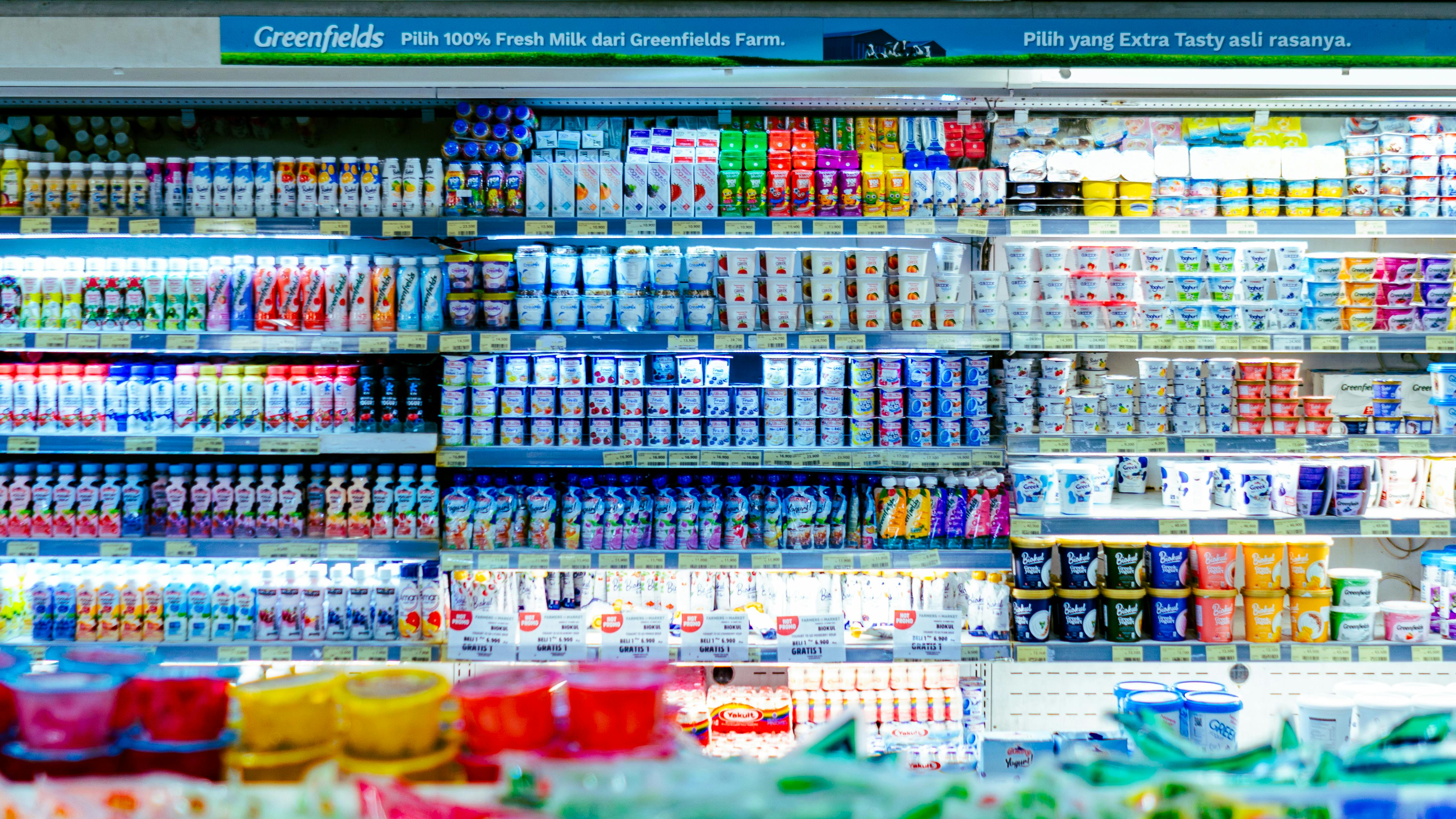
Bagged milk survives because habits, regional markets, and retail systems reinforce one another. In Ontario, where the format remains most familiar, stores still stock the pitchers, dairies still package 4-liter bags efficiently, and shoppers still expect to find them. Once a format becomes embedded in a region's grocery culture, it gains staying power that has little to do with trendiness.
Consumer loyalty plays a major role. People tend to keep buying what they understand, especially with staple foods. Milk is not an experimental purchase for most households. It is routine, repetitive, and often bought quickly. That gives established packaging an advantage. A family that has used bagged milk for decades has little reason to switch unless price, availability, or quality changes dramatically.
Dairy supply management in Canada also shapes the broader market context. While the packaging itself is not created by supply management, the regulated nature of the dairy sector contributes to stable, regionally patterned systems. Processors optimize around local demand, and retailers respond to what consistently sells. That helps explain why bagged milk can remain common in one province and marginal in another.
In other words, the format survives because it still fits its market. Not every grocery practice endures because it is beloved. Some endure because they are efficient enough, familiar enough, and supported by the equipment and expectations already in place.
The American reaction says more than people realize

American horror at bagged milk is partly genuine and partly performative. The format is unusual within the U.S. grocery landscape, so the initial surprise is real. But the intensity of the reaction often reveals something broader about food culture. People tend to assume that familiar packaging is the logical endpoint of progress, and anything else must be backward, messy, or inferior.
That assumption breaks down quickly when viewed globally. Around the world, milk and other liquids are sold in a wide range of formats, including shelf-stable cartons, pouches, bottles, and refill packs. In many countries, flexible packaging is not strange at all. The American response to bagged milk, then, is less an objective judgment and more a reminder of how local consumer norms can masquerade as universal common sense.
There is also a class and cleanliness angle to the reaction. Soft plastic bags can look temporary or improvised to shoppers raised on rigid, sealed containers. Yet that visual cue does not say much about product quality. Canadian milk standards are strict, and the contents are handled through the same regulated dairy system as milk sold in cartons or jugs.
The fascination persists because bagged milk is easy to mock and easy to film. It is instantly legible as "different." In a media environment that rewards quick reactions, few items communicate cultural contrast as efficiently as a bag of milk dropped into a pitcher and snipped with scissors.
What bagged milk really tells us about grocery culture

At its core, the bagged milk debate is not really about dairy. It is about how everyday systems become invisible to the people who live with them. Grocery stores teach consumers what normal looks like, from egg carton sizes to bread slicing styles to how milk is packaged. When another country uses a different system, the surprise can feel larger than the actual difference.
Bagged milk also shows how practicality and identity often overlap. Canadians do not all drink milk from bags, and many do not care deeply about the format. Still, it has become a shorthand for a particular kind of Canadian domestic life, especially in central and eastern provinces. Like ketchup chips or all-dressed flavor, it functions as both a real product and a cultural talking point.
For Americans, the better response is curiosity rather than disgust. The bag is not a symbol of national decline, nor is it proof that Canadians are doing groceries wrong. It is a reminder that convenience is learned. Once a system is familiar, it stops looking like a system at all.
That is why bagged milk endures as such a perfect cross-border obsession. It is mundane, practical, faintly ridiculous-looking, and deeply revealing. Few grocery items do a better job of showing how culture hides inside ordinary packaging.




Leave a Reply