
When kids and adults share one party space, the biggest problems usually come from planning the room for only one group. A better setup makes the event safer, calmer and easier for everyone to enjoy.
Leaving safety to chance

A shared party space changes fast once children start moving around. A coffee table corner, a tray of glassware on a low surface, or a loose extension cord may seem minor during setup, but they become real hazards in a busy room. Hosts often focus on food and decorations first, then assume adults will naturally keep an eye on everything.
That approach rarely works for long. The American Academy of Pediatrics has long advised parents to watch for choking hazards, hot foods and drinks, and access to dangerous household items during gatherings. In a mixed-age party, that means checking the floor level as carefully as the tabletop.
A useful rule is simple: if it can spill, shatter, tip or be swallowed, move it. One strong party photo here is a living room with breakables cleared away, cords secured and kid-safe play items visible nearby.
Serving one menu for everyone

Food is one of the easiest places to lose both comfort and convenience. Adults may be happy with spicy dips, nuts, charcuterie and sparkling drinks, but younger children often need simpler choices, smaller portions and easier textures. When there is only one menu, somebody ends up frustrated, hungry or making a mess.
The U.S. Department of Agriculture also notes that some foods are more likely to cause choking for young children, including whole grapes, chunks of meat or cheese, popcorn and nuts. That matters at parties, where kids are excited, distracted and more likely to eat while walking around.
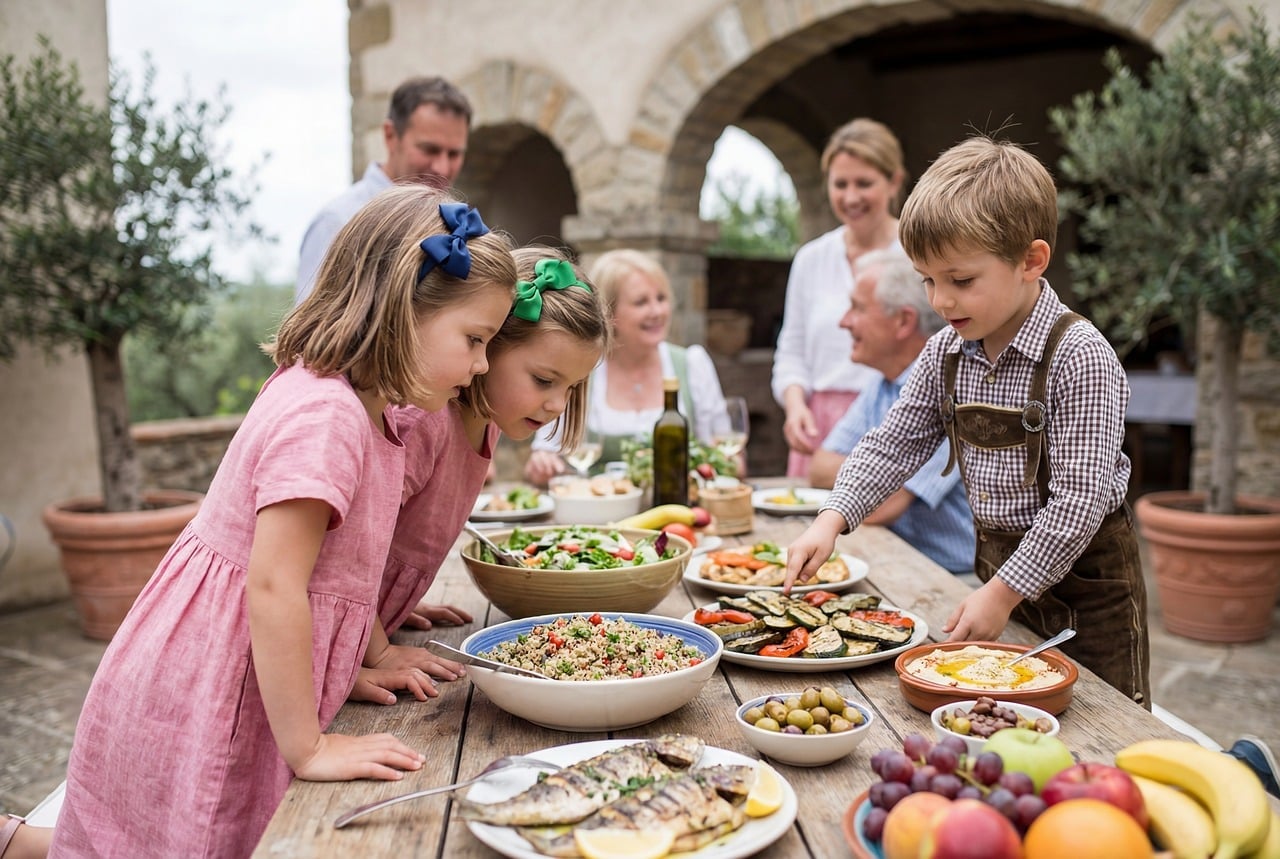
Good hosting is less about making separate meals and more about building a smart spread. Think cut fruit, small sandwiches, water within reach, and clearly placed adult snacks away from toddler height. A buffet table with distinct kid and adult zones makes this mistake easy to illustrate in a single image.
Expecting kids to entertain themselves
Children rarely drift happily for hours just because other children are present. That is one of the most common planning errors at family parties. A room full of adults talking can feel endless to a child, especially if there is no activity designed for their age and energy level.
Research from child development experts consistently shows that predictable activities help children regulate behavior better than unstructured waiting. At a party, this does not require hired entertainment or a packed schedule. It can be as simple as coloring, a scavenger hunt, building toys or a clearly defined play corner.
The point is not to create nonstop stimulation. It is to prevent boredom from turning into running, grabbing, whining or conflicts with other kids. A photograph of a small activity table with crayons, paper and quiet toys captures this fix well.
Forgetting that adults need a zone too

Hosts often work hard to make children comfortable, then accidentally leave adults standing in doorways, balancing plates or speaking over toy noise. Mixed-age gatherings go better when grown-ups also have a place to settle in, eat and talk like guests instead of temporary referees.
This matters because layout shapes behavior. When every seat faces the play area, adults stay on alert and conversation never really begins. But when there is a nearby seating cluster with food and drinks at adult height, people can relax while still keeping children within sight.
The best version is not total separation. It is partial separation with visibility. A patio seating area, a dining table off to one side, or a living room corner with soft lighting can give the event a more balanced rhythm.
Letting the party run too long

The final mistake is treating a mixed-age party like an all-evening open house. Adults may linger comfortably for hours, but children often hit a wall once they are tired, overstimulated or off schedule. That is when meltdowns, sibling fights and rushed goodbyes tend to begin.
Pediatric sleep experts regularly emphasize how strongly children respond to disrupted routines, especially around naps, meals and bedtime. Even flexible kids can struggle when noise, sugar and social activity pile up. A party that feels easy at 4 p.m. can feel very different by early evening.
A clear start and end time solves more than many hosts expect. It helps parents plan, keeps energy steadier and lets the gathering end while everyone still feels good. A natural closing image is a family-friendly party winding down in daylight, not after exhaustion has taken over.




Leave a Reply