
Walk through a Canadian supermarket and you may spot products made with ingredients that face much tougher rules across Europe. In many cases, the food itself is not the issue. It is the dye, preservative, processing aid, or farming method behind it. This gallery breaks down 10 examples in clear, everyday language, showing why regulators on each side of the Atlantic have landed in different places.
Bread Made with Potassium Bromate

Few ingredients sound as industrial as potassium bromate, and that is part of why it draws so much scrutiny. Bakers use it to strengthen dough, help bread rise higher, and create a more uniform texture. It has been banned in the European Union for years because of concerns tied to carcinogenicity in animal studies.
In Canada, potassium bromate is not permitted as a flour treatment agent, but imported baked goods and some products on shelves can still raise questions for shoppers who assume bread rules are identical everywhere. The bigger point is that Europe tends to apply a stricter precautionary approach when an additive carries unresolved safety concerns. That difference in philosophy helps explain why a loaf that looks ordinary in one market can be treated very differently in another.
Breakfast Cereals with BHT
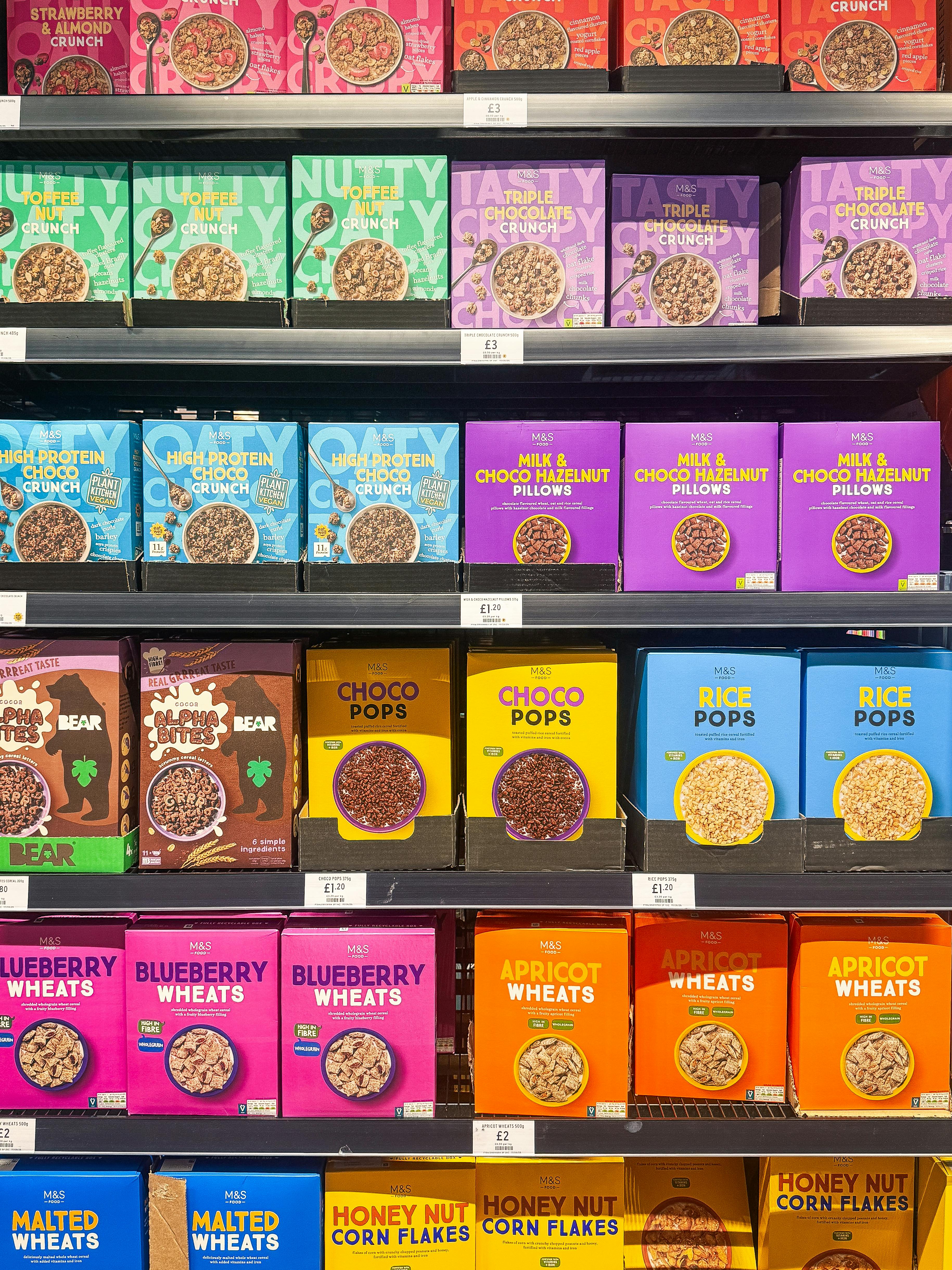
A colorful box of cereal can hide a surprisingly technical ingredient list. One additive that often comes up is BHT, short for butylated hydroxytoluene, a preservative used to keep fats from going rancid and cereals tasting fresh longer. Some European countries have taken a harder line on it, and its use is more restricted across Europe than many Canadians realize.
Canadian shoppers can still find cereals and snack foods made with BHT, especially imported or mainstream packaged brands. Health agencies have debated its safety for years, with regulators allowing it at set levels while critics argue the evidence deserves more caution. For consumers, this is one of those examples where a product marketed as a simple pantry staple can come with a regulatory backstory far more complicated than the front label suggests.
Candies Colored with Titanium Dioxide

Bright candy sells fast, and titanium dioxide has long been part of that visual strategy. It is used to make sweets, gum, icing, and powdered foods look whiter, smoother, and more opaque. The European Union moved to ban it as a food additive after regulators said they could no longer rule out concerns about genotoxicity.
In Canada, the issue has drawn growing public attention because the ingredient has appeared in candies and baked goods that many families buy without a second thought. The debate shows how food regulation is not just about whether an ingredient causes immediate harm. It is also about how much uncertainty a regulator is willing to accept. Europe decided the unanswered questions were reason enough to step away, while Canadian shelves have taken longer to reflect that level of caution.
Sodas and Sweets with Brominated Vegetable Oil
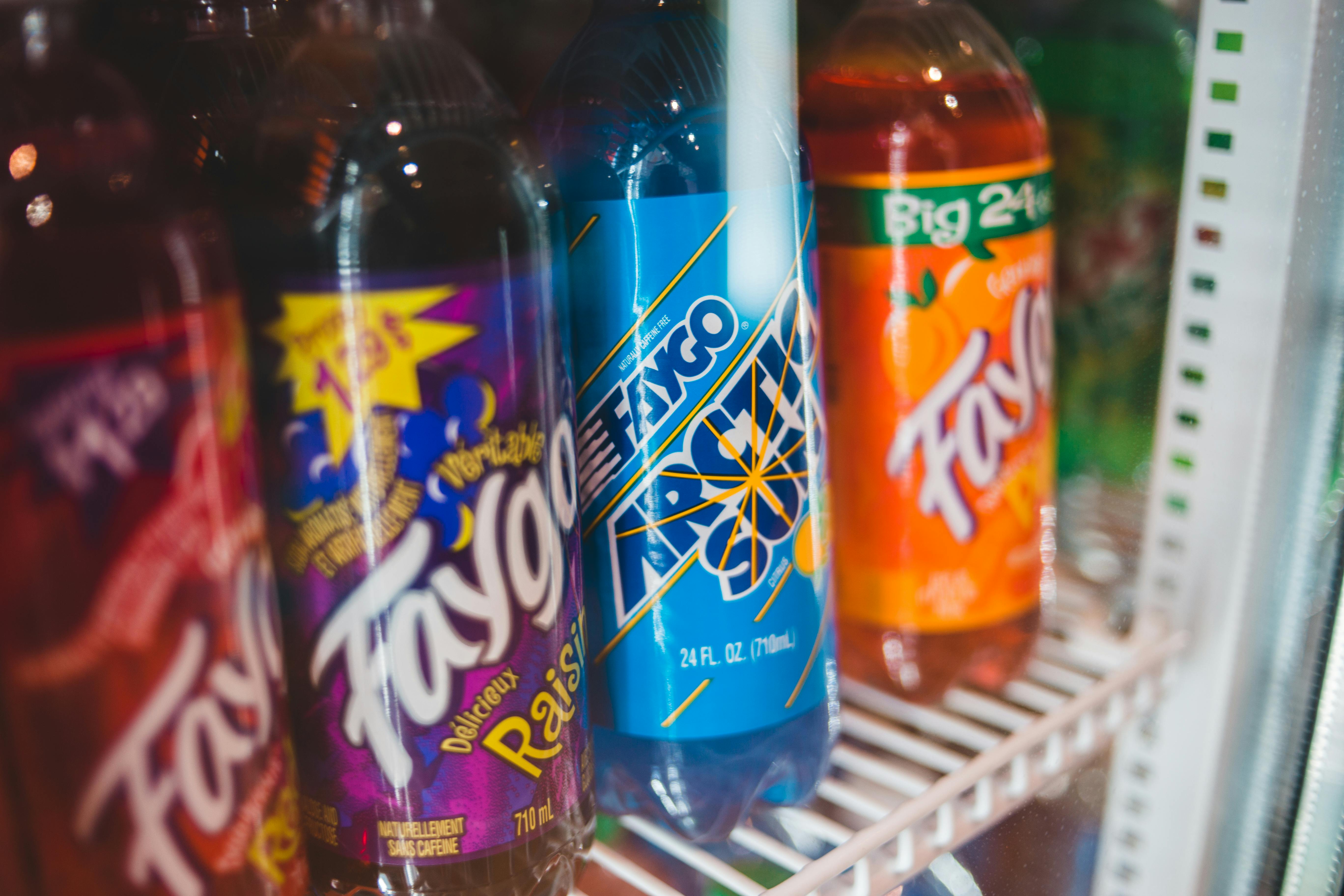
Brominated vegetable oil, often called BVO, sounds obscure until you realize it has been used in citrus-flavored drinks for decades. Manufacturers added it to help flavoring oils stay mixed evenly in soft drinks instead of floating to the top. Europe has long barred its use in food because of concerns linked to bromine buildup in the body and possible health effects with repeated exposure.
Canada has also moved away from BVO in many products, but the broader story remains important because imported drinks and legacy formulations still shape public confusion. This is a classic case of regulation catching up with ingredient technology that once seemed useful and harmless. A bottle of orange soda may look playful and familiar, yet the chemistry behind it has triggered serious questions for years.
Farmed Salmon Raised with Different Feed and Dye Rules

Salmon is one of those foods that looks wholesome by default, but how it is produced matters enormously. In both Canada and Europe, farmed salmon may be fed carotenoid pigments to give the flesh its expected pink color. The difference is that Europe has often applied tighter oversight to feed ingredients, veterinary drug use, and broader aquaculture standards.
That means the same fillet category can carry different regulatory assumptions depending on where it is sold. Canadian consumers may see farmed salmon as a straightforward healthy choice, while European regulators have historically been more cautious about what enters the feed chain and how residues are managed. It is less about one dramatic ban and more about a pattern of stricter controls that can leave similar products feeling worlds apart on paper.
Chicken Washed with Antimicrobial Rinses

Here is a food fight that has become a symbol of transatlantic regulation. In North America, poultry processing can include antimicrobial rinses designed to reduce bacteria on carcasses after slaughter. Europe has generally rejected this approach for imported poultry, arguing that hygiene should be ensured throughout production rather than corrected at the end with chemical washes.
Canadian chicken sold domestically is governed by Canadian rules, not European ones, and that leaves shoppers in a very different policy environment. Supporters of rinses say they are a practical food safety tool. Critics say they can mask weaker standards earlier in the process. The result is a sharp philosophical split. One system leans on intervention at multiple stages, while the other is more skeptical of fixes that happen after the bird reaches the plant.
Beef Produced with Growth Hormones

Nothing captures the Europe versus North America divide quite like hormone-treated beef. The European Union has long banned beef from cattle treated with certain growth hormones, citing consumer protection concerns and a precautionary reading of the science. Canada, like the United States, allows approved hormonal growth promotants in beef production under regulated conditions.
That means Canadian supermarket beef may come from production systems Europe does not accept. For shoppers, the disconnect can feel jarring because the meat looks no different at the butcher counter. The disagreement is rooted in risk assessment and public trust as much as toxicology. Europe has chosen a more conservative line, while Canadian regulators maintain that approved uses are safe. It is a reminder that food policy often reflects values as much as laboratory data.
Milk from Cows Treated with rBST

Milk carries a health halo, which makes its regulatory history easy to overlook. Recombinant bovine somatotropin, or rBST, is a synthetic hormone used to boost milk production in dairy cows. It is not allowed in Canada, but the broader North American conversation matters because products and ingredients linked to different dairy systems still shape consumer expectations. Europe also rejected rBST, in part over animal welfare concerns.
This topic belongs in the wider banned-abroad discussion because it shows that food regulation is not always centered only on the final carton. Sometimes the key issue is how the animal was raised and whether productivity tools are considered acceptable. European rules have often put more weight on welfare and production ethics, while Canadian shoppers are left navigating labels that do not always tell the full story at a glance.
Snacks and Drinks with Artificial Dye Additives

If a snack is almost glowing, there is a good chance synthetic color is doing the heavy lifting. Europe has taken a tougher stance on several artificial food dyes, including requiring warning labels on some products tied to possible effects on children's behavior. In many cases, manufacturers selling into Europe reformulate with natural colors while continuing to sell brighter versions elsewhere.
Canadian shelves still carry candies, drinks, and snack foods made with dyes that face stricter treatment across the Atlantic. That does not automatically make them illegal here, but it does expose a striking double standard in product design. The same brand can quietly swap ingredients depending on the market. For shoppers, that raises a simple question with no simple answer: if a cleaner formula exists, why is it not the default everywhere?
Processed Foods Containing Azodicarbonamide

Azodicarbonamide is one of those ingredients people only notice after a headline brings it into view. In baking, it has been used as a dough conditioner to improve texture and consistency in breads, buns, and packaged baked goods. The European Union does not allow it in food, while its use has persisted in other markets, making it a frequent talking point in conversations about ingredient transparency.
Canadian consumers may encounter products that reflect this broader North American processing style, especially in highly industrial baked foods. What makes azodicarbonamide controversial is not just the name. It is the sense that a basic food like bread should not need such a technical assist in the first place. Europe has largely answered that concern by saying no. Canadian shelves, by contrast, still reveal how much room regulators can leave for additives in everyday staples.




Leave a Reply