
Food choices often look personal. In reality, they are deeply shaped by pressure, fatigue, and the pace of daily life.
Stress is changing appetite in opposite ways

For many Canadians, stress does not produce one predictable eating pattern. Psychologists have long noted that acute stress can suppress appetite, while chronic stress often pushes people toward frequent snacking, larger portions, and foods high in sugar, salt, and fat.
That split has a biological basis. Stress hormones such as cortisol and adrenaline can temporarily dull hunger in the short term, but when stress lingers, elevated cortisol is linked to stronger cravings for calorie-dense comfort foods and more impulsive eating.
Canadian clinicians say this matters because burnout is rarely just mental exhaustion. It also changes body signals. People report skipping breakfast, forgetting meals during overloaded workdays, then overeating late at night when stress, fatigue, and hunger all collide at once.
Burnout weakens the mental skills needed for healthy eating

One of burnout's quietest effects is cognitive overload. When people are emotionally drained, they have less capacity for planning meals, grocery shopping carefully, cooking from scratch, or resisting the convenience of takeout and packaged foods.
Psychologists often describe healthy eating as a chain of small executive decisions. You need attention, memory, organization, and self-control. Burnout chips away at each one, making the easiest choice feel like the only realistic choice after a long day.
This is especially visible among shift workers, healthcare staff, teachers, and parents balancing paid work with caregiving. In these groups, irregular schedules and decision fatigue can turn eating into a reactive act rather than a deliberate one, with nutrition becoming secondary to survival.
Money stress is shaping the dinner table too

In Canada, food behaviour is also being reshaped by financial strain. Grocery inflation over the past few years has forced many households to rethink what they buy, how often they cook, and whether fresh produce, meat, and specialty items still fit the budget.
Psychologists say financial stress intensifies emotional eating because uncertainty itself is exhausting. When people feel squeezed, they may seek low-cost comfort through highly processed foods that are cheaper, shelf-stable, and often engineered to be especially rewarding under stress.
There is also a social layer. People may feel shame about relying on discount foods, skipping meals, or visiting food banks, which can heighten anxiety and further disrupt regular eating patterns. Stress around money does not stay in the bank account. It follows people into the kitchen.
Routines have fractured, and eating has become more irregular
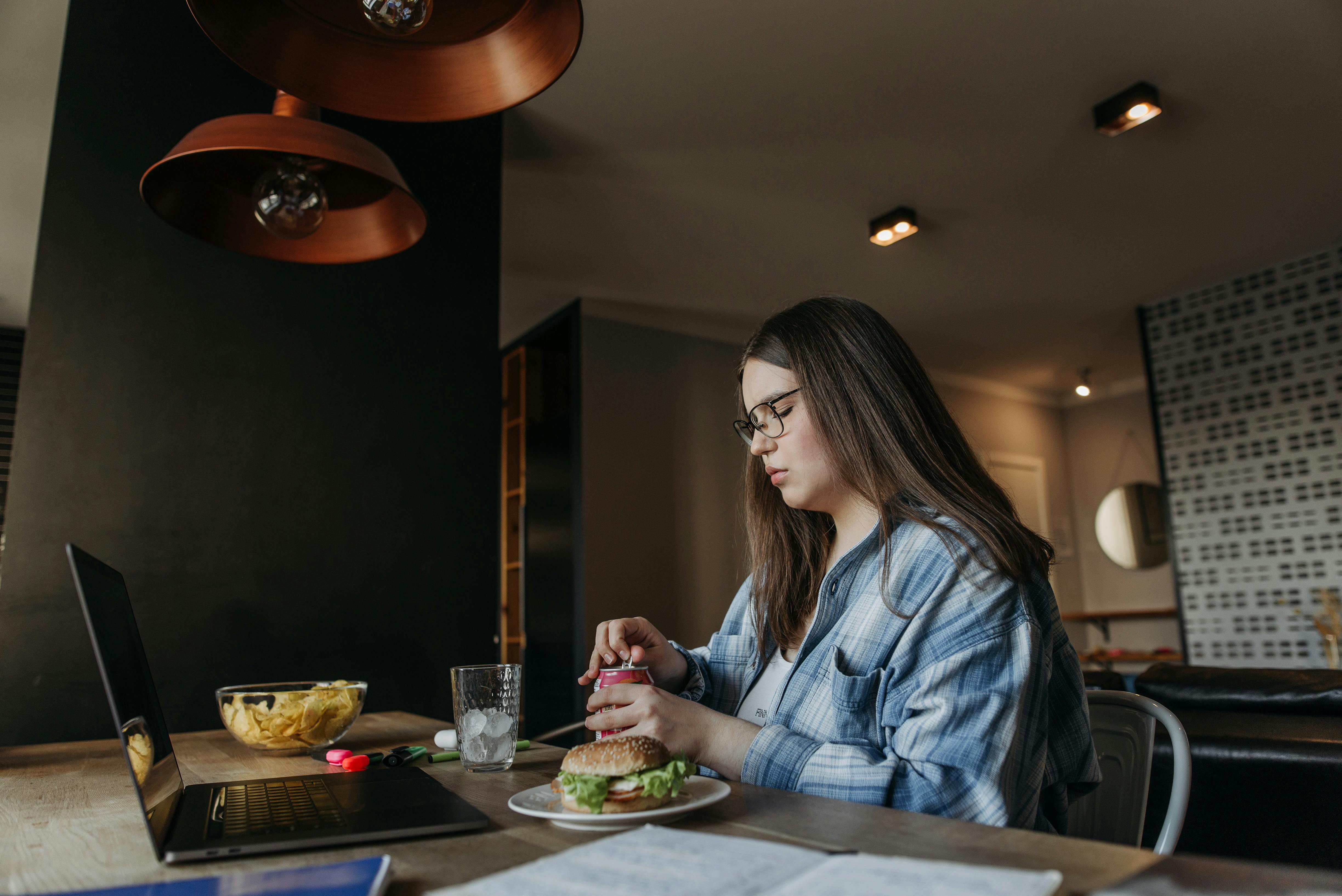
A major shift in Canadian eating habits is not only what people eat, but when they eat. Remote work, hybrid schedules, long commutes, and unstable hours have blurred traditional meal times, making grazing and distracted eating far more common.
Psychologists warn that irregular eating can weaken the cues that help regulate hunger and fullness. When meals happen in front of screens, between meetings, or while answering messages, people are less likely to notice satisfaction and more likely to keep eating past it.
Sleep plays a role here too. Burnout often disrupts sleep quality, and poor sleep is strongly associated with increased hunger, stronger cravings, and reduced impulse control. In practice, that means a stressful week can reshape eating behaviour before a person even realizes it.
Comfort eating is often about regulation, not weakness

It is easy to frame stress eating as a failure of discipline, but psychologists strongly reject that view. Comfort eating often functions as a form of emotional regulation, offering temporary relief, familiarity, or a sense of reward when other sources of stability feel out of reach.
Foods tied to pleasure can briefly calm the nervous system. That does not make the pattern harmless, especially if it becomes frequent, but it does explain why lectures about willpower often fail. People are not simply choosing badly. They are coping with real psychological strain.
Researchers have also found that social isolation can magnify this cycle. People eating alone more often may rely more heavily on convenience foods and may be less aware of portions. Shared meals tend to create structure, while isolation can make eating more private, emotional, and unplanned.
What experts say can actually help

Psychologists and dietitians generally agree that the best response is not a stricter food rulebook. Under high stress, rigid diets can backfire, increasing guilt, preoccupation with food, and the likelihood of binge-restrict cycles that leave people feeling even more out of control.
Instead, experts recommend stabilizing the basics first. That includes regular meals, easier nutritious staples, better sleep routines, and realistic planning such as preparing 2-3 simple dinners in advance. Even modest structure can reduce the chaos that fuels stress-driven eating.
The broader lesson is that eating habits are often a mirror of mental load. If Canadians want healthier relationships with food, psychologists say the conversation must include burnout, work stress, affordability, and social support, not just personal responsibility on the plate.



Leave a Reply