
Some desserts are simply eaten. Others are recruited into national identity.
The Nanaimo bar belongs to the second category, and its history is far more layered than its famous three-tiered form suggests.
A dessert with a disputed beginning
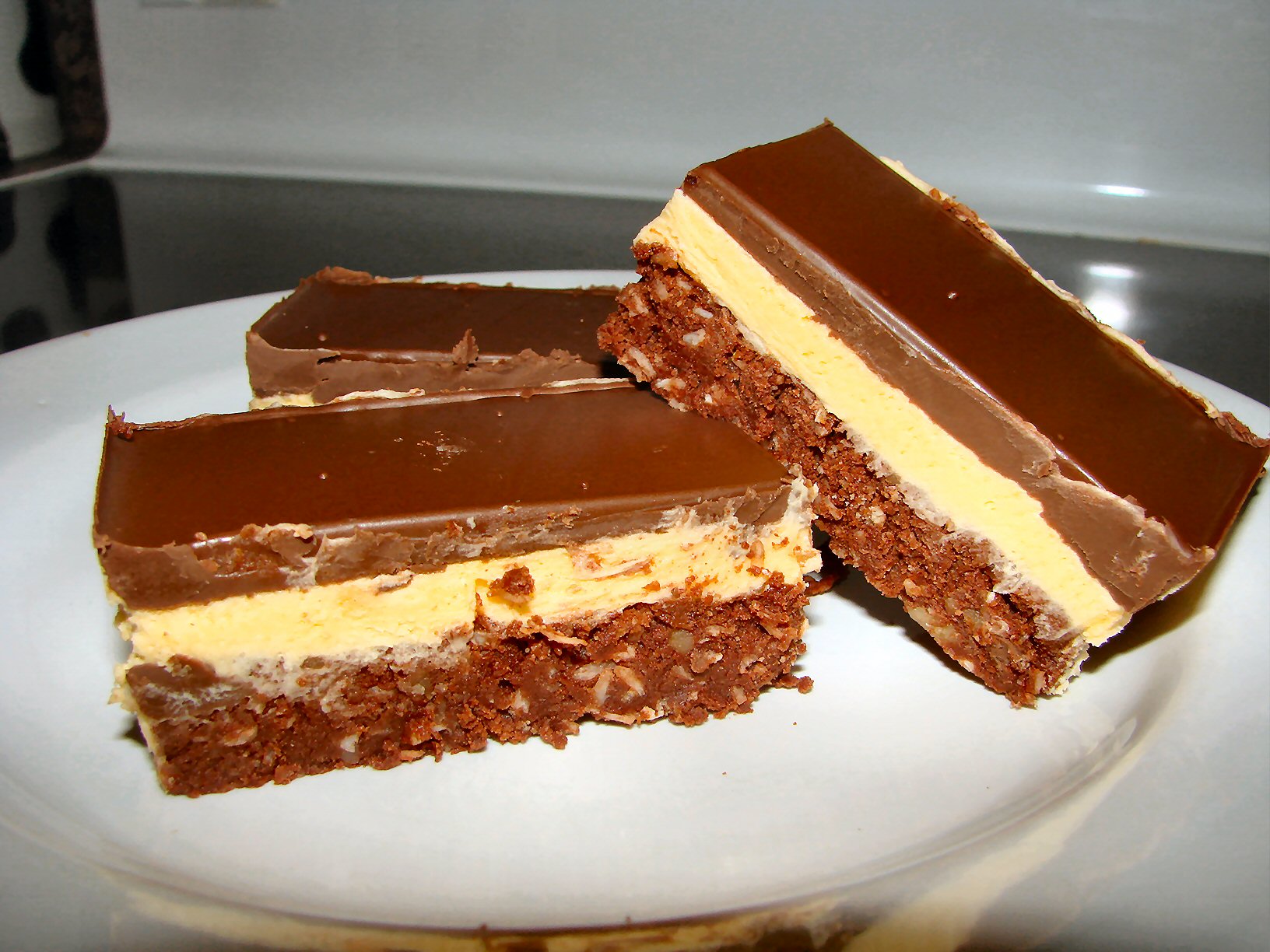
The Nanaimo bar is widely treated as an old Canadian classic, yet its origins are murkier than many people assume. Food historians generally agree that the dessert emerged in British Columbia, but the idea that it appeared fully formed as a named local treasure is misleading.
The earliest documented version usually cited is a 1952 recipe in the Women's Auxiliary to the Nanaimo Hospital Cookbook. There, the square appeared under the more generic name "Chocolate Square," a clue that it may have evolved from broader no-bake confection traditions rather than a single moment of invention.
That ambiguity matters. Many beloved foods gain prestige through tidy origin stories, but the Nanaimo bar seems to have come from a looser network of home cooks, church kitchens, and community recipe exchanges where authorship was collective, unstable, and rarely glamorous.
The hidden labor behind the legend

Its story is also inseparable from the unpaid and often overlooked labor of women. Mid-century community cookbooks were built from recipes contributed by homemakers, volunteers, and auxiliary groups whose culinary work sustained hospitals, churches, and local fundraising efforts without receiving the recognition later given to chefs or brands.
In that sense, the "dark" history is not scandal in the modern tabloid sense. It is the familiar erasure of who actually builds food traditions, then watches them become civic property once they prove useful to a city's image.
The Nanaimo bar's rise shows how domestic recipes can be lifted from private kitchens into public mythology. What begins as practical, inexpensive, crowd-pleasing food can later be reframed as heritage, often with the original makers disappearing from the story.
How a local square became a civic asset

By the 1980s, Nanaimo's famous square was no longer just a potluck staple. It had become a branding opportunity. In 1985, mayor Graeme Roberts backed a contest to identify the "official" recipe, a move that turned a flexible homemade treat into a symbol that could be promoted, standardized, and claimed.
Joyce Hardcastle's winning version helped give the dessert a stronger public identity. Yet even that effort reveals a tension at the heart of culinary heritage: foods rooted in variation are often repackaged as fixed traditions once tourism and civic pride enter the picture.
Expo 86 accelerated that transformation. As visitors encountered British Columbia's regional foods on a global stage, the Nanaimo bar gained recognition far beyond Vancouver Island, stepping into the role of edible ambassador for a place and, increasingly, for Canada itself.
Commercial success changed the meaning

National fame did not come only from official contests or fairs. Entrepreneurs helped move the Nanaimo bar from community table to commercial showcase. Susan Mendelson played an important role in the 1970s and 1980s by selling the bars and later bringing them to broader audiences through The Lazy Gourmet in Vancouver.
Her version, reportedly notable enough to be featured in The New York Times, marked a turning point. Once a recipe enters upscale retail, cookbooks, and national media, it begins to shed some of its local rough edges and gain a more polished, exportable identity.
That shift is common in food history. Commercialization rarely destroys a tradition outright, but it does reshape what people think the tradition is, privileging certain textures, ingredients, and stories over the many informal versions that existed before.
The three layers that made it unforgettable

Part of the Nanaimo bar's symbolic power lies in its structure. The base, usually made from graham crumbs, cocoa, coconut, nuts, and butter, feels homey and practical. The middle custard layer brings a sweet, almost theatrical richness, while the chocolate top creates a clean finish that looks more elegant than the dessert's humble roots suggest.
It is also a no-bake confection, which helped its spread in ordinary kitchens. It required no specialized equipment, traveled well, and could be made for holidays, school events, and family gatherings with relatively accessible pantry ingredients.
Those qualities matter because national foods are rarely the most refined dishes. They are often the ones that are repeatable, adaptable, and emotionally portable across generations, regions, and class lines.
Why Canada still claims it so fiercely
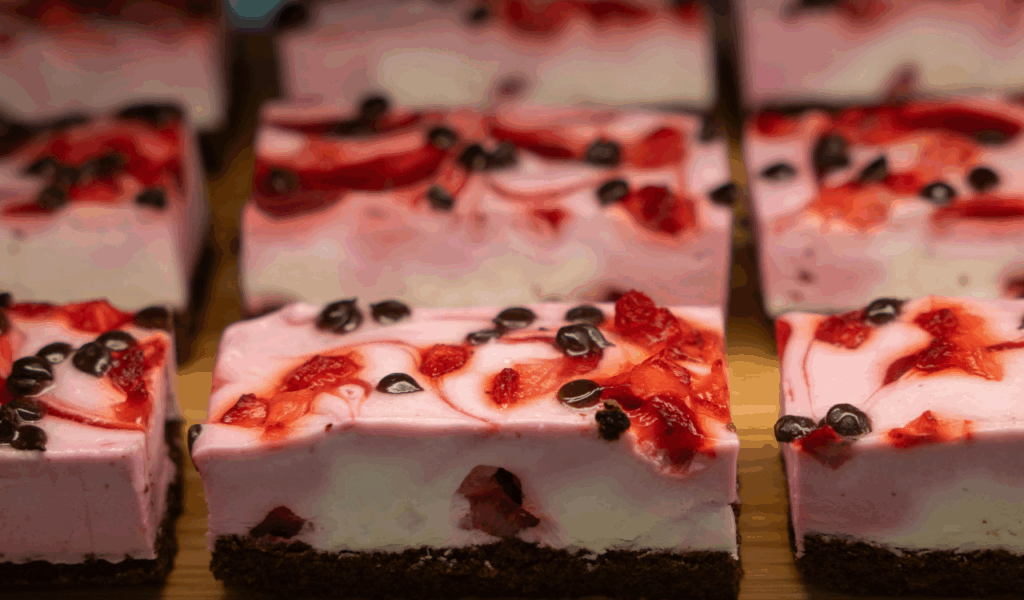
Today, Nanaimo bars appear in bakeries, coffee chains, supermarkets, and home kitchens across Canada and beyond. Their ubiquity can make them seem timeless, but that visibility is the result of decades of reinvention, public promotion, and selective memory.
Modern variations with mint, peanut butter, vegan ingredients, or gluten-free substitutes prove the dessert is still evolving. That flexibility helps explain its endurance. A rigidly preserved relic would not have traveled so well across changing tastes and dietary habits.
The Nanaimo bar became a national symbol not because its history was pure, but because it was messy, communal, and adaptable. Like many iconic foods, it carries a past shaped by contested origins, invisible labor, and the powerful human urge to turn sweetness into identity.

Leave a Reply