
Many of the "Chinese" dishes Canadians grew up eating would be unfamiliar in Beijing, Shanghai, or Guangzhou. They were born in Canada, not China, and their history says as much about immigration and adaptation as it does about food.
Why Chinese Canadian food became its own cuisine
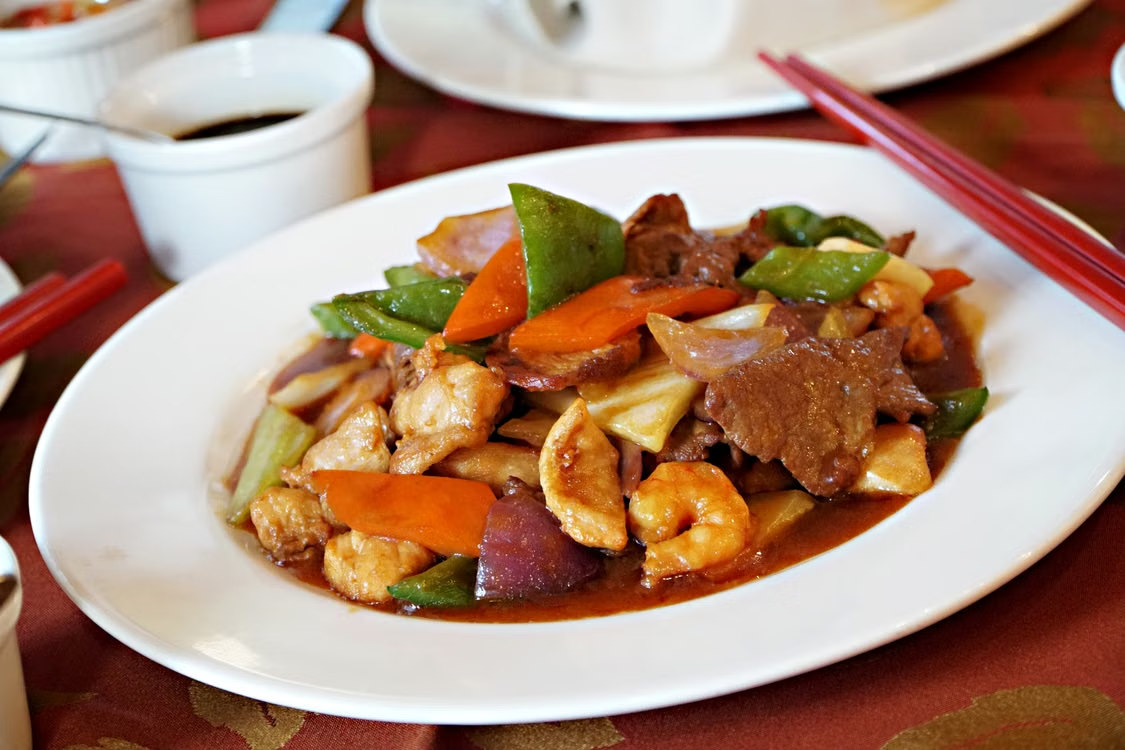
Chinese Canadian cooking developed under pressure. From the late 19th century onward, Chinese immigrants faced exclusion, head taxes, and severe limits on where they could work, so restaurants became one of the few viable businesses.
That economic reality shaped the menu. Restaurateurs often had to cook for non-Chinese customers in small towns, railway communities, and prairie cities, using local pantry staples rather than the ingredients they knew from southern China.
The result was not "fake" Chinese food but a practical new cuisine. It blended Cantonese cooking methods with Canadian produce, North American ideas about sweetness and texture, and the business need to make dishes broadly appealing, filling, and affordable.
Ginger beef is Calgary's signature invention

If one dish best captures Chinese Canadian invention, it is ginger beef. Most food historians trace it to Calgary in the 1970s, where chef George Wong of the Silver Inn created a plate of deep-fried beef strips coated in a sweet, sticky, gingery sauce.
Its structure is telling. Traditional Chinese beef dishes do use ginger, but not in this exact format: crisp battered beef, strong sweetness, and a glossy red-brown sauce made for immediate impact on the palate.
Ginger beef also reflects western Canadian dining habits of the era. Alberta beef was abundant, deep-frying was popular, and diners wanted bold flavor and crunch. The dish became a local classic, then spread across Canada, even as it remained largely unknown in China itself.
Chop suey in Canada was a local answer to local demand

Chop suey has roots in the wider Chinese diaspora, especially in North America, but its Canadian life was distinctly local. In countless Canadian towns, it became the safe, familiar introduction to Chinese restaurant food.
Typically made with sliced meat, celery, bean sprouts, onions, and a thickened gravy, Canadian chop suey was less about reproducing a regional Chinese dish and more about translating stir-fry into something legible to mainstream diners.
Its importance goes beyond the plate. Historians of Chinese Canadian communities have noted that dishes like chop suey allowed immigrant-owned restaurants to survive in places where Chinese families were few but customer traffic mattered. In that sense, chop suey was both a meal and a business strategy.
Sweet-and-sour standbys took on a Canadian identity
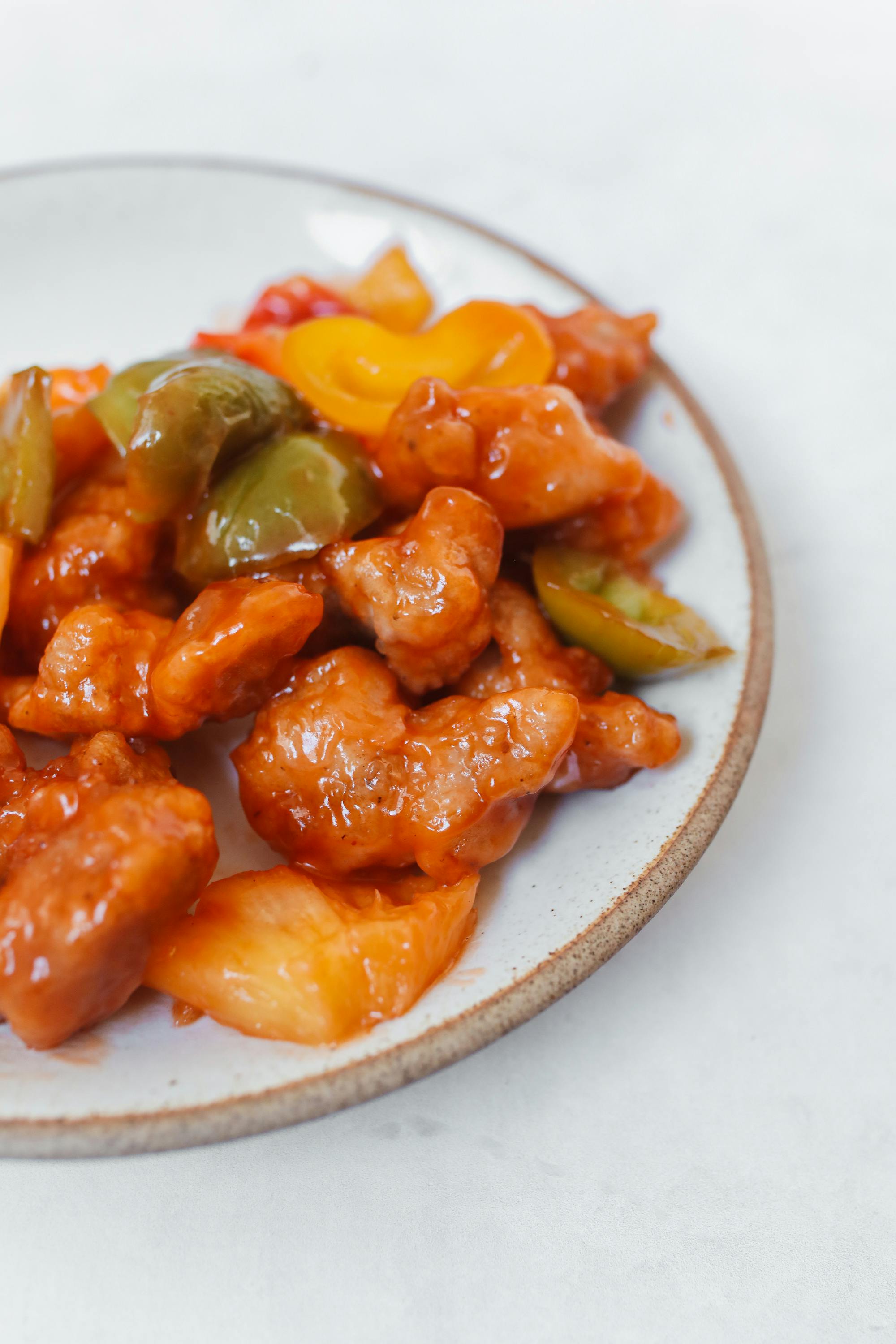
Sweet-and-sour pork exists in Chinese cooking, especially in Cantonese traditions, but the version familiar in Canada became something quite different. Here, it often arrived as heavily battered pieces with a neon-red or bright orange sauce served on the side or poured over top.
That Canadian restaurant style emphasized contrast over subtlety: very crisp coating, very sweet sauce, and a visual presentation designed to stand out on combination plates. Pineapple, maraschino cherry, and green pepper often joined the dish because they signaled abundance and color.
The same pattern appears in lemon chicken and almond chicken soo guy. These dishes rely on frying, thick sauces, and recognizable garnish to create comfort food that feels "Chinese" to Canadian diners while having no real equivalent as standard dishes in China.
The prairie classic of dry garlic ribs tells a similar story
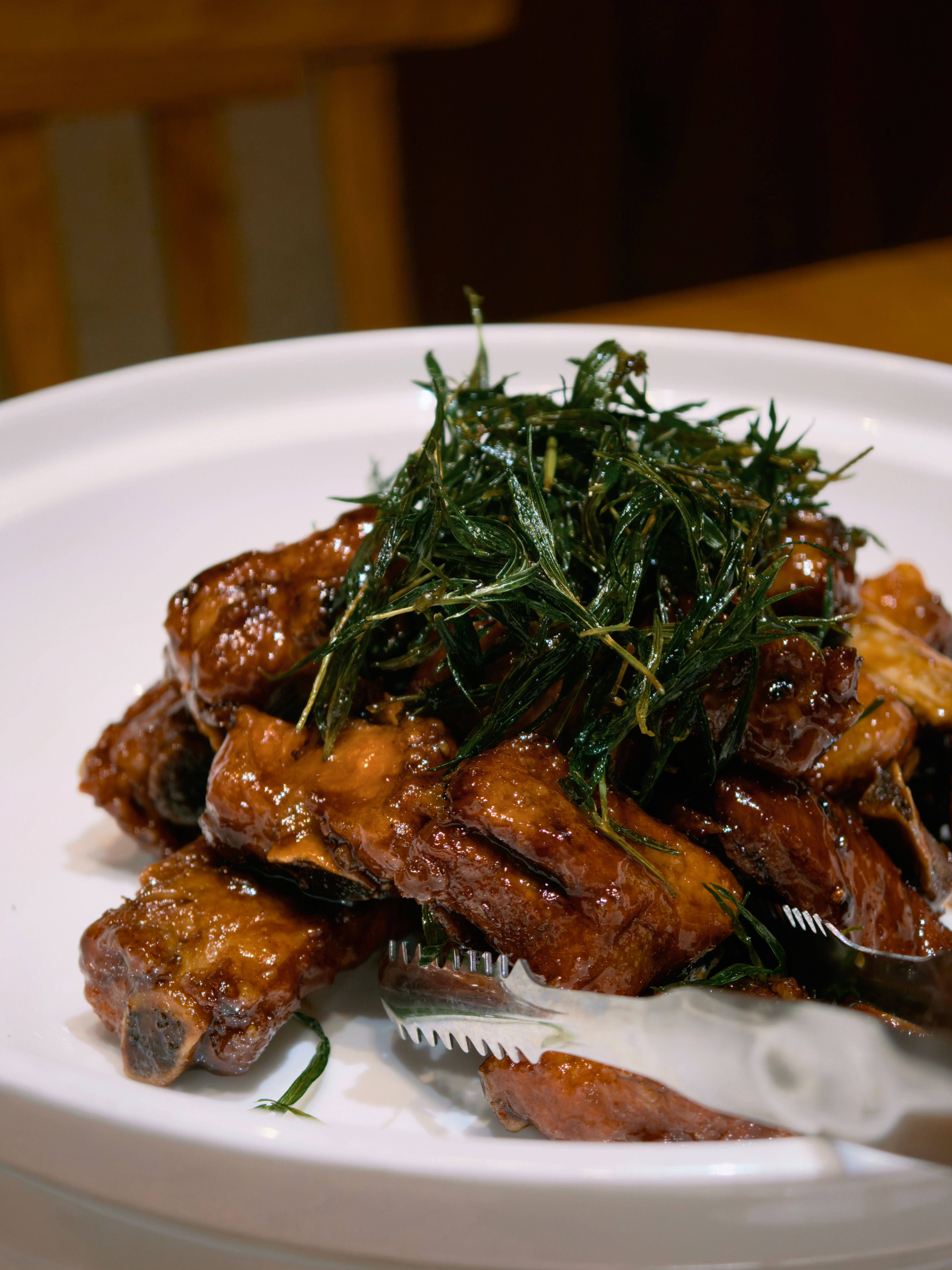
Dry garlic ribs are another restaurant staple that says more about Canada than China. Popular especially across the Prairies and in western provinces, they are usually pork rib pieces marinated, dredged, fried, and tossed with salt, garlic, and sometimes chili or five-spice.
The name itself is revealing. In Chinese culinary traditions, ribs are common, but this specific bar-snack format, with its dry seasoning and finger-food appeal, developed in Canadian restaurant culture, often alongside fries, wings, and licensed dining rooms.
Their rise reflects how Chinese Canadian restaurants often had to be many things at once: family restaurant, takeout counter, banquet hall, and neighborhood pub. Dishes like dry garlic ribs fit that hybrid role perfectly, which helps explain why they became so entrenched in Canada.
These dishes are Canadian history on a plate
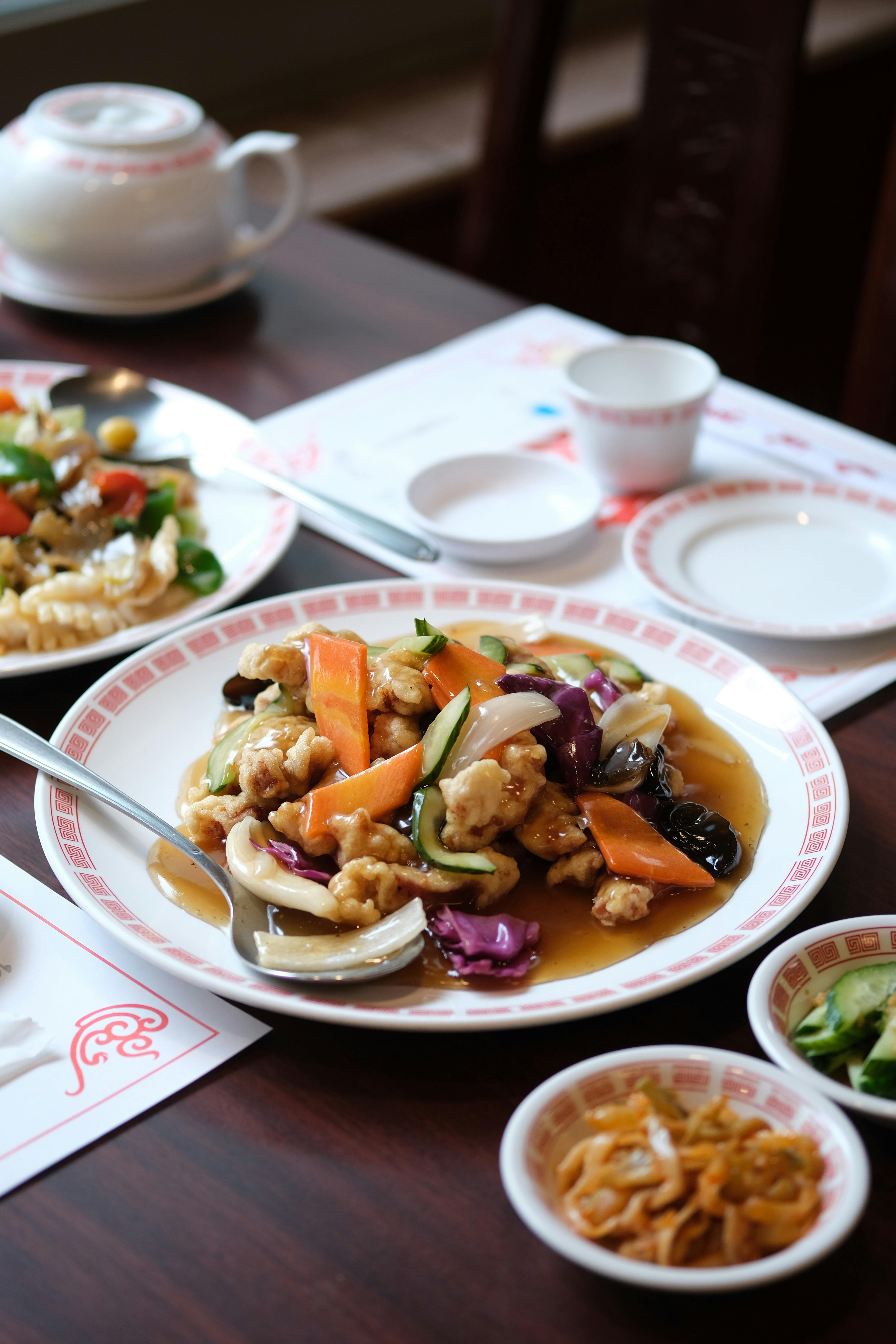
It is tempting to judge these foods by whether they are "authentic," but that misses the point. Authenticity is not fixed, and immigrant cuisines regularly change when cooks meet new ingredients, laws, customers, and social pressures.
Chinese Canadian dishes are best understood as records of adaptation. They tell the story of migrants who preserved technique where they could, improvised where they had to, and built businesses that fed generations of Canadians from Newfoundland to British Columbia.
That is why ginger beef, chop suey, dry garlic ribs, and battered sweet-and-sour classics matter. They are not failed copies of food from China. They are original creations of Chinese Canadians, and they deserve recognition as one of the country's most distinctive culinary traditions.



Leave a Reply