
Big grocery decisions often look ordinary at first. But when Canada's largest food retailer starts giving small domestic brands a bigger platform, it can change what millions of people buy and what kinds of businesses survive.
Why Loblaw's move matters more than it first appears
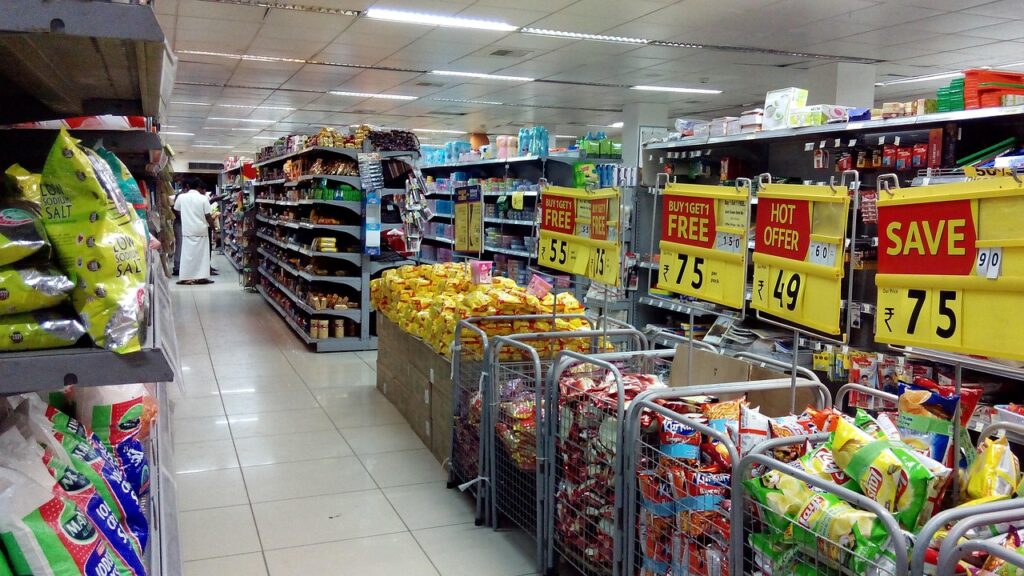
At face value, spotlighting small Canadian brands may seem like a simple merchandising strategy. In practice, it is far more significant because Loblaw has enormous reach through banners such as Loblaws, Real Canadian Superstore, No Frills, Fortinos, Independent grocers, and Shoppers Drug Mart. When a retailer with that footprint highlights a smaller company, it does not just create awareness. It can alter production volumes, improve supplier credibility, and give a regional brand a realistic path to national recognition.
This matters because grocery retail in Canada is heavily concentrated. A few major chains control a large share of food and household spending, which means access to shelf space is one of the hardest barriers for smaller businesses to overcome. Many young brands can build a loyal following at farmers' markets, specialty shops, or online, but scaling into mainstream grocery is a different challenge altogether. Listing fees, supply consistency, logistics requirements, and margin pressures can all stop a promising product before it reaches a wider audience.
Loblaw's spotlight on smaller domestic suppliers also lands at a moment when shoppers are paying closer attention to where products come from. Inflation has made grocery trips more deliberate, but it has not eliminated interest in local identity, cleaner ingredient lists, and products that feel tied to Canadian tastes and needs. Consumers are increasingly weighing value in broader terms. Price still matters, but so do quality, trust, and the sense that a purchase supports nearby jobs and entrepreneurship.
There is also a strategic reason for Loblaw to do this. Big retailers need differentiation, especially when price competition is intense and consumer loyalty is harder to hold. Smaller brands often bring novelty, regional flavor, and faster innovation than large multinational suppliers. That can make store shelves feel more relevant and less repetitive. In a business where traffic, basket size, and brand perception all matter, helping shoppers discover unique Canadian products is not just a goodwill gesture. It is smart retailing.
What small Canadian brands gain from major grocery exposure

For a small brand, getting attention inside Loblaw's ecosystem can be transformative. Grocery is still one of the most powerful trial channels in the country because it places a product directly in the shopper's path, often at the exact moment a purchase decision is made. A strong display, an in-store feature, or inclusion in a promotional program can do more in a few weeks than months of paid digital marketing. Visibility creates trial, and trial is the first step toward repeat purchasing.
That kind of exposure also sends a signal to the rest of the market. If a small Canadian brand earns placement at a major national chain, other buyers, distributors, and investors often treat that as proof of commercial viability. It shows the business has met important thresholds around packaging, food safety, logistics, and consumer appeal. For many entrepreneurs, the first major listing is not just a sales opportunity. It is a credibility event that can unlock new conversations across retail, foodservice, and private capital.
The operational impact can be just as important as the branding effect. Higher volumes can help small suppliers negotiate better manufacturing terms, source ingredients more efficiently, and lower per-unit costs over time. That does not happen overnight, and scaling too fast can be risky, but the upside is substantial. A brand that once struggled with small production runs may begin to build a more stable business once orders become predictable and recurring.
There is a broader economic angle too. Small and medium-sized businesses are major employers in Canada, and food manufacturing has long been an important part of regional economic development. When a grocer gives shelf space to smaller domestic companies, the benefits can extend beyond the founder and the store aisle. They may reach co-packers, farmers, packaging firms, transport providers, and local workers. In that sense, a retail spotlight can support entire supply networks, not just a single logo on a shelf.
Why shoppers are more open than ever to discovering local products

Canadian shoppers are not making decisions the way they did five or ten years ago. They are more informed, more skeptical, and more willing to test alternatives if a product promises better fit, better ingredients, or a stronger sense of place. Social media, creator recommendations, and direct-to-consumer marketing have already trained many consumers to look beyond legacy household names. That mindset carries into grocery aisles, where shoppers increasingly expect discovery alongside convenience.
Inflation has changed this behavior in a nuanced way. Many households have become highly price sensitive, but that does not mean they only want the cheapest option. Instead, shoppers are often trying to maximize value across several dimensions at once. They may trade down in one category and trade up in another. A smaller Canadian brand can win in that environment if it offers a clear reason to buy, whether that is superior taste, a simpler ingredient panel, a functional health benefit, or a product profile that reflects Canadian eating habits.
Trust also plays a central role. After years of supply chain disruption, label scrutiny, and rising concern about food quality, many consumers feel more comfortable with brands that tell a transparent story. Small Canadian businesses often communicate in a more direct and personal way than large global corporations. Founders speak publicly, packaging tends to be more specific, and regional roots are easier to understand. That can make a product feel less like an anonymous commodity and more like a considered choice.
There is a cultural layer as well. Canada is diverse, and grocery demand reflects that reality. Smaller brands are often quicker to serve niche or underserved communities with authentic flavors, dietary needs, and regional preferences. Large national players can be slower to react. When a major retailer elevates these smaller businesses, it gives shoppers access to products that feel more reflective of how people actually cook, snack, and eat today. That relevance is a powerful reason to pay attention.
The business logic behind putting smaller brands on bigger shelves

Retailers do not expand shelf space or promotional support without a business case. In Loblaw's case, spotlighting small Canadian brands can support several goals at once: differentiation, customer engagement, supplier diversity, and category growth. Grocery aisles can become stale when they are dominated by the same multinational portfolios in every market. Smaller brands introduce freshness, and that can help retailers create a stronger sense of discovery, especially in categories where innovation has become a key driver of sales.
This is particularly true in high-interest areas like snacks, beverages, sauces, frozen foods, better-for-you products, and culturally specific pantry staples. Emerging brands often identify consumer shifts earlier than large incumbents because they are closer to niche communities and can pivot faster. They may launch with lower sugar, higher protein, allergen-friendly ingredients, or bold flavor combinations before larger companies move. For Loblaw, featuring these businesses can help keep assortments current and align with trends that are already shaping demand.
There is also a reputational benefit. Large grocers have faced criticism over pricing, competition, and the balance of power between retailers and suppliers. Supporting smaller domestic businesses can help demonstrate responsiveness to public concerns about concentration and local economic resilience. Of course, optics alone are not enough. The effort matters only if it leads to meaningful placement, fair commercial terms, and sustained opportunities rather than short-lived promotional moments. But when executed well, the strategy can improve both customer perception and supplier relationships.
Importantly, smaller brands can lift entire categories rather than merely taking share from larger ones. Novelty drives incremental purchases. A shopper who would not have bought anything in a category might add a new locally made sauce, snack, or ready-to-eat product simply because it catches their eye. That creates growth for the aisle as a whole. For a retailer balancing traffic, margin, and assortment appeal, that is a compelling outcome. It is one reason these programs are about more than feel-good branding.
What to watch for as Loblaw expands these opportunities

Not every small brand spotlight turns into a lasting success. Shoppers should pay attention not just to which products appear on shelves, but to whether those products stay there, expand to more locations, and remain competitively priced. A temporary feature can generate curiosity, yet sustainable support looks different. It includes repeat merchandising, strong in-stock performance, and gradual integration into normal shopping patterns rather than one-off promotional bursts that vanish after a season.
Execution is where many promising programs succeed or fail. Small brands may have excellent products but struggle with the demands of large-scale retail. Forecasting errors can lead to empty shelves. Rapid volume growth can strain manufacturing. Packaging that looked strong in a boutique setting may not communicate clearly in a crowded supermarket environment. Loblaw's role is therefore not limited to selection. If it wants these brands to succeed, it must also create conditions that make scale possible, from onboarding support to realistic expectations around supply.
Price perception will be another key test. Many shoppers are willing to support Canadian businesses, but only within reason. If a local item is dramatically more expensive than an established alternative, trial may remain limited. The most successful small brands will likely be those that can clearly explain their premium or compete effectively on value. In today's market, emotional appeal alone is rarely enough. Products need to deliver on taste, performance, convenience, and price architecture all at once.
It is also worth watching which categories get the most attention. Some sections of the store naturally lend themselves to emerging suppliers, while others are harder to penetrate because of scale, regulation, or consumer habits. Shelf-stable pantry items, snacks, specialty beverages, and wellness-adjacent products often offer the clearest runway. If Loblaw broadens support across multiple categories and regions, that will signal a deeper commitment. If the effort stays narrow, its long-term impact may be more limited than the headlines suggest.
How consumers can make the most of this retail shift

For shoppers, the practical takeaway is simple: use the grocery trip as a chance to notice what is new and who is making it. Smaller Canadian brands are often easy to miss because many consumers shop on habit, following the same route through the same aisles and buying the same labels. A retailer spotlight helps break that pattern. It invites people to test one or two unfamiliar products without having to search far beyond their usual store.
Trying these products does not mean abandoning budget discipline. A smart approach is to experiment selectively in categories where quality or novelty matters most to your household. That might be coffee, granola, sauces, frozen meals, yogurt, snacks, or pantry staples with distinctive regional or cultural appeal. If a product delivers, it earns repeat business on merit. If it does not, the lesson is inexpensive. Discovery works best when it is curious but grounded, not driven by impulse alone.
Consumers should also pay attention to the stories behind the products. Packaging and in-store features often reveal where a brand is based, how it sources ingredients, or what problem it was created to solve. Those details are not just marketing. They help shoppers understand whether a product reflects local manufacturing, founder-led innovation, or a genuinely differentiated recipe. In a crowded store environment, context can be the difference between a novelty purchase and a lasting favorite.
In the bigger picture, this shift gives shoppers more influence than they may realize. Every purchase sends a retail signal. If customers consistently support well-made small Canadian brands, chains like Loblaw have a stronger incentive to keep allocating space to them. That can improve variety, strengthen domestic supply networks, and give emerging businesses a fairer shot at growth. For shoppers who want better choices and a grocery landscape that reflects Canadian talent more clearly, paying attention is not just worthwhile. It is a meaningful vote.




Leave a Reply