
In Canada, a plate can carry as much regional pride as a flag. Some of the country's liveliest provincial rivalries have played out not over borders or budgets, but over what belongs on the table.
Alberta and Ontario Over Pineapple Pizza
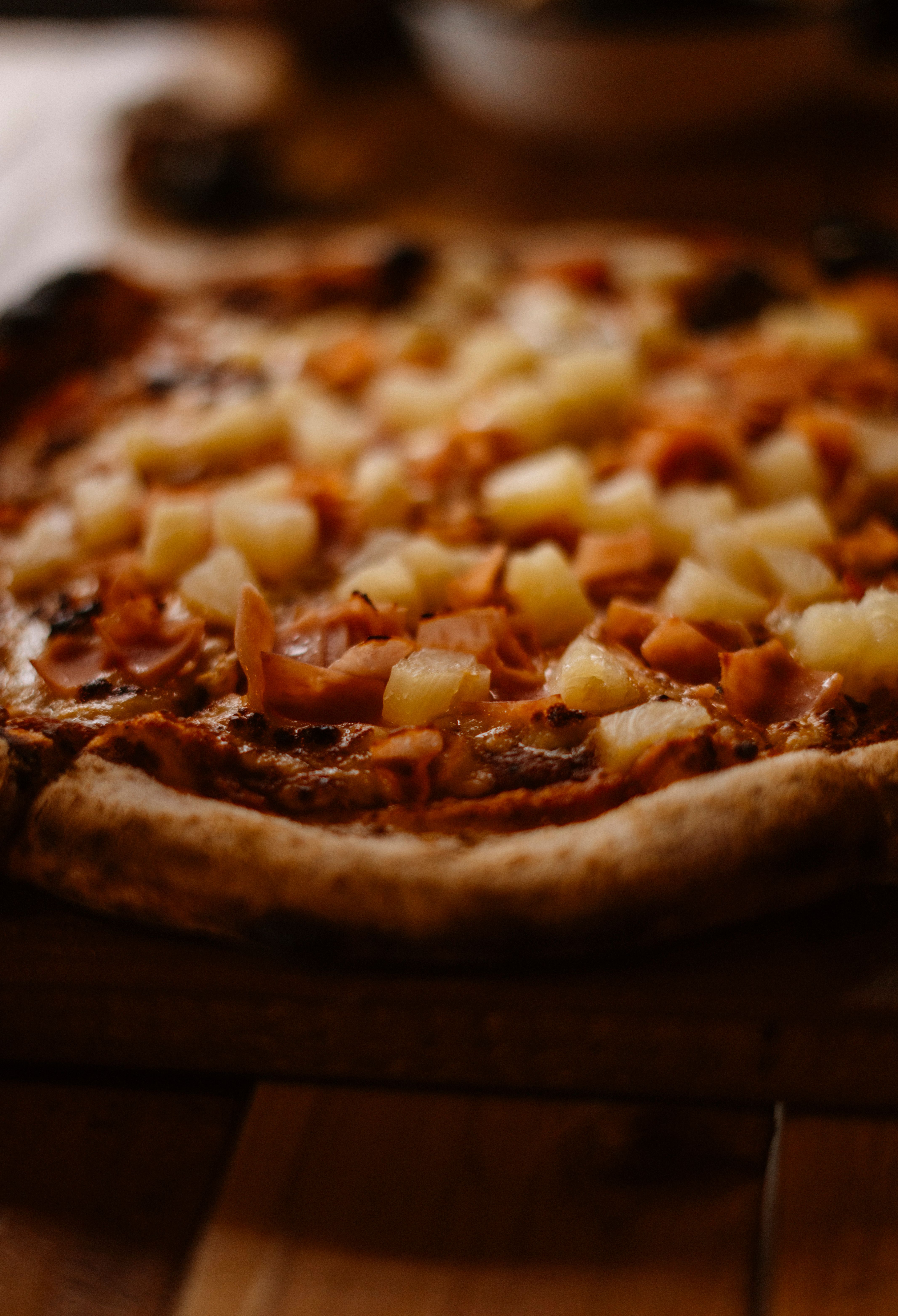
Few Canadian food fights have gone as far as the pineapple pizza argument. The dispute turns provincial because Sam Panopoulos, the Greek Canadian restaurateur widely credited with creating Hawaiian pizza in Chatham, Ontario, gave the country one of its most divisive dishes.
Ontario often claims the origin story with understandable confidence. Panopoulos introduced the pie in the early 1960s after experimenting with canned pineapple, and the province has treated that invention as a point of culinary innovation. Restaurants and food historians in Ontario regularly cite Chatham as the birthplace, making the case that the province should own both the credit and the controversy.
Alberta enters the quarrel from the other side of the table. The province has long been associated with a more meat-forward pizza culture, and critics there have often treated pineapple as an unnecessary interruption to a proper slice. What makes the clash memorable is not a formal political dispute, but a cultural one, where one province defends invention and another defends orthodoxy. In modern Canada, that still counts as a food war.
Quebec and Ontario Over Bagels
A bagel in Central Canada is rarely just breakfast. It is often a declaration of allegiance, with Quebec and Ontario each standing behind radically different ideas of what a bagel should be.
Quebec's Montreal bagel is smaller, denser, sweeter, hand-rolled, boiled in honeyed water, and baked in wood-fired ovens. Famous shops such as St-Viateur and Fairmount helped define it over generations, and food writers have long treated it as one of the city's signature contributions to North American eating. For many Quebecers, the style is not simply local. It is culturally protected.
Ontario's position rests mostly on the reach of the larger, softer Toronto and New York-style bagel market. In Ontario, consumers often expect more topping choices, sandwich versatility, and a fluffier interior. The rivalry sharpened as chain bakeries expanded and as travelers compared the two styles constantly. What looks like a minor difference in texture is really a disagreement over authenticity, tradition, and whether scale should ever beat craft.
Manitoba and Saskatchewan Over Honey Dill Sauce

Some provincial rivalries begin with a recipe card and never calm down. Honey dill sauce, a blend usually built from mayonnaise, honey, and dill, is one of the Prairie region's most specific obsessions.
Manitoba has the strongest historical claim. The sauce is commonly traced to a Winnipeg restaurant called Mitzi's, where it became inseparable from chicken fingers and fries. Over time, grocery shelves across the province filled with bottled versions, and what started as a house dip became a marker of Manitoba identity. Ask many Manitobans, and they will insist the sauce is practically a civic institution.
Saskatchewan's role is less about invention than adoption and competition. Prairie diners across the provincial line embraced the sauce, and local restaurants began treating it as part of a shared regional taste. That popularity created the familiar tension: Manitoba argues origin, while Saskatchewan argues that true regional foods cannot be fenced in. It is a classic Canadian dispute, polite in tone but stubborn in substance.
Nova Scotia and Newfoundland and Labrador Over Donair Culture
The donair is one of Atlantic Canada's most emotional food symbols. While the argument is often about where devotion runs deepest, the provincial edge comes from how Nova Scotia and Newfoundland and Labrador each folded the dish into local daily life.
Nova Scotia has the clearest ownership claim because the Halifax donair is widely recognized as a local invention. Built around spiced beef shaved from a spit and topped with onions, tomatoes, and a sweet condensed milk-based sauce, it became so iconic that Halifax later named it the city's official food. In Nova Scotia, the donair is treated as heritage as much as takeout.
Newfoundland and Labrador counters with intensity of adoption. Donair pizza, donair subs, and heavily localized shop menus helped make the dish feel at home far beyond Halifax. The province did not invent it, but it embraced and remixed it with unusual enthusiasm. That has created a familiar regional push and pull between birthplace and belonging, especially in Atlantic Canada's tightly connected food culture.
Quebec and New Brunswick Over Poutine Râpée

Not every provincial food battle is nationally famous. Some are rooted in Acadian history, where a single potato dish can become a serious question of cultural ownership and regional interpretation.
Poutine râpée, a boiled potato dumpling usually stuffed with salted pork, is most strongly associated today with New Brunswick's Acadian communities. In that province, it appears at family tables, community suppers, and heritage festivals, and it is often presented as a culinary emblem of Acadian endurance. Its dense texture and labor-intensive preparation give it unusual emotional weight.
Quebec also enters the conversation because Acadian migration and French colonial foodways tied the provinces together for centuries. Variations in dumpling traditions, naming, and technique blur easy borders, and historians of French Canadian cuisine often note overlapping roots. The resulting friction is less commercial than cultural. New Brunswick insists on living tradition, while Quebec points to a broader Francophone inheritance that predates modern provincial lines.
Prince Edward Island and Quebec Over Lobster Rolls

Lobster is one of the few foods powerful enough to trigger both economic and identity disputes. When Prince Edward Island and Quebec each serve lobster rolls as regional signatures, the question quickly becomes who represents the ingredient best.
Prince Edward Island builds its case on proximity, catch quality, and tourism. The island's cold-water lobster industry is central to local branding, and roadside seafood counters have turned the lobster roll into a shorthand for summer on the Gulf. PEI's version typically emphasizes sweetness and freshness, often with restrained seasoning to let the meat dominate. That simplicity is part of the sales pitch and the pride.
Quebec, especially in the Gaspé and Magdalen Islands, answers with its own powerful lobster tradition. There, the roll sits inside a broader francophone seafood culture shaped by fishing history and regional cuisine. The clash is really about narrative control. PEI markets lobster rolls as iconic island fare, while Quebec argues its coastal communities have every bit as deep a claim to lobster expertise.
British Columbia and Ontario Over Nanaimo Bars

This dispute sounds settled until Ontario enters the bakery case. Nanaimo bars are named after Nanaimo, British Columbia, yet their spread across Canada has inspired recurring efforts elsewhere to reinterpret, mass-produce, and in some minds, partially claim them.
British Columbia's position is straightforward. The no-bake square, usually layered with a crumb base, custard-flavored middle, and chocolate top, is strongly tied to Vancouver Island and has been promoted for decades as a provincial classic. Community cookbooks and local food histories helped cement the association, and Nanaimo itself has used the dessert as a tourism asset and civic symbol.
Ontario's challenge comes through scale and visibility rather than origin. Bakeries, supermarkets, and media outlets in Ontario helped make Nanaimo bars ubiquitous across English Canada, often flattening the dessert into a generic national treat. British Columbia resists that dilution because place is the whole point. When a province lends its city's name to a dessert, it rarely wants the rest of the country to forget it.



Leave a Reply