
It sounds like a gimmick at first. In reality, Vancouver's newest ramen food court may be one of the clearest signs yet of where urban dining is heading.
Why standing room is suddenly part of the business model

The biggest story here is not ramen. It is real estate.
In Vancouver, where commercial rents remain punishing and restaurant margins are notoriously thin, every square foot has to work harder. A stand-up food court cuts the need for large dining rooms, bulky furniture, and the kind of spacing that limits customer turnover. For operators, that can mean more stalls in the same footprint and more sales per hour during lunch and evening rushes.
This is not a random experiment. Across dense cities in Japan, quick-service noodle shops have long used compact layouts to serve customers efficiently. Vancouver's version borrows that logic but adapts it for a local market shaped by high labor costs, expensive leases, and consumers who are increasingly comfortable with casual, fast meals that do not require a full sit-down experience.
The ramen format makes this idea easier to sell
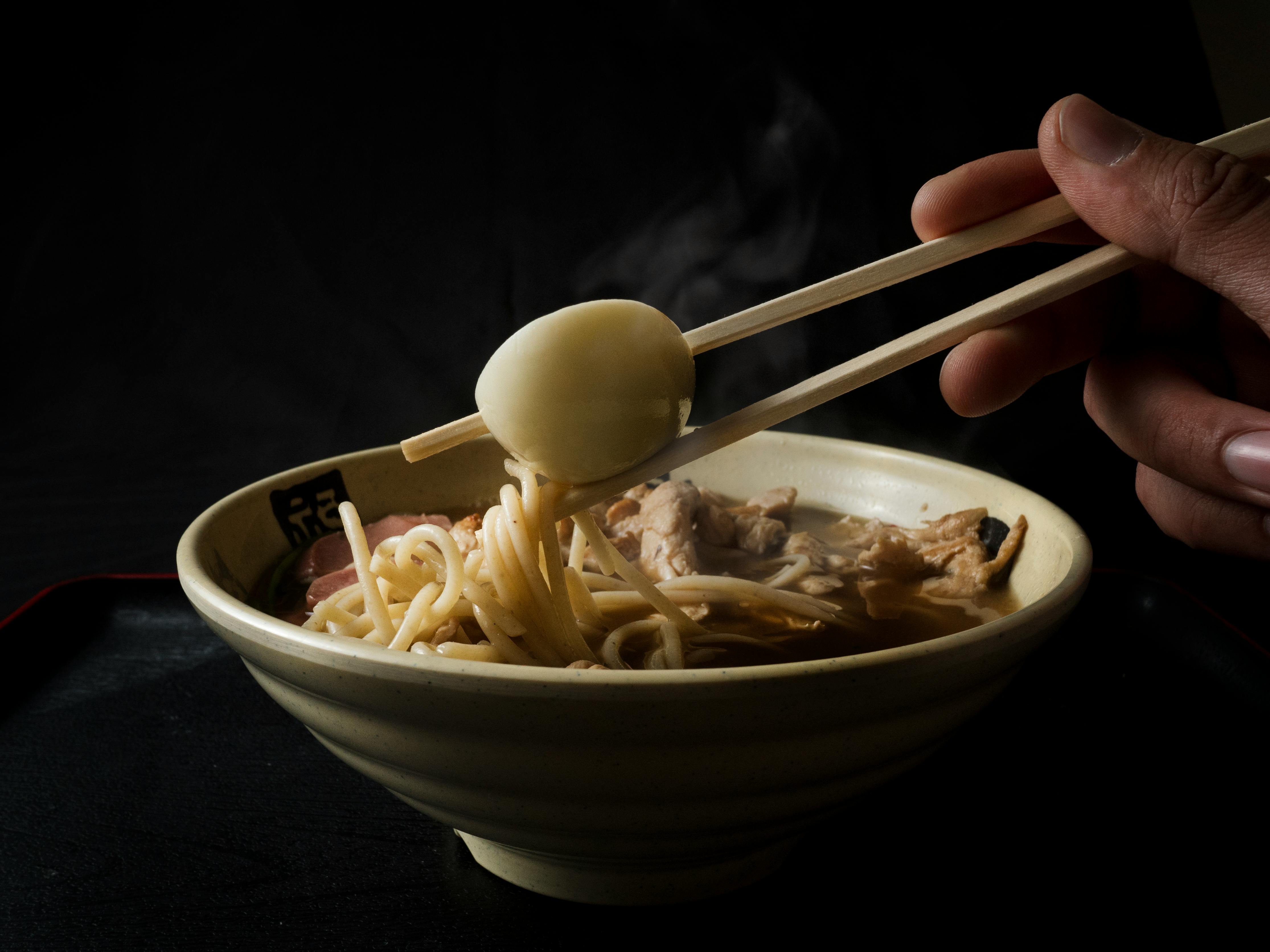
Ramen is unusually well suited to a stand-up model because it already lives between comfort food and speed.
A bowl can be assembled quickly, eaten relatively fast, and customized enough to feel satisfying without turning into a drawn-out meal. That matters in a food court environment, where the goal is to keep lines moving while still offering the depth and quality people expect from specialty ramen. Rich tonkotsu, lighter shoyu, spicy miso, and limited regional styles all fit neatly into that framework.
The dish also carries cultural credibility. Diners tend to associate ramen with specialized craft, long-simmered broths, and serious technique. That gives operators more room to strip away formal seating without making the experience feel cheap. If the noodles, broth, and toppings are excellent, many customers will accept less comfort in exchange for flavor, speed, and novelty.
Vancouver diners are already primed for this kind of experience
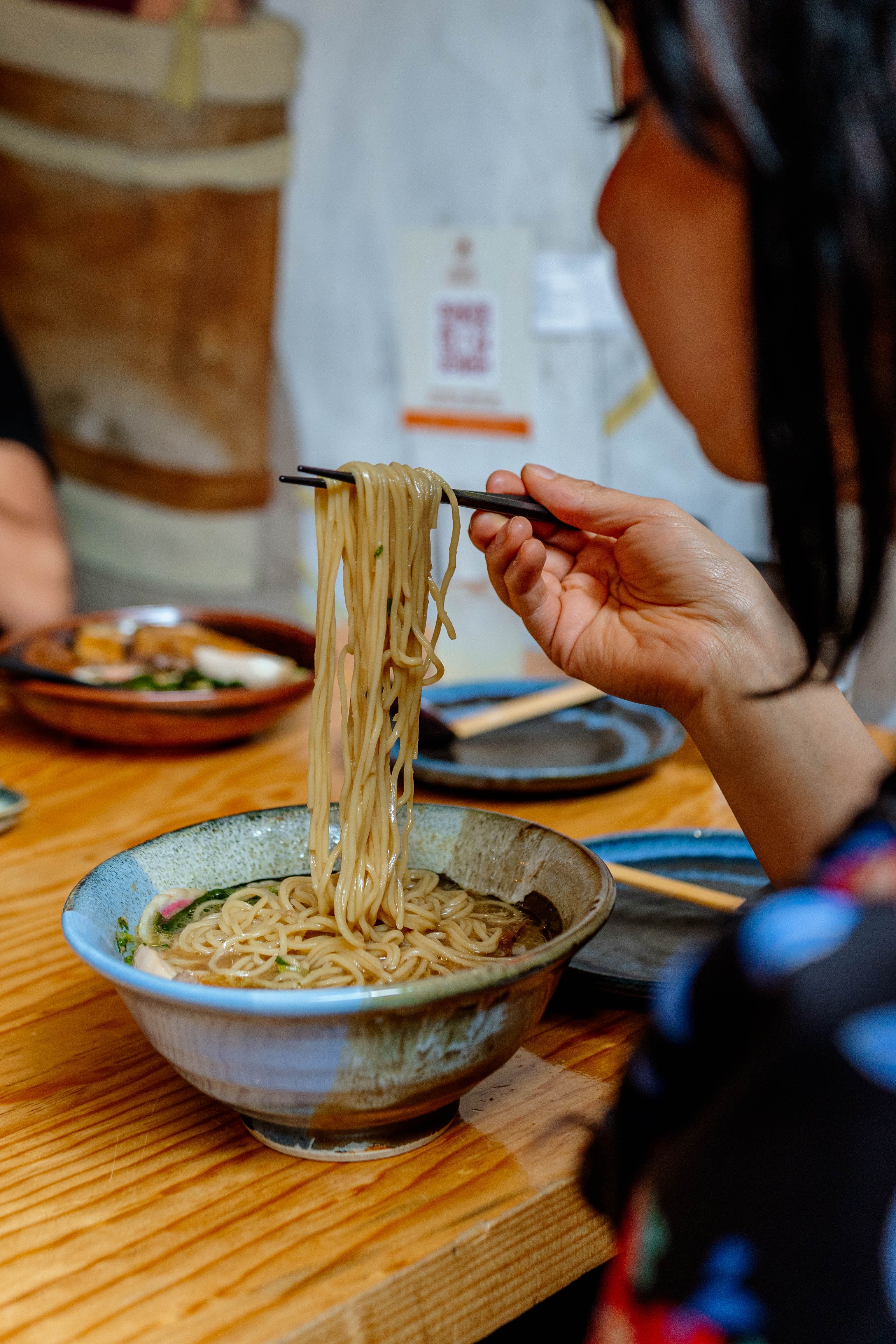
Consumer behavior has been shifting for years, and this concept lands at the right moment.
Younger urban diners often prioritize flexibility over formality. They might grab dinner before a concert, meet friends for a quick bite, or eat solo between errands. In that context, standing is less of a sacrifice than older restaurant models assume. Coffee bars, counter-service bakeries, and high-turnover food halls have already trained people to accept shorter, more functional visits.
There is also a social element. Standing spaces can feel livelier and less isolating than rows of tables, especially for solo diners. People enter, order, eat, and leave with less friction. In a city where many residents are balancing high living costs with packed schedules, a meal that feels immediate, energetic, and relatively affordable can be more attractive than a leisurely sit-down dinner.
The risks are real, especially in a city that values comfort
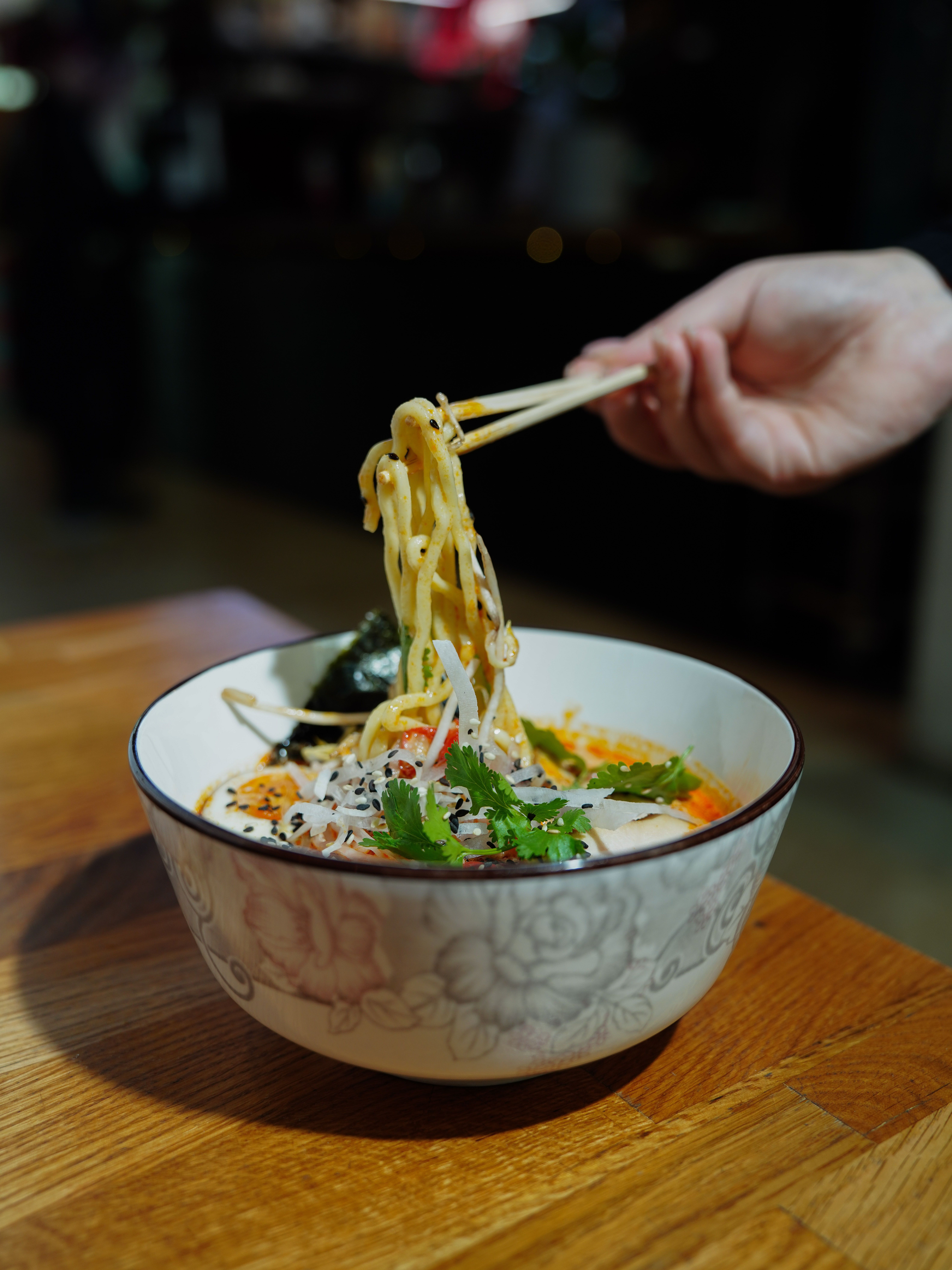
Still, not every trend translates neatly from one market to another.
Vancouver diners may embrace informality, but they also expect comfort, accessibility, and weather-conscious design. A stand-up venue has to work for more than able-bodied customers in a hurry. If it feels cramped, inconvenient, or exclusionary, the novelty can wear off fast. Accessibility standards, thoughtful counter heights, nearby seating options, and sensible traffic flow will matter as much as the food itself.
There is also the issue of duration. Ramen is fast, but it is hot, messy, and not always ideal for eating while balancing bags, coats, or umbrellas. Unlike a handheld snack, it demands a bit of stability. The concept succeeds only if the physical setup makes that experience feel easy rather than awkward.
Food courts are being redesigned for efficiency and identity
What makes this opening notable is how it reflects a broader redesign of shared dining spaces.
Traditional food courts were built around convenience first and atmosphere second. Newer versions reverse that equation. They aim to feel curated, distinctive, and urban, with focused vendors instead of generic choices. A ramen-led court fits that evolution well because it gives the space a clear identity rather than a scattered, one-size-fits-all mix.
That identity can become a draw in itself. Diners are no longer just looking for a place to eat; they want a place that feels specific. In a crowded food scene, a stand-up ramen court is memorable. It offers the efficiency of fast casual dining, the visual energy of a market hall, and the specialized appeal of a niche culinary destination.
What this bet says about the future of city dining
At its core, this is a wager on changing expectations.
The assumption used to be simple: a proper meal required a proper seat. That is becoming less certain in expensive, high-density cities where time, space, and labor all carry heavier costs. If diners accept standing for high-quality ramen, other categories could follow, from dumplings and curry to pasta and dessert counters designed for rapid turnover.
Vancouver may be an ideal testing ground because it combines adventurous eating habits with intense economic pressure. If this model works, it will not be because people suddenly dislike sitting down. It will be because enough of them decide that speed, quality, and atmosphere matter more than a chair.



Leave a Reply