
Before TikTok turned it into a trend, this cake was already famous at kitchen tables across America. For many people, it is less a dessert than a memory baked into a 9x13 pan.
Why this old-fashioned cake suddenly feels new again
What TikTok has rediscovered is the classic pineapple upside-down cake, a dessert many grandmothers made on repeat through the 1990s, even though its roots go back much further. In thousands of short videos, home bakers flip warm cakes from round pans and reveal glossy pineapple rings, bright maraschino cherries, and a caramelized brown sugar topping that still looks camera-ready. The visual payoff is a major reason it has exploded online. It delivers instant drama in a way many everyday cakes do not.
But the appeal goes beyond looks. The ingredients are familiar, relatively inexpensive, and widely available in almost any grocery store. Canned pineapple, butter, brown sugar, eggs, flour, and cherries make this a recipe that feels achievable, even for first-time bakers. In a period when many people are watching food costs closely, recipes that feel special without demanding specialty ingredients tend to travel fast.
There is also the broader nostalgia economy pushing this revival. According to food trend analysts and major grocery retailers, retro recipes have been gaining momentum as consumers seek comfort foods tied to childhood and family tradition. TikTok simply amplifies that instinct. A cake that once appeared at birthdays, bridge clubs, holiday dinners, and Sunday lunches now arrives with a soundtrack, a reveal shot, and millions of views.
The 90s kitchen staple that never really disappeared
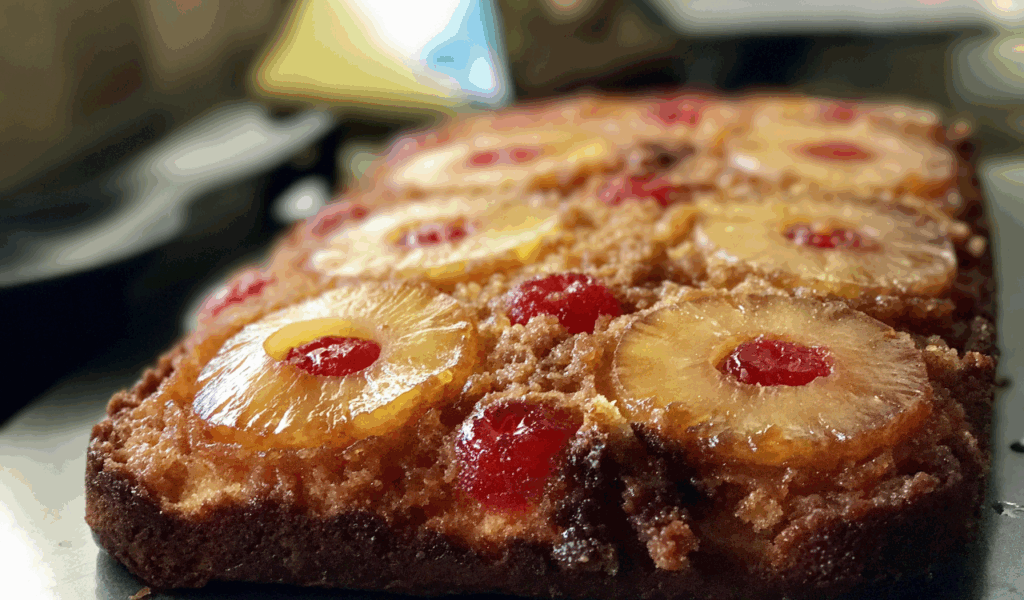
Pineapple upside-down cake did not begin in the 1990s, but that decade helped cement its place as a dependable family dessert. It fit the era perfectly. Home baking in the 90s often balanced convenience with presentation, and this cake excelled at both. It looked festive enough for company, yet it relied heavily on pantry and canned goods that many households already kept on hand.
Its popularity also reflected how recipes were shared before social media. Grandmothers clipped versions from newspaper food pages, copied them onto recipe cards, or memorized a formula that barely changed over time. Boxed cake mix versions became especially common in the 80s and 90s because they streamlined the process while keeping the signature topping intact. That combination of reliability and familiarity is exactly why the cake survived decade after decade.
Another reason it endured is that it solved a common home-cook problem: making something that felt homemade without becoming complicated. The pineapple and brown sugar created moisture and flavor even if the baker was not highly skilled. The decorative fruit pattern did the work of frosting, piping, or elaborate finishing. Long before social media rewarded beautiful reveals, this cake was already designed to impress with minimal fuss.
What makes pineapple upside-down cake so satisfying to watch
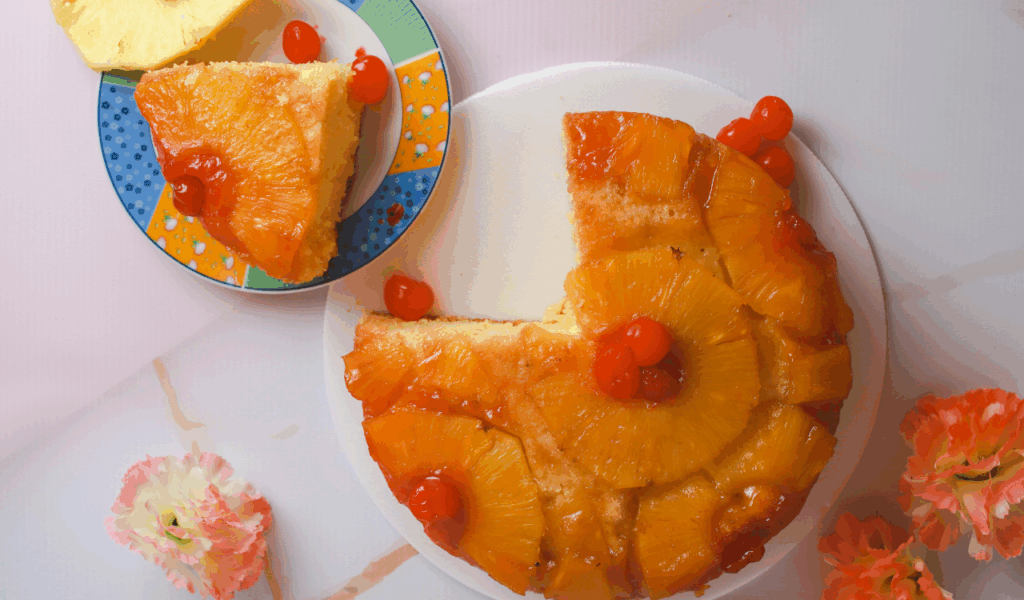
Every viral food trend needs a visual hook, and this cake has one built in. The suspense comes from the flip. As the pan is turned and lifted, viewers wait to see whether the topping releases cleanly or sticks. That tiny moment of risk creates exactly the kind of tension short-form video thrives on, and when the cake lands perfectly, the result is instantly rewarding.
Then there is the texture contrast. The top becomes sticky and glossy from melted butter and brown sugar, while the cake underneath stays soft and tender. In video, that sheen catches light beautifully. Slices show off distinct layers, with fruit set into a caramelized surface that feels both retro and luxurious. It is the opposite of overdesigned bakery content. The beauty comes from simple ingredients behaving exactly as they should.
Creators have also helped the cake spread by testing multiple variations that keep the original recognizable. Some use cast-iron skillets for deeper caramelization. Others make mini individual cakes, sheet-pan versions, or adaptations with rum, coconut, or spice cake. Those updates keep engagement high, but the core formula stays the same. Viewers are not just chasing novelty. They are responding to a recipe whose visual pleasure has always been part of its power.
The practical reasons home bakers are embracing it again

One of the strongest reasons for the comeback is that pineapple upside-down cake is forgiving. It does not require layers, complex decorating tools, or advanced technique. If the topping is slightly uneven, it still tastes good. If the cake crumbs a little during the flip, many bakers simply cover it with a pineapple ring or spoon over extra syrup. That flexibility makes it ideal for younger users learning to bake through video tutorials.
It is also a smart recipe for busy households. Most versions come together quickly, and many rely on ingredients with long shelf lives. In contrast to desserts built around seasonal berries or premium chocolate, this cake can be made year-round with basic supermarket staples. During periods of inflation, durable pantry recipes often re-enter the spotlight because they reduce waste and make planning easier.
There is an emotional practicality here too. Many people describe making this cake after remembering a parent or grandparent serving it at family gatherings. Food psychologists have long noted that aroma and taste are powerful triggers for autobiographical memory. Butter, brown sugar, and warm fruit are especially evocative. So while TikTok may introduce the cake to a new generation, for older viewers it often works like an edible time machine.
How today's versions differ from what grandmothers made

Modern bakers tend to tweak sweetness, texture, and presentation to suit current tastes. Some reduce the sugar in the topping to avoid an overly sticky finish. Others swap boxed mix for scratch batters made with sour cream, buttermilk, or yogurt for more depth and tenderness. There are also gluten-free and dairy-free versions circulating widely, reflecting how internet recipe culture adapts classics for more dietary needs than many 90s home kitchens considered.
Presentation has shifted too. In the 90s, this cake was often served plainly on a glass plate, still warm or at room temperature. Today, creators style it with whipped cream, toasted coconut, flaky salt, or even a drizzle of dark rum glaze. The social media version often leans slightly more polished, but its structure remains rooted in the same fruit-on-the-bottom method grandmothers relied on.
Even so, the strongest videos are usually the least fussy. Many of the most shared clips show handwritten recipe cards, aging metal pans, and cooks narrating family memories while they bake. That detail matters. Viewers are not only interested in the final dessert. They are responding to continuity, to the sense that a family recipe can survive changes in technology, taste, and culture without losing its identity.
What this viral comeback says about food culture now

This cake's return reveals something important about how people eat and share food today. Audiences are increasingly drawn to recipes with emotional credibility. A highly engineered dessert may impress, but a cake associated with grandparents, potlucks, and family kitchens carries a different kind of authority. It feels lived in. In a crowded content environment, authenticity is often more persuasive than novelty.
It also shows that old recipes are not relics. They are frameworks that can be revived, adapted, and reinterpreted without being stripped of their history. Pineapple upside-down cake works on TikTok because it meets several modern demands at once. It is affordable, visually satisfying, beginner-friendly, and emotionally resonant. Few desserts check all those boxes so naturally.
Most of all, its popularity proves that social media does not only invent trends. Sometimes it rediscovers what home cooks already knew. Grandmothers kept making this cake because it was dependable, generous, and good. TikTok simply gave that wisdom a new stage, and millions of viewers are now learning what families figured out long ago: some recipes last because they deserve to.




Leave a Reply