
Weeknight cooking looks very different from social media fantasy. For working mothers, the real goal is not gourmet brilliance every night, but dependable food that fits into the pressure of modern family life.
The daily dinner problem is really a time-management problem

The first surprise was how little these mothers talked about recipes and how much they talked about timing. Across different jobs, family sizes, and schedules, each woman described dinner as part of a larger operating system that includes commuting, pickups, homework, laundry, and bedtime. In other words, the question is not simply what they cook, but what can be cooked without disrupting everything else.
That aligns with broader household research. Time-use data has long shown that employed parents, especially mothers, carry a heavy share of unpaid domestic work even when they also work full time. Nutrition experts often note that people do not fail at healthy eating because they lack information. They fail because the weeknight environment rewards speed, predictability, and low mental effort.
One mother, a hospital administrator with two children, said her most common dinner is rice, roasted vegetables, and a quick protein such as salmon, chicken thighs, or eggs. Not because it is exciting, but because it scales easily and creates leftovers. Another, a marketing manager, said she cooks what she calls "components, not meals," such as a pot of beans, chopped vegetables, cooked pasta, and marinated chicken, then recombines them for two or three nights.
That practical framing matters. The women I spoke with were not looking for culinary novelty on a Wednesday. They were building repeatable habits that reduce decision fatigue. Their meals were often simple, but behind that simplicity was strategy.
Mom #1 relies on bowls, because they solve multiple problems at once

The first mother, Danielle, works in healthcare and gets home at unpredictable hours. Her default dinner is some version of a grain bowl, usually rice or quinoa with seasoned chicken, black beans, avocado, and whatever vegetables are available. She told me bowls work because everyone can build their own plate, which reduces complaints without requiring her to make separate meals.
There is a reason this approach appears so often in real households. Bowls are modular, and modular meals are efficient. They let one base support different tastes, appetites, and dietary needs. A child can skip the onions, a spouse can add hot sauce, and leftovers can become lunch the next day. Dietitians frequently recommend this kind of structure because it naturally balances carbohydrates, protein, fiber, and healthy fats.
Danielle also batch-cooks one or two core ingredients on Sunday, usually rice and shredded chicken in a slow cooker. That one step gives her a head start for several dinners. On especially hard days, she turns the same ingredients into tacos or quesadillas, proving that variety often comes from presentation rather than entirely new cooking.
What surprised me was not that she used shortcuts. It was how disciplined those shortcuts were. Her system was less about cutting corners and more about preserving energy for a long week.
Mom #2 cooks soup, pasta, and eggs far more often than expected
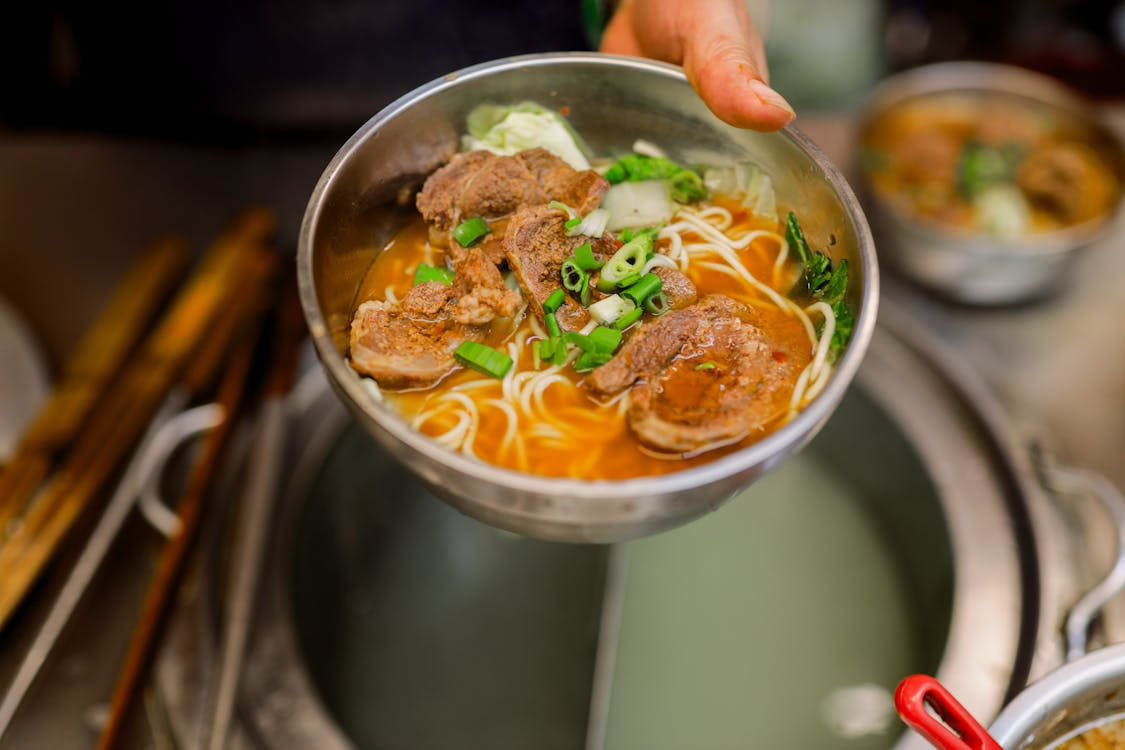
Laura, a public school administrator and mother of three, gave the least glamorous answer and perhaps the most revealing one. She said her weeknight staples are soup, pasta, and eggs. Not fancy pasta, either. Often it is spaghetti with sautéed garlic, olive oil, frozen spinach, and grated cheese, or tomato sauce boosted with lentils and ground turkey for more staying power.
Eggs came up repeatedly in our conversations, and that deserves more respect than they usually get. Eggs are one of the fastest complete proteins available, they pair with vegetables easily, and they move between breakfast and dinner without much resistance from children. Laura makes vegetable frittatas, scrambled eggs with toast and fruit, and fried rice with egg when the refrigerator looks nearly empty.
Her soups follow the same logic. She keeps broth, canned beans, frozen vegetables, and small pasta on hand so she can produce a filling meal in under 30 minutes. Food economists often point out that pantry cooking remains one of the strongest household cost-control strategies, especially when grocery prices are volatile. Soup is affordable, flexible, and forgiving.
Laura said she stopped chasing the idea that dinner had to look different every night. Once she accepted a core rotation, cooking became easier and her family ate better. That answer was surprisingly liberating because it replaced novelty with consistency.
Mom #3 and Mom #4 prove that repetition is a hidden strength

Mina, an accountant with one preschooler, said she cooks stir-fries at least three times a week. The ingredients change, but the method rarely does. She starts with onion, garlic, and ginger, adds a protein such as tofu, shrimp, or sliced chicken, then finishes with quick-cooking vegetables and a simple sauce. Served over rice or noodles, it is done fast and generates minimal cleanup.
This is exactly the kind of meal many professional cooks praise for home use. Stir-fries reward preparation, use small amounts of protein efficiently, and make frozen produce useful rather than second-best. Mina said she buys broccoli, peas, and mixed vegetables frozen because they reduce waste and eliminate chopping on exhausted nights. That is a financially and nutritionally sound choice, not a compromise.
The fourth mother, Jessica, works in finance and depends heavily on sheet-pan dinners. She roasts sausage with peppers and potatoes, chicken with carrots and onions, or salmon with green beans and sweet potatoes. Her rule is simple: if it can cook at the same temperature and be seasoned with olive oil, salt, and spices, it is a candidate for dinner.
Both women described repetition not as boredom but as relief. Behavioral experts often note that routines lower cognitive load, and these meals do exactly that. They create a dependable framework while still allowing enough variation to keep the table interesting.
Mom #5 showed how cultural habits shape daily cooking in powerful ways

Priya, who works in human resources and has two school-age children, offered a reminder that "everyday cooking" often follows cultural rhythm more than trend-based meal planning. Her regular meals include dal, vegetable sabzi, yogurt, rice, and rotis, with occasional chicken curry or paneer. She said these dishes remain central because they are familiar, balanced, budget-conscious, and easier to prepare than people assume.
From a nutrition standpoint, her routine is strong. Lentils provide fiber, protein, and minerals, while yogurt adds calcium and supports satiety. Vegetable-forward meals built around legumes are consistently associated with better diet quality in public health research. Priya pressure-cooks dal in batches and refrigerates dough, which turns traditional cooking into something manageable on a worknight.
She also made an important point about children and taste development. Because her family eats the same core foods regularly, her children are accustomed to spices, cooked vegetables, and mixed dishes. Pediatric feeding specialists often emphasize repeated exposure as the best way to build acceptance. Familiarity, not persuasion, does much of the work.
Her answer was surprising because it challenged the assumption that busy families must default to ultra-processed convenience foods. In her house, tradition itself functions as convenience because the system is already built.
What these five mothers actually teach us about feeding a family well

Taken together, these conversations point to a clear truth: the most successful weeknight meals are not the most ambitious ones. They are the ones designed for real life. Bowls, pasta, eggs, soups, stir-fries, sheet-pan dinners, dal, and roast vegetables may sound ordinary, but they solve the actual problems families face, including time, cost, nutrition, and differing preferences at the table.
Another key lesson is that healthy eating often depends more on structure than motivation. Every mother I spoke with used some form of planning, even if she did not call it meal prep. They kept pantry staples, repeated reliable formulas, cooked in batches, and reused leftovers intelligently. This is exactly what many registered dietitians recommend because it lowers stress while improving the odds of balanced meals.
The most surprising part was how little guilt appeared in these conversations. None of the women claimed to love cooking every day, and none pretended dinner was magical. But they had developed systems that protected their families from chaos. That is a form of expertise that deserves more recognition.
If there is one takeaway, it is this: everyday cooking success is not about doing more. It is about choosing meals that are flexible, nourishing, and easy to repeat when life gets crowded. For working mothers, that is not settling. It is mastery.




Leave a Reply