
School lunches in Canada have changed dramatically since the 1950s, reflecting shifts in family life, food prices, nutrition advice and what was available in local stores. A typical lunch could mean a thermos of milk and a homemade sandwich in one decade, then packaged snacks, juice boxes and more convenient foods in another. Here's a look at the lunches and lunchbox staples that came to define Canadian school days from the 1950s through the 2000s.
1950s - The Homemade Lunch
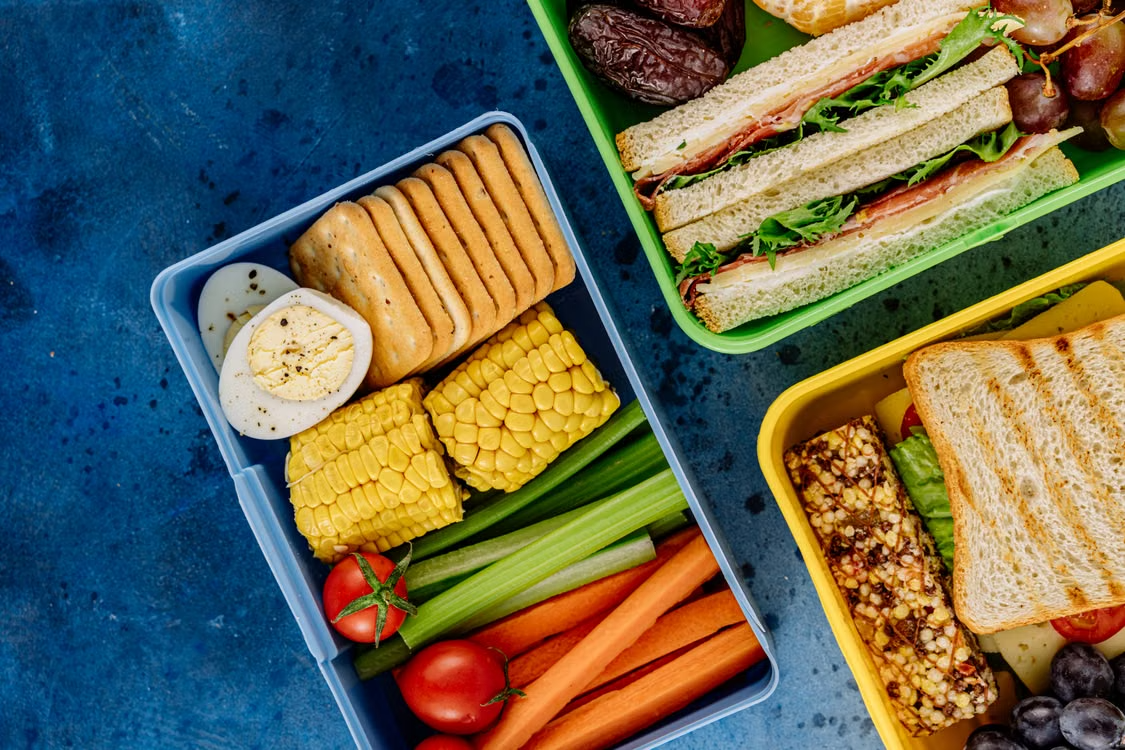
The 1950s lunchbox was built around the foods Canadian nutrition advice considered essential: bread, a protein food, vegetables, fruit and milk. The meal pattern published alongside the 1949 Food Rules, and reprinted through the 1950s, suggested cheese, egg or another protein food with a vegetable, bread, dessert and milk for lunch or supper.
That points to a lunch that was simple, filling and largely assembled from everyday household ingredients.
1960s - Milk, Bread and Simple Staples

In the 1960s, Canadian school lunches still reflected the food groups promoted by the country's official guide. The 1961 guide recommended milk, fruit, vegetables, bread and cereals, and meat or alternatives such as eggs, cheese, dried beans or peas.
Milk had a particularly prominent place, with the guide recommending substantial daily amounts for children and adolescents. The decade's lunchbox was therefore less about novelty and more about covering the basics.
1970s - The Era of the School Food Program

The 1970s brought more attention to what schools themselves were serving. Montreal's school boards became notable for developing subsidized lunch programs with nutritional requirements.
In 1974, the Montreal Island School Commission expanded a program that required participating schools to remove junk foods from cafeterias and vending machines and serve nutritionally balanced meals. Quebec then introduced a free milk program in elementary schools across the province in 1977.
1980s - A More Varied Lunchbox
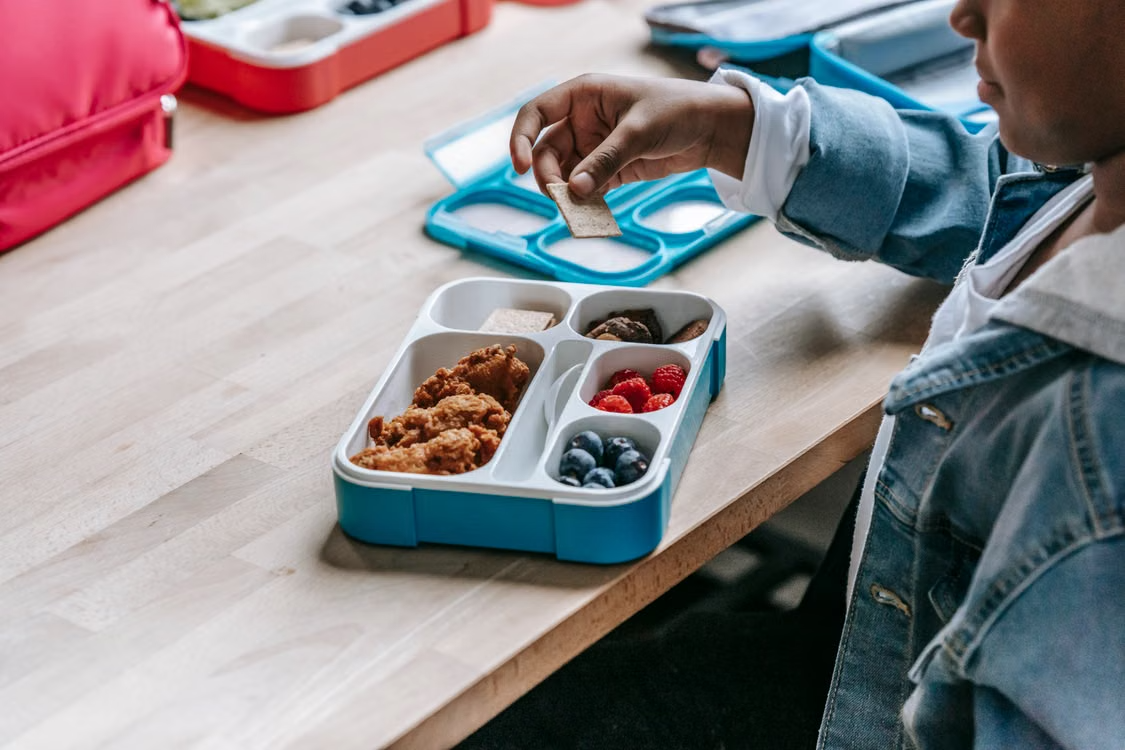
The 1980s are better described as a period of changing choices than one defined lunch. Canada's 1982 Food Guide encouraged a broad mix of milk products, meat or alternatives, breads and cereals, and fruits and vegetables, while also introducing a stronger message about moderation in fat, sugar and salt.
Foods such as bread, buns, muffins, yogurt, cheese, fruit and vegetables all appeared within the guide's examples, reflecting the increasingly varied lunchbox of the period.
1990s - Convenience Takes a Bigger Role

By the 1990s, Canadian children were eating within a food culture that offered considerably more convenience and variety than previous generations. Canada's Food Guide to Healthy Eating, introduced in 1992, replaced the older wheel with a rainbow and expanded the range of serving guidance.
Rather than one signature school lunch, the decade is best represented by the combination of familiar sandwiches and fruit with increasingly convenient, packaged foods that were easy to portion and pack.
2000s - The Modern Lunchbox
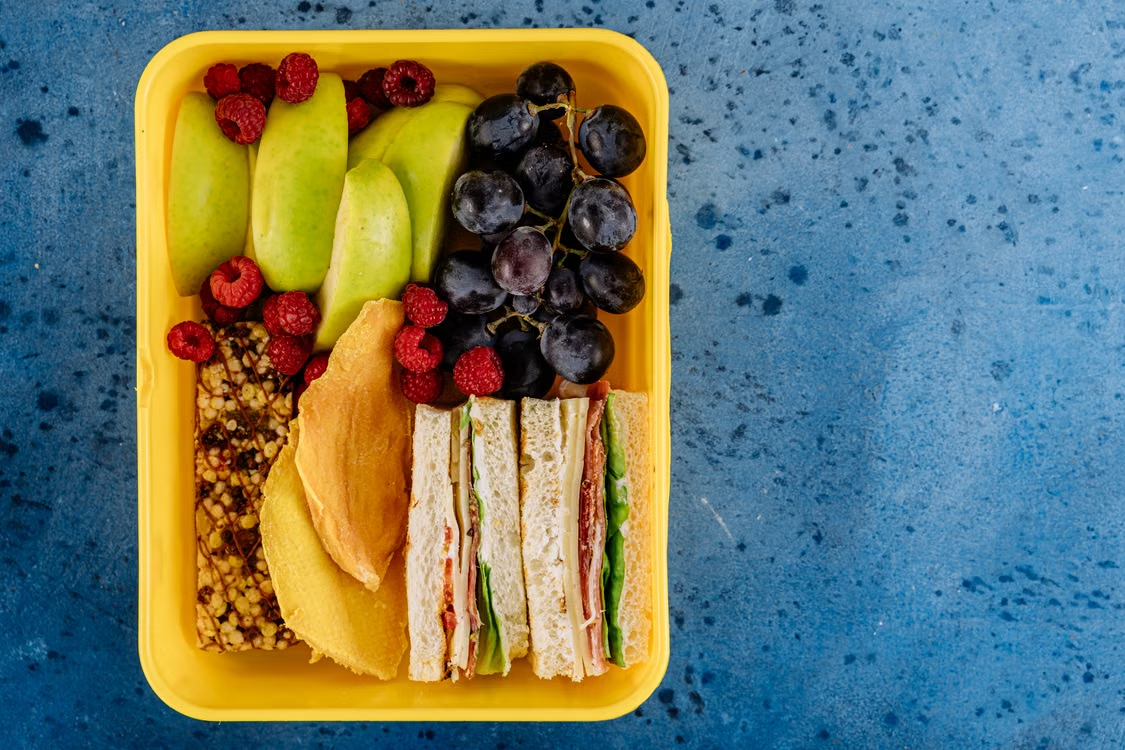
By the 2000s, the traditional packed lunch had become a mixture of homemade food and convenient packaged options. Canada's 2007 food guide emphasized variety and included more detailed advice for different groups, while school food policies increasingly had to account for issues such as nutrition and children's differing dietary needs.
The lunchbox could still contain familiar staples such as sandwiches, fruit and dairy, but convenience had become a much larger part of how school food was packed and served.




Leave a Reply