
The cereal aisle looks cheerful, but its nutrition story is much less friendly. In Canada, the products most clearly aimed at children would not survive the very standards the government designed to protect kids from unhealthy food marketing.
A revealing contradiction in the cereal aisle
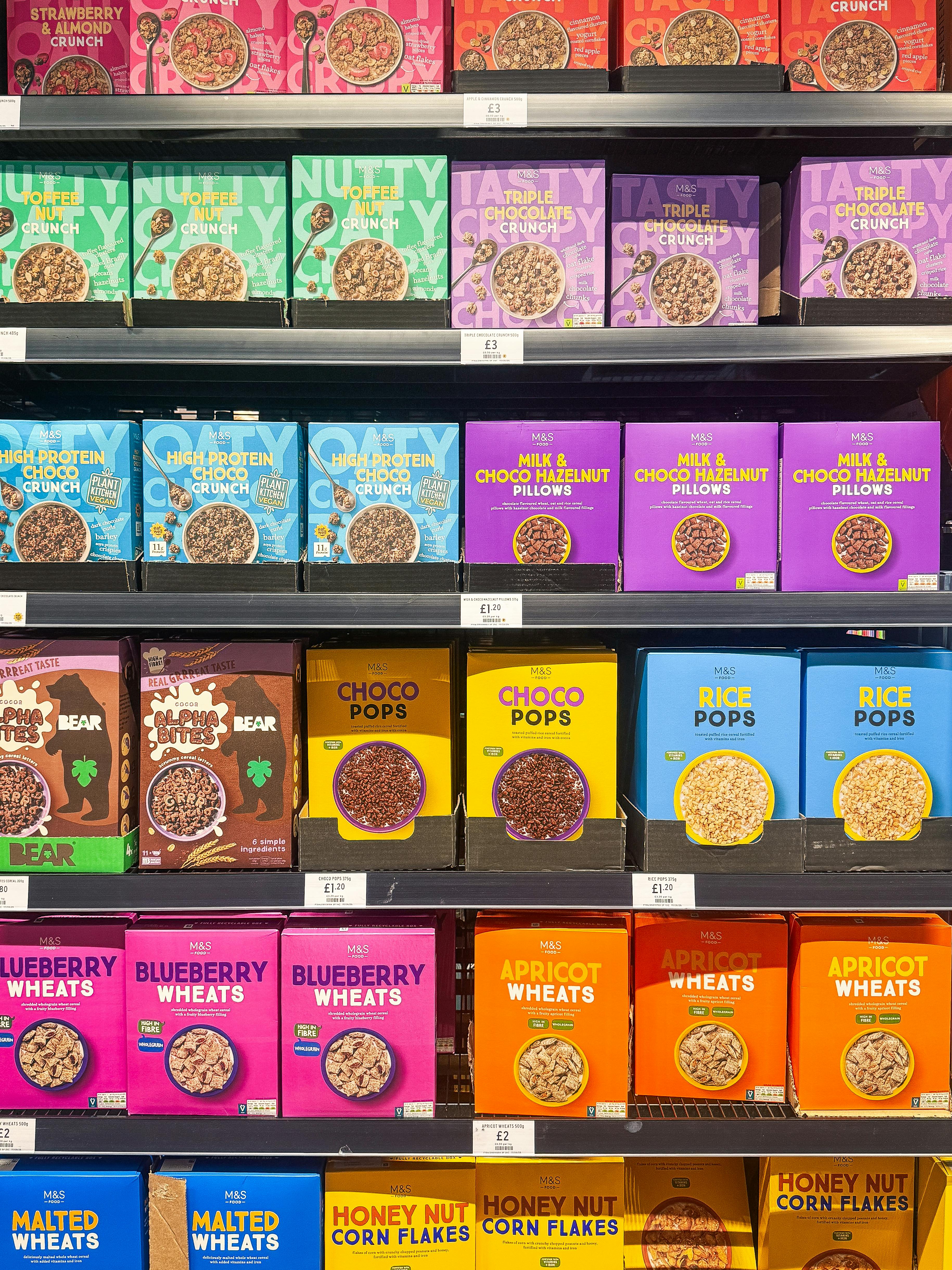
At the center of this issue is Health Canada's long-running concern about how food advertising shapes children's preferences. Proposed federal rules were built around a simple idea: foods high in sugars, sodium, or saturated fat should not be marketed to kids because repeated exposure normalizes unhealthy choices early in life.
When researchers and advocacy groups applied those thresholds to children's breakfast cereals sold in Canada, the result was stark. Not one product squarely marketed to children passed. In practical terms, the cartoon mascots, bright colors, game-themed boxes, and sweet flavor cues were attached almost entirely to cereals the government itself would classify as unsuitable for child-directed promotion.
That disconnect matters because packaging works like advertising, even inside the store. Young children respond strongly to familiar characters and playful visual cues, and parents often face purchase pressure in seconds. The contradiction is not abstract policy trivia. It sits at eye level on supermarket shelves every day.
Why these cereals fail the test

The answer starts with sugar. Many children's cereals contain enough added or free sugars to make them poor candidates under nutrient-profile models used in policy discussions across Canada and internationally. A cereal can look harmless because it is dry, grain-based, and often fortified, yet still deliver a dessert-like sweetness per serving.
Sodium also plays a bigger role than many shoppers realize. Breakfast cereals are not usually seen as salty foods, but enough sodium can be added for flavor balance and shelf appeal that a product moves out of the "healthy marketing" category. Saturated fat is less often the main problem in cereal, though marshmallow pieces, coatings, or chocolate elements can push some products higher.
The larger issue is formulation strategy. Manufacturers engineer cereals to be intensely palatable, highly recognizable, and easy for children to request by name. Added vitamins then help create a health halo, allowing a box with heavy sugar content to appear balanced or even beneficial to rushed families scanning labels quickly.
Packaging is marketing, whether regulators say so or not

A key reason this debate persists is that food marketing is no longer limited to television commercials. The cereal box itself is a powerful media channel. Colors, mascots, puzzles, collectible tie-ins, movie licensing, and child-friendly fonts all act as promotional tools designed to make one product stand out to a young shopper.
Public health experts have argued for years that children do not interpret these techniques the way adults do. They are less able to recognize persuasive intent and more likely to read fun branding as a signal that the product is meant for them. That makes in-store marketing especially influential during family shopping trips.
Real-world studies from several countries have consistently found that products aimed at children tend to have weaker nutritional profiles than comparable products aimed at adults. In cereal, the pattern is especially visible. The sweeter the branding and the more animated the box, the less likely the product is to align with modern nutrition standards.
What this means for parents and public health

For parents, the problem is not just one sugary breakfast. It is repetition. A child who starts the day with a sweet cereal may also encounter sweet yogurt, snack bars, flavored drinks, and packaged treats later on, creating a daily pattern that pushes sugar intake well beyond recommended levels.
For public health officials, breakfast cereals are a clear case study in how voluntary restraint often falls short. Companies may reformulate some products or offer "better for you" lines, but flagship children's cereals frequently remain too sweet to satisfy stricter standards. The market incentive to preserve familiar taste profiles is powerful.
This has long-term consequences. Diet quality established in childhood is linked to risks of obesity, dental decay, and cardiometabolic disease later in life. No single cereal causes those outcomes on its own, but constant exposure to heavily promoted, nutritionally weak foods helps shape preferences that can endure for decades.
The policy debate is bigger than one breakfast food

The cereal finding resonates because it exposes a broader weakness in nutrition governance. If products sold with child-oriented branding cannot meet the government's own test for kid-directed marketing, then policy and retail reality are badly out of sync. That raises questions about enforcement, loopholes, and the pace of regulatory action.
Industry groups often argue that parents, not regulators, should make final food choices. That is true in a narrow sense, but it ignores how modern marketing is designed to influence both children and adults before a decision is made. Information alone is not always enough when branding is sophisticated and omnipresent.
Advocates, meanwhile, say stronger front-of-package labeling, tighter marketing restrictions, and meaningful reformulation targets could shift the marketplace. Other jurisdictions have shown that clear standards can pressure companies to reduce sugar or redesign products. The basic principle is straightforward: if a food is unsuitable to advertise to children, it should not be dressed up to attract them.
What shoppers can do while policy catches up

Until regulation fully aligns with nutrition goals, consumers are left doing the filtering themselves. The most useful habit is to compare the Nutrition Facts table rather than the front of the box. Cereals with less sugar and more fiber usually have plainer packaging, but they often provide a more stable and filling breakfast.
Parents can also treat many children's cereals as occasional products rather than daily staples. Mixing a sweet cereal with an unsweetened whole-grain option, serving fruit on the side, or choosing oatmeal can lower overall sugar exposure without turning breakfast into a fight. Small changes matter when they happen consistently.
The bigger lesson is that branding should never be mistaken for suitability. Canada's cereal aisle shows how easily child appeal can outrun child health. When not a single children's cereal clears the government's own bar, the message is hard to miss: the packaging says breakfast fun, but the nutrition profile tells a very different story.




Leave a Reply