
Dinner still tells the truth about a culture. Look closely at the table, and you can see how people live, work, spend, and connect.
The family meal is no longer the daily default
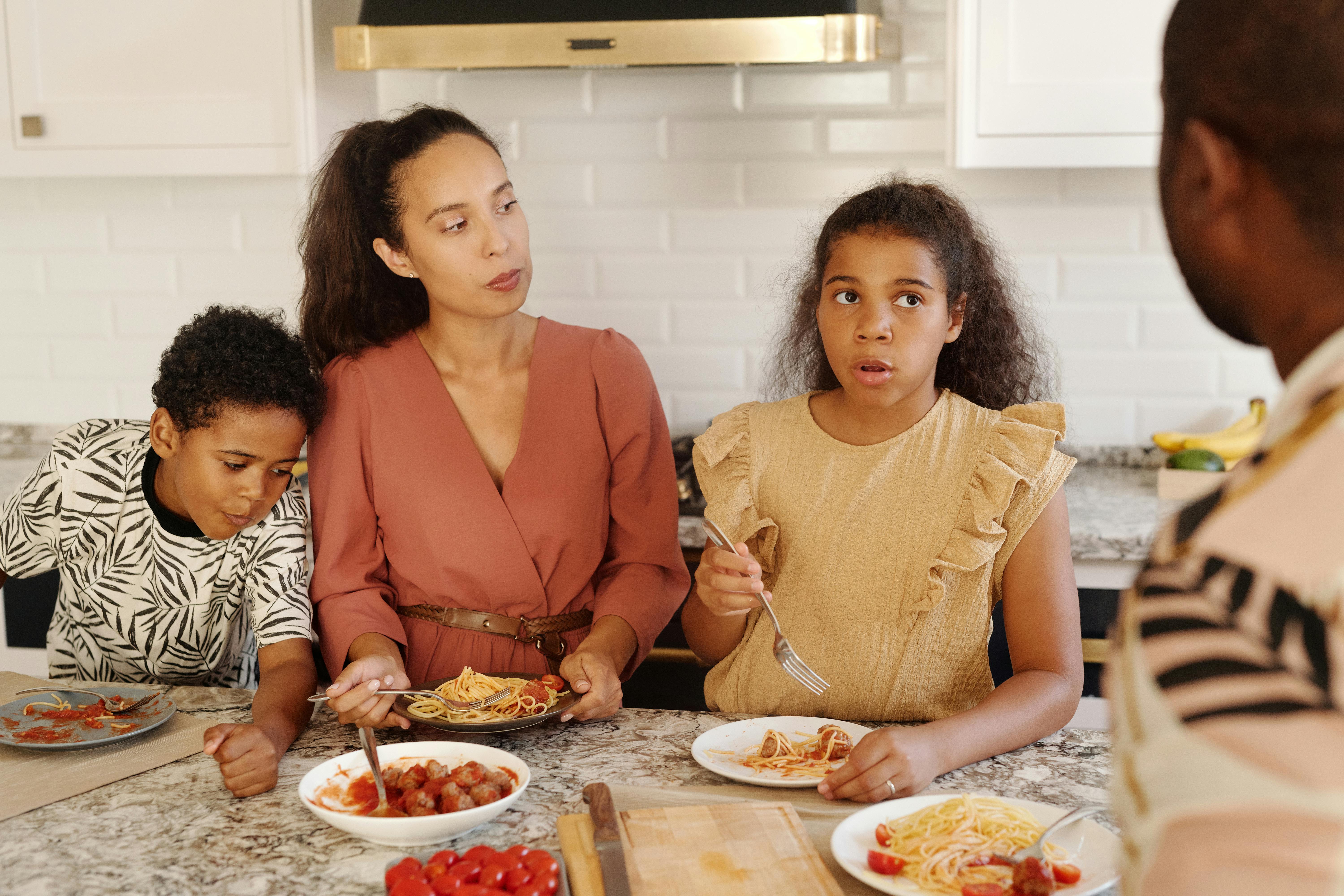
Not long ago, the evening meal was treated as a fixed point in the day. In many households, dinner happened at a predictable hour, with most people expected to be present unless work or illness got in the way. That rhythm has weakened. Dual-income homes, shift work, longer commutes, after-school activities, and irregular schedules have turned dinner into something many families assemble rather than share at the same time.
This change is not just anecdotal. Time-use data in the United States and Europe have shown that families still value eating together, but they do it less consistently than previous generations did. Researchers studying household routines have found that while many parents say shared meals matter, the actual number of weekly sit-down dinners often falls short of that ideal. The intention remains strong. The habit is far more fragile.
The result is a table that often works in shifts. One person eats before soccer practice, another after a late meeting, and someone else reheats leftovers at 9 p.m. Instead of one shared meal, dinner becomes a rolling sequence of individual eating events. Food is still present, but the social ritual is thinner.
What has been lost is not simply nostalgia for a more orderly time. Shared meals gave families a regular space for informal conversation, observation, and emotional check-ins. Small changes in mood, appetite, or behavior often surfaced there first. When that common hour disappears, one of daily life's most reliable forms of connection goes with it.
Convenience has reshaped both the menu and the meaning of dinner

The modern dinner table is built around efficiency. Supermarkets stock meal kits, pre-marinated proteins, chopped vegetables, frozen entrees, and heat-and-eat side dishes because people need speed. Food manufacturers and retailers are responding to a real demand. When adults are balancing work, childcare, eldercare, and household management, convenience is not laziness. It is often the only thing making dinner possible.
That convenience has changed what appears on the plate. Home cooking has not disappeared, but it is now frequently assisted by industrial preparation. A sauce comes from a pouch, grains from a microwaveable packet, and dessert from a bakery box. According to market research firms tracking grocery behavior, consumers increasingly mix homemade and ready-made elements in the same meal. Dinner is less about cooking from scratch and more about strategic assembly.
There are clear benefits to this shift. Convenience foods can reduce stress, cut prep time, and make weeknight meals more accessible to inexperienced cooks. In some cases, they also reduce food waste by offering portioned ingredients with longer shelf life. For many households, these products are practical tools, not culinary compromises.
Still, something subtle has been lost. Cooking used to carry knowledge from one generation to another through repetition, observation, and touch. Measurements were learned by feel, not just by instruction. Family dishes carried memory, migration, class, and region. When dinner becomes mostly assembled from pre-made parts, people may still eat well, but they inherit less of the craft, language, and story once embedded in the meal itself.
Screens now compete with conversation at the table
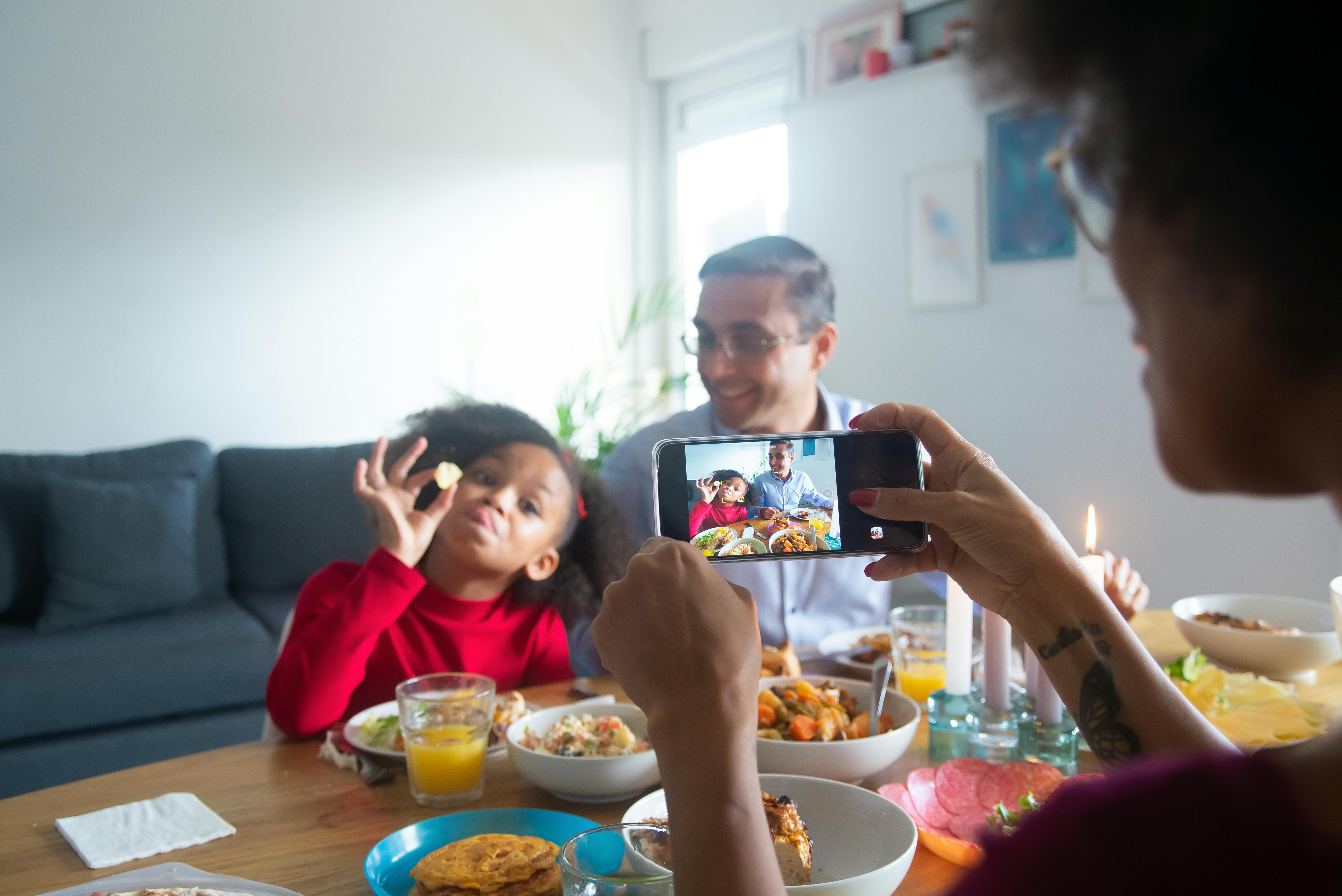
A quiet but powerful transformation has taken place at dinner: the table is no longer guaranteed to be the center of attention. Smartphones, televisions, tablets, and smart speakers now accompany meals in many homes. What used to be a break from the outside world is often another point of entry for it. News alerts, group chats, streaming shows, and work messages sit beside the salt and water glasses.
Researchers in child development and public health have spent years examining the effects of screen use during meals. Their findings are nuanced, but one pattern is consistent: device-heavy meals tend to reduce conversation quality and attentiveness. Adults speak less, children receive fewer verbal cues, and the give-and-take that helps build language, patience, and social habits can weaken. The issue is not simply distraction. It is displacement.
Many families do not intend for screens to dominate dinner. Often, devices arrive as coping mechanisms. A tired parent turns on a show for peace. A teen answers messages because social life now lives on the phone. A worker keeps a device nearby because the office no longer ends at 5 p.m. The table reflects broader pressures, not just bad manners.
What has been lost is the unstructured talk that once gave dinner its emotional weight. These were not always deep conversations. Often they were ordinary exchanges about school, work, neighbors, errands, and plans. Yet those small exchanges built familiarity and trust over time. When screens fill the silence, people may still sit together physically while missing the slower work of truly noticing one another.
Money, inequality, and time pressure now shape the table more than tradition
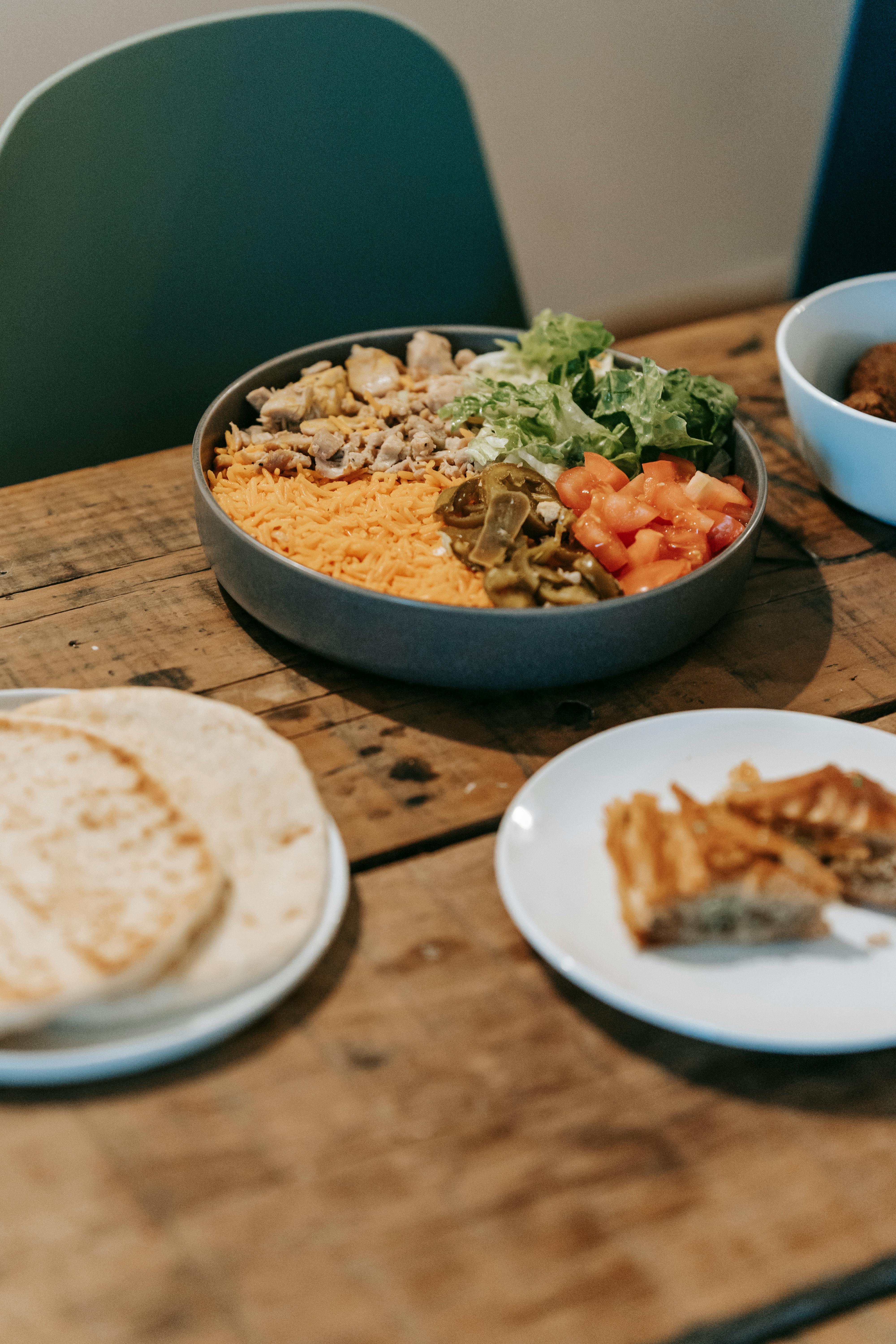
Every dinner table is also an economic document. Rising food prices, housing costs, childcare expenses, and wage pressure have changed what many households can buy and how much time they can devote to preparing it. Inflation has made staple items noticeably more expensive in many countries, and even when headline inflation eases, grocery bills often remain elevated. Families respond by trading down, simplifying menus, or stretching ingredients across multiple meals.
These pressures do not fall evenly. Higher-income households can absorb price increases more easily, outsource labor through takeout or prepared meals, and shop at stores with broader healthy options. Lower-income households often face a harsher mix of time scarcity, transportation constraints, and limited access to fresh food. Public health experts have long noted that food choice is rarely just about preference. It is deeply shaped by affordability and availability.
This means the modern dinner table often reveals inequality in plain sight. One family discusses which meal kit subscription they prefer. Another decides whether fruit is affordable this week. One parent experiments with air-fried salmon and farro. Another works late, grabs fast food, and feels judged for doing what the schedule and budget allow.
What has been lost here is the idea that dinner is a neutral domestic ritual. It is not. It is increasingly shaped by labor markets, urban planning, food systems, and policy decisions. The table still looks personal, but its pressures are structural. Understanding modern dinner means recognizing that many families are not choosing between ideal options. They are managing constraints with remarkable effort.
The table has become more individual, even when people eat together

Dinner used to demand compromise. A household often ate one main meal, at one time, with limited substitutions. Today, personalization is everywhere. One person is vegetarian, another is gluten-free, a child wants plain pasta, and someone else is counting protein grams. Add food allergies, medical conditions, ethical eating choices, and culturally mixed households, and the result is a dinner table organized less around one shared plate than around parallel preferences.
This change reflects real progress in some ways. People now have better information about nutrition, better diagnosis of food sensitivities, and greater freedom to eat according to health, identity, and belief. A generation ago, many people simply endured meals that did not suit their bodies or values. The modern table is more responsive and, in many cases, more humane.
But personalization has also weakened the shared nature of dinner. Instead of everyone adjusting to one meal, the cook often becomes a manager of multiple versions. The meal can feel fragmented before anyone sits down. Even restaurants have adapted, offering customizable bowls, substitutions, and build-your-own formats that mirror what happens at home. Choice has become the organizing principle.
What has been lost is the social lesson built into eating the same thing together. Shared dishes once taught flexibility, patience, and participation in a collective routine. They created common memories because everyone tasted the same soup, the same roast, the same overcooked peas. The modern table is more accommodating, but also more atomized. It serves the individual well, while sometimes serving the group less fully.
What remains worth protecting is not tradition for its own sake, but attention

It is easy to romanticize the past and imagine that earlier dinner tables were always warm, orderly, and meaningful. They were not. Many were rushed, tense, unequal, or silent. Nostalgia can hide the unpaid labor, gender expectations, and rigid rules that once structured family meals. The goal is not to recreate a fantasy of dinner. It is to understand what made the best versions of it valuable in the first place.
What mattered most was attention. A good dinner table created a repeated moment where people looked at one another, listened, and participated in a shared act that marked the day. It did not require elaborate cooking, expensive ingredients, or perfect behavior. It required presence. That is still possible now, even within modern constraints.
Some families protect that presence by setting one or two device-free dinners each week. Others rely on simpler meals that can be made consistently, not impressively. Community groups and schools have also begun emphasizing shared food experiences because they recognize how meals support belonging and communication. The form may change, but the function still matters.
What we have lost along the way is not only slower cooking or stricter routines. We have lost a common pause, a modest daily ceremony of attention that helped people feel seen. If the modern dinner table is worth improving, that is the reason. Not because the past was better, but because being present with one another still is.




Leave a Reply